Blog
Articles about dental treatment, written so that before a visit you know what will happen, how long it takes and what it costs.

Dental treatment under general anaesthesia: who qualifies, how the day runs and what the NFZ pays for
General anaesthesia in dentistry is not a stronger anaesthetic, it is a different way of organising treatment: two teams in the room, an anaesthesiologist who watches only the patient, and all the work done in one visit. This article describes who this path is for, how qualification works and who pays.
Read the article
Root canal treatment under a microscope: when it is needed, how it runs and what it costs
Root canal treatment saves a tooth that would otherwise have to be extracted. The microscope does not change the principle of the procedure, it changes how much the dentist sees: canals invisible to the naked eye, broken instruments, perforations. Below, the whole process from symptoms to the follow-up X-ray.
Read the article
Dental implants step by step: from the CBCT scan to the crown
An implant is a titanium screw that replaces the root, and the crown on it replaces the visible part of the tooth. Between the two are several stages that take months. This article describes them in order, with prices from the clinic's price list.
Read the article
A child's first visit to the dentist: when, how to prepare, and what happens when cooperation is not possible
A child's first visit is not for treatment but for getting to know the room, the chair and the person in it. Below: when to come for the first time, how to talk to the child before the visit, what prevention does, and the path when a child is not able to cooperate.
Read the article
Fear of the dentist: what actually helps, from the first conversation to general anaesthesia
Fear of dental treatment is common and usually has a concrete cause: pain that once could not be stopped, or no information about what is about to happen. This article describes the tools the clinic really has for it, from a written plan to sedation, and says honestly who general anaesthesia is for.
Read the article
Is dental treatment under general anaesthesia safe? Risks, side effects and a child's brain development
Dental treatment under general anaesthesia is safe when it is preceded by qualification and the anaesthetic is given by an anaesthesiologist with continuous monitoring. Below: what research says about side effects, serious complications and the brain development of young children, and which questions to ask before the procedure.
Read the article
NFZ-funded dental treatment under general anaesthesia in 2026: who is entitled, which documents and how long the wait is
Since 1 January 2026, dental treatment under general anaesthesia funded by the NFZ (Poland's National Health Fund) covers not only people with disabilities but also five groups of children and young people up to the age of 18. Below: all the criteria, the documents needed, the scope of treatment and waiting times in Podlaskie province, as the law stood on 12 October 2026.
Read the article
How to prepare a child for general anaesthesia at the dentist: food, talking, the morning of the procedure and the first 24 hours
Preparing a child for dental treatment under general anaesthesia starts a few days before the procedure and ends a day after it. Below: fasting times according to the guidelines, a conversation suited to the child's age, a list of things to bring, how waking up goes, and the symptoms that mean you should call.
Read the article
Sedation or general anaesthesia at the dentist: how they differ and when local anaesthesia is enough
Local anaesthesia, inhalation sedation with nitrous oxide and general anaesthesia each switch off something different: sensation, part of the anxiety, or consciousness. This text compares them for awareness, preparation, recovery and driving, and explains who chooses the method and on what basis.
Read the article
A dentist for people with disabilities: NFZ entitlements, when general anaesthesia applies and how to prepare the visit
NFZ rules give people with disabilities additional entitlements at the dentist: treatment under general anaesthesia and light-cured fillings, where there are medical indications. This article is for carers: who qualifies, which documents to bring, how to prepare the visit and who signs the consent.
Read the article
Wisdom tooth removal: when it is necessary, whether it hurts, how long it takes and how healing goes
A wisdom tooth does not have to come out just because it is there. This article explains when removing a wisdom tooth is justified according to the guidelines, when a CBCT scan is needed beforehand, how the procedure and healing go, what it costs and what the NFZ covers.
Read the article
After a tooth extraction: what to eat, how long it hurts, when you can smoke and how to recognise dry socket
The first 24 hours after a tooth extraction decide whether a blood clot stays in the socket, and the rest of healing depends on that clot. Below is a day by day plan: what to do and what to avoid, what to eat, when to go back to smoking and sport, how to tell ordinary pain from dry socket and when to seek help urgently.
Read the article
How much does root canal treatment cost? Prices for teeth 4, 6 and 7, the number of canals and what the NFZ funds
The price of root canal treatment depends mainly on how many canals a tooth has, and that follows from its place in the arch. This article explains why tooth 6 costs more than tooth 3, what is included in the price, what is paid for separately, and for which patients the NFZ funds treatment of which teeth.
Read the article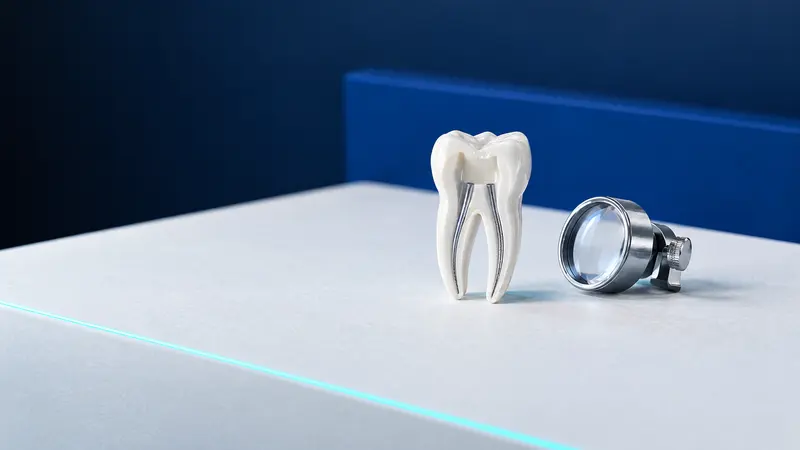
Root canal retreatment (re-endo): when it saves a tooth, how it works and what happens if it fails
A root-treated tooth can start hurting again after months or years, or show a lesion on an X-ray. This article explains why the first treatment fails, how to recognise the problem, how re-endo, apicoectomy and extraction differ, and what studies say about the chances.
Read the article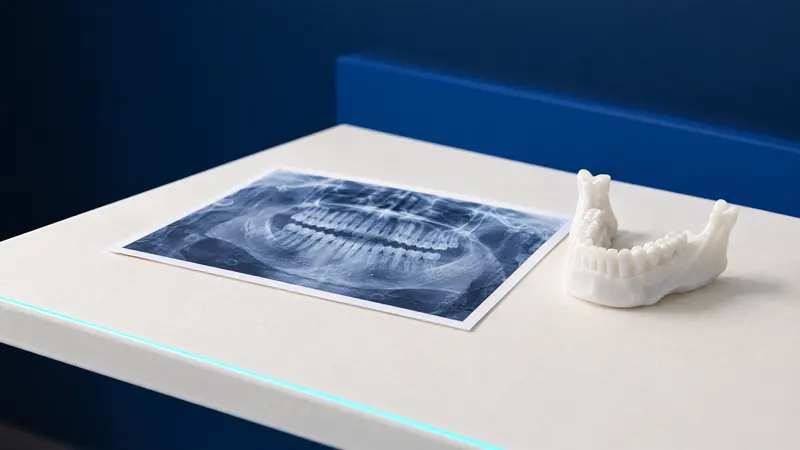
CBCT or panoramic X-ray: how they differ, when each is used and how much radiation a dental CT scan gives
A panoramic X-ray is a flat image of all the teeth at once; a CBCT scan is a three-dimensional image of a chosen part of the jaws. This article explains what each examination shows, when the dentist chooses one or the other, what the typical radiation doses are and what the NFZ (Poland's National Health Fund) funds.
Read the article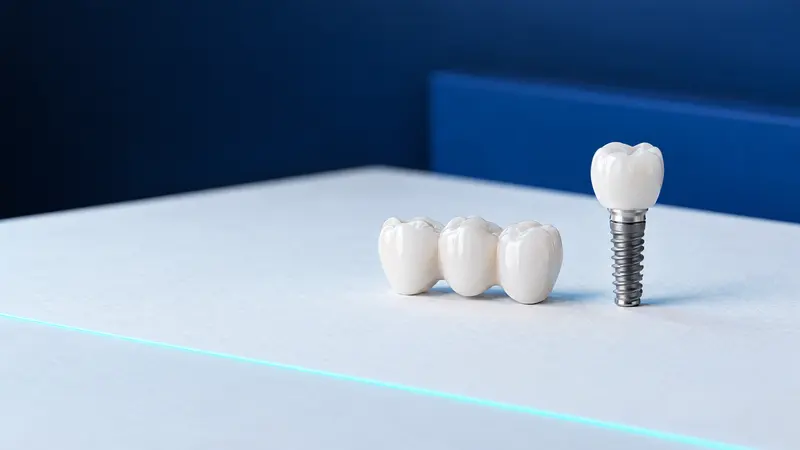
Implant or bridge: which to choose for one missing tooth and what the decision depends on
An implant replaces the root and does not touch the neighbouring teeth; a bridge rests on them and is made faster. This article explains how the two differ in terms of bone, time, durability in studies, hygiene and cost, and when a bridge, including an adhesive one, is a sensible choice.
Read the article
Do dental implants last a lifetime? How long they last, what harms them and when an implant may fail to take
The durability of implants is well researched, but nobody can honestly promise that an implant will last for the rest of your life. This article explains what studies report after 10 and 13 years, why an implant may fail to take, what peri-implantitis is, how smoking and diabetes affect implants, and what helps an implant last a long time.
Read the article
Sinus lift and bone grafting: when they are needed before an implant and how long they take
When bone is missing at the back of the upper jaw, an implant has nothing to rest on, and the answer may be a sinus floor elevation or another kind of bone graft. This article explains where bone loss comes from, how it is measured on a CBCT scan, how the techniques differ and how long each stage takes.
Read the article
What the NFZ covers at the dentist in 2026: the list for adults, children, pregnant women and people with disabilities
At the dentist, the NFZ (Poland’s National Health Fund) funds examinations, fillings, root canal treatment, extractions, scaling and acrylic dentures, but the scope depends on age, pregnancy and disability. Below is a full overview by patient group, with the limits and the legal basis, plus help with pain at night and at weekends; the law is stated as at 12 October 2026.
Read the article
Toothache: what to do straight away, when an abscess is dangerous and where to find help at night and at weekends
Toothache rarely goes away on its own, but it can almost always be eased until your appointment, and only a few symptoms mean you need to go to the hospital emergency department (SOR). This article explains what to do straight away, how to recognise a dangerous abscess, how to save a knocked-out tooth and where to find NFZ help at night and at weekends.
Read the article
When to take your child to an orthodontist: the first visit, removable or fixed braces and what the NFZ covers
A first visit to the orthodontist does not have to mean braces, and most often it ends with monitoring and a date for the next check-up. This article explains at what age to bring your child, which signs are a reason for a visit, how removable and fixed braces differ, what the NFZ (Poland’s National Health Fund) funds and why treatment ends with retention.
Read the article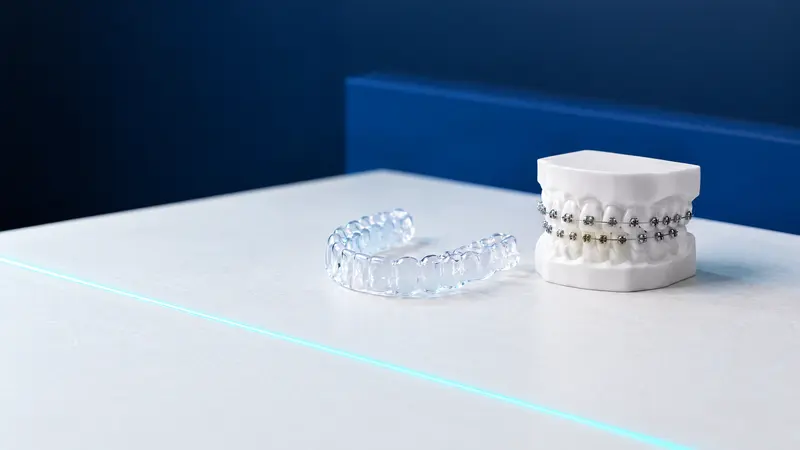
Clear aligners or fixed braces: how they differ, what the research says and how retention works
Clear aligners and fixed braces with brackets move teeth by the same principle, but they differ in what they can control, how much they ask of the patient and what daily life looks like during treatment. Below is a comparison based on research reviews, costs from the clinic's price list and what happens once the braces come off.
Read the article
Tooth decay in children: what baby bottle tooth decay looks like, how to prevent it and how milk teeth are treated
Tooth decay affects most Polish preschool children and usually begins quietly, with white spots along the gum. This article explains how to recognise it, how much fluoride toothpaste to use at each age, what fissure sealing achieves, what the NFZ funds and when treatment takes place under general anaesthesia.
Read the article
Periodontitis and bleeding gums: symptoms, whether periodontitis can be cured and how treatment works
Bleeding when you brush is most often the first sign of gingivitis, which without treatment can progress to periodontitis and in time cost you teeth. This article explains how to tell one from the other, how treatment proceeds step by step, what links periodontitis with diabetes and what the NFZ, Poland's National Health Fund, pays for.
Read the article
Dental treatment in pregnancy: what is safe, anaesthesia, X-rays and what the NFZ provides
Pregnancy is no reason to put off dental treatment, and untreated inflammation is a bigger problem for mother and baby than a visit to the dentist. This article explains what current expert statements say about anaesthesia and X-rays, when to plan procedures and what the NFZ, Poland's National Health Fund, additionally funds in pregnancy and the postnatal period.
Read the article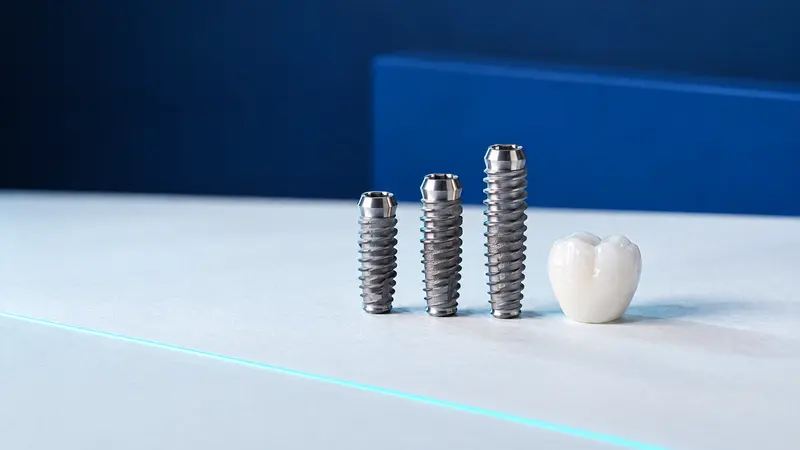
How much does a dental implant cost? What the price includes, full-arch implants, the NFZ and tax relief
The price of a dental implant is the sum of several stages: consultation, CT scan, placement, uncovering and the crown, and sometimes also a tooth extraction and bone rebuilding. This article explains what makes up the cost, what the individual items in the clinic’s price list cost, what full-arch implants cost and which rules apply to the NFZ and to tax.
Read the article
How much does general anaesthesia at the dentist cost? What makes up the price of dental treatment under general anaesthesia, and when the NFZ pays
The price of dental treatment under general anaesthesia is not a single sum but the total of several items: anaesthesiology consultations, the length of the anaesthetic, supervision after the procedure and the dental procedures themselves. This article explains what each of them depends on, how to work out an example plan and when the cost is covered by the NFZ, Poland’s National Health Fund.
Read the article
Dental treatment under general anaesthesia for adults: who qualifies, what the NFZ funds and how to prepare
An adult can have dental treatment under general anaesthesia, but it is health, not convenience, that decides. This article explains when general anaesthesia makes sense for an adult, who is entitled to it on the NFZ (Poland’s National Health Fund), what the anaesthesiology qualification involves, how long to fast and why you do not drive for a full day after the procedure.
Read the article
Dentist at night and at the weekend in Białystok: where to get help on the NFZ, at what hours, and when to go to the hospital emergency department
In Białystok, night-time and weekend dental help on the NFZ (Poland’s National Health Fund) is provided by a single centre for the whole of the Podlaskie province. This article explains where it is and when it is open, what can be dealt with there, when you need the hospital emergency department (SOR) or 112 instead of a dentist, and what to do until your visit.
Read the article
Tooth extraction: when it is necessary, whether it hurts, how much it costs and what the NFZ covers
Removing a tooth is usually the last choice rather than the first, and it is most often the result of tooth decay or periodontal disease. This article explains when an extraction is justified, how a simple procedure differs from a surgical one, whether it hurts, what can replace the missing tooth, how much it costs and what the NFZ (Poland’s National Health Fund) covers.
Read the article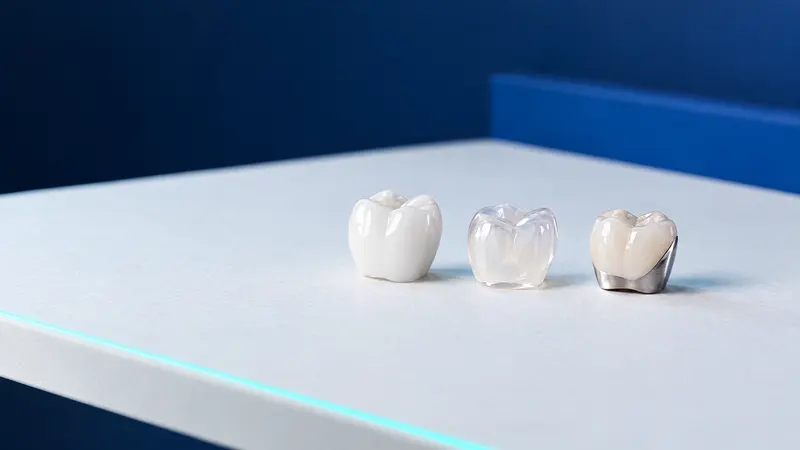
Dental crown: when you need one, zirconia or porcelain, how long it lasts and what it costs
A dental crown covers the whole visible part of a tooth and protects a tooth that can no longer be safely rebuilt with a filling. This article explains when a crown is needed, how zirconia, porcelain and lithium disilicate crowns differ, what research says about how long they last and what the successive visits look like.
Read the article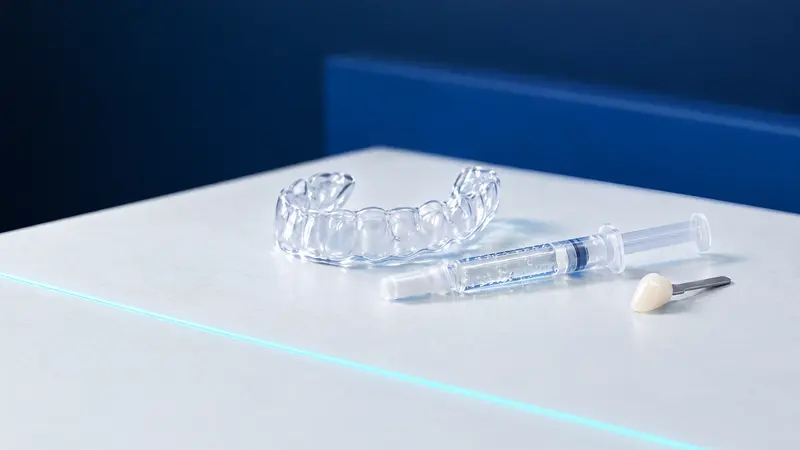
Teeth whitening: at the dentist or at home, is it safe and what affects the price
Teeth whitening lightens natural teeth with a peroxide gel, but it does not change the colour of crowns, veneers or fillings. This article explains how lamp whitening at the surgery differs from tray whitening at home, what EU law says, how often sensitivity occurs and what the cost depends on.
Read the article
Professional teeth cleaning: scaling, air polishing and fluoride, how often, does it hurt and what the NFZ covers
Professional teeth cleaning is several separate steps: scaling removes tartar, air polishing removes biofilm and stains, and fluoride treatment strengthens the enamel. This article explains what each step does, how often it is worth repeating according to research, whether it hurts, what the NFZ funds and what it costs privately.
Read the article
Dental filling: types of material, how long it lasts, what the NFZ covers and what it costs
A dental filling replaces tissue removed because of decay or a fracture, and how long it lasts depends on the material, the size of the cavity and the risk of decay. This article explains how composite, glass ionomer cement and amalgam differ, which filling you are entitled to on the NFZ and what a filling costs privately.
Read the article
Local anaesthetic at the dentist: types, how long it lasts, does it hurt and when it may not work
Local anaesthetic accompanies almost every dental procedure, and its action is well documented: we know how long it lasts and why it is sometimes weaker. This article explains how an infiltration differs from a nerve block, how long the lip stays numb, how to watch a child after the visit and how rare an allergy is.
Read the article
How much do braces cost? What makes up the price of orthodontic treatment and what the NFZ funds
The price of the braces themselves is only part of the bill for orthodontic treatment: on top of it come diagnosis, check-up visits throughout treatment and retention once it ends. This article explains what affects the cost most, what the items in the clinic’s price list cost and what the NFZ covers.
Read the article
Veneers or bonding: how they differ, how long they last, what they cost and who is not a candidate
A ceramic veneer is made in a laboratory and usually requires some enamel to be ground away, while bonding is composite applied to the tooth directly at the surgery. This article explains what studies say about how long each option lasts, what their drawbacks are, who is advised against veneers and what the individual items in the clinic’s price list cost.
Read the article
Dentures: types, prices, acrylic dentures on the NFZ and how long it takes to get used to them
A denture can be acrylic, cast metal (skeletal), a combined denture on attachments or one supported by implants, and the choice depends on how many teeth are missing and the condition of those that remain. This article explains how these options differ, what the NFZ (Poland’s National Health Fund) funds, how a denture is made and how to look after it.
Read the article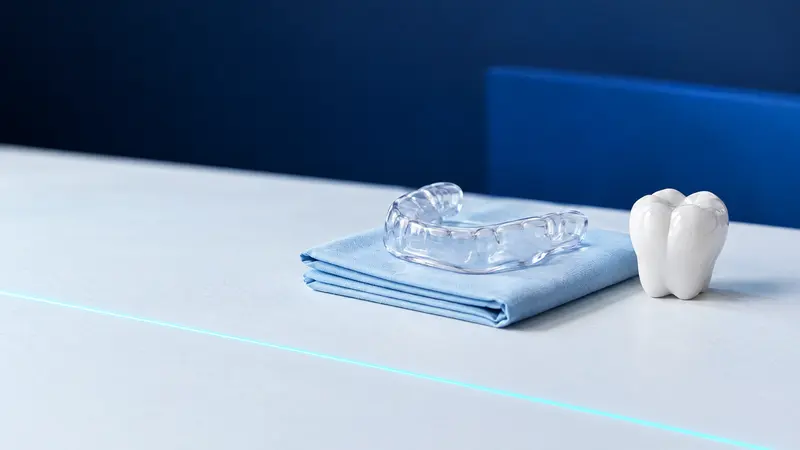
Bruxism: symptoms, causes and treatment, from a relaxation splint to botulinum toxin
Grinding your teeth at night and clenching them during the day are two forms of bruxism, which studies suggest affects one person in five to one in four. This article explains how to recognise it, what it can do to the teeth and joints, what a relaxation splint really achieves and what is known about botulinum toxin.
Read the article
Knocked-out tooth: what to do in the first minutes when a tooth comes out, chips or breaks
When a permanent tooth is knocked out, the outcome depends on minutes and on what the people present at the accident do before the patient reaches a dentist. This article explains how to put the tooth back, what to keep it in, what to do with a fragment of a broken tooth, why a baby tooth is not put back and where to find help in Białystok.
Read the article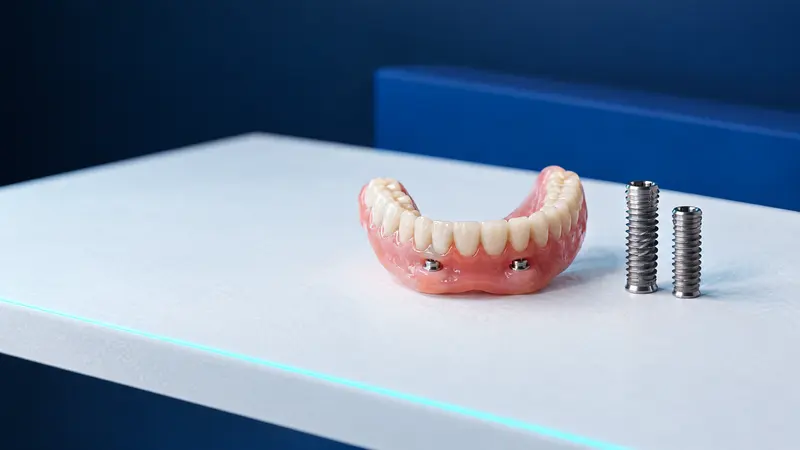
Implant-supported dentures: 2 or 4 implants, removable or fixed, and what the cost depends on
An implant-supported denture clips onto the implants with attachments or a bar, so it does not shift like an ordinary complete denture. This article explains how many implants are needed in the lower and the upper jaw, how it differs from fixed teeth on implants, what needs servicing and what it costs.
Read the article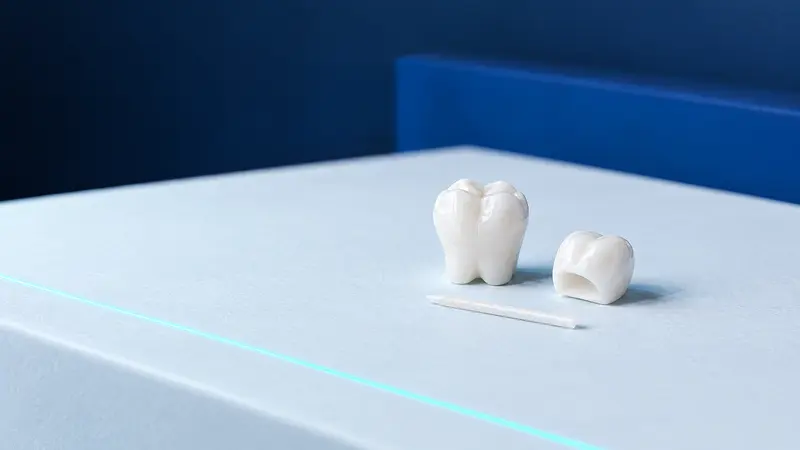
Crown or filling after root canal treatment: how to restore the tooth, when a post is needed and what if the tooth has cracked
Root canal treatment saves a tooth from the inside, but how many more years it serves depends largely on how it is restored from above. This article explains when a filling is enough and when a crown or an onlay is needed, what the ferrule effect is, when a post makes sense and what a crack in the tooth means.
Read the article
Should milk teeth be treated? Fillings, root canal treatment, extraction and space maintainers
Milk teeth fall out, but milk molars usually stay in the mouth until the age of 9 to 12, so a four-year-old’s tooth with a cavity still has several years of work ahead of it. This article explains how milk teeth are treated, when a tooth is extracted, what a space maintainer is for and what the NFZ funds.
Read the article
Fissure sealing: what it involves, whether it works, up to what age the NFZ funds it and how it differs from fluoride varnish
Fissure sealing closes the grooves on the chewing surface of the molars before decay has a chance to start in them, and it is one of the well-studied preventive procedures. This article explains when to have a child’s teeth sealed, what the NFZ funds, how long a sealant lasts and how fissure sealing differs from fluoride varnish.
Read the article
How often should you see a dentist? Dental check-ups: what they include, how often and what the NFZ covers
A check-up every six months is a habit, not a rule: guidelines recommend an interval tailored to risk, from 3 to 24 months in adults. This article explains what the interval depends on, what a dental check-up includes, when an X-ray is needed and what the NFZ funds.
Read the article
Sensitive teeth: why teeth hurt with cold, what helps and when it is not sensitivity
A short, sharp pain after a sip of cold water or while brushing is most often dentine hypersensitivity, which can usually be managed at home. This article explains where it comes from, which toothpaste ingredients have a proven effect, what the dentist does and how to recognise pain that means something else.
Read the article
Dead tooth: symptoms, why it darkens, whether it needs treatment and whether it can be whitened
A dead tooth often does not hurt, and the first sign is sometimes a change of colour or a small pimple on the gum. This article explains how to recognise a dead pulp, why a tooth darkens after an injury, what the European guidelines recommend, what treatment involves and whether a darkened tooth can be lightened from the inside.
Read the article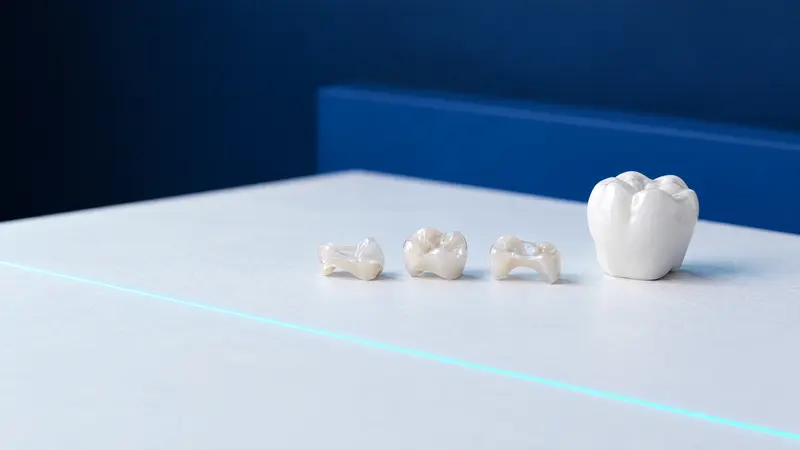
Inlays and onlays: what they are, when to choose one over a filling or a crown, how long they last and what they cost
Inlays and onlays are restorations made outside the mouth and fixed in the tooth when a cavity is too large for an ordinary filling but too small to justify preparing the tooth for a crown. This article explains how inlays, onlays and overlays differ, what studies say about how long they last, what they are made of and what they cost.
Read the article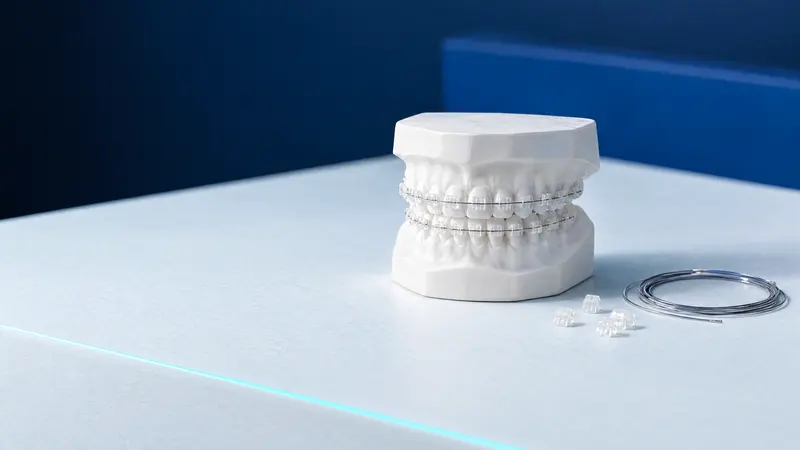
Braces for adults: is it too late, how long does treatment take and which braces to choose
Age alone does not close the door to orthodontic treatment, but in an adult the plan is shaped by the gums, the bone and the condition of the teeth. This article explains how long treatment takes in adults according to research, how metal, ceramic and lingual braces and aligners differ, and why retention stays for many years.
Read the article
How to brush your teeth properly: toothbrush, fluoride toothpaste, floss and tongue, according to current guidance
Brushing your teeth seems obvious, yet the details decide the result: the timing, the duration, the fluoride concentration in the toothpaste and what you do right after spitting out the foam. This article explains what a guideline-based daily routine looks like, whether an electric toothbrush gives an advantage and what to use to clean between your teeth.
Read the article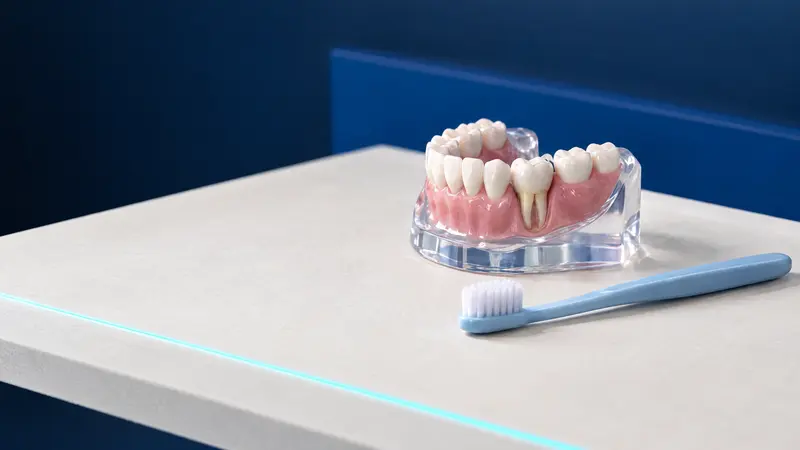
Gum recession: why gums recede, what an exposed tooth neck can lead to and when a graft is needed
Receding gums are one of the most common problems seen at the dentist, and their causes are not always what intuition suggests. This article explains where recession comes from, what an exposed root can lead to, how the dentist assesses its type, what research shows a gum graft achieves and how much root coverage costs.
Read the article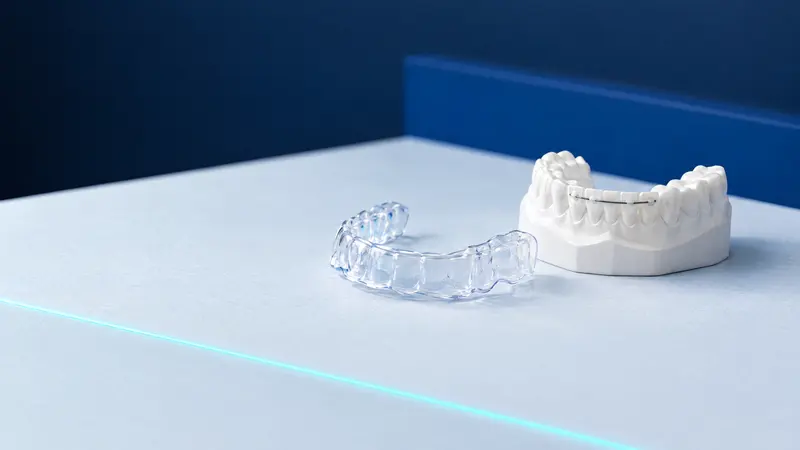
Retainer after braces: fixed or removable, how long to wear it and what to do if your teeth start to move
When braces come off, the teeth are not yet settled in their new position, and their alignment keeps changing throughout life. This article explains how a fixed retainer differs from a removable one, what research says about relapse, how long to wear a retainer, what to do if it comes loose, and what it costs.
Read the article
Teething: when the first teeth come through, what the symptoms are and how to soothe your baby
The first tooth usually appears at around 6 months, but children vary widely, and teething is blamed for more symptoms than research confirms. Below: the order in which milk teeth come through, real and supposed symptoms, safe ways to bring relief and what not to use for teething.
Read the article
Bad breath (halitosis): where it comes from, whether it can come from the stomach and how to get rid of it
Bad breath rarely has anything to do with the stomach, and often has to do with the coating on the tongue and the state of the gums. This article explains the causes of halitosis inside and outside the mouth, what helps at home, what a mouthwash will not fix and when to see a dentist about bad breath, and when a doctor.
Read the article
Tooth discolouration: where yellow, brown and grey teeth come from and what actually removes the stains
Coffee, tea and cigarettes leave deposits on the surface of the enamel, but yellow or grey teeth can also have a cause inside the tooth that whitening toothpaste does not touch. This article explains how to tell these two types of discolouration apart and what removes each of them: cleaning, whitening or veneers.
Read the article
Tooth pain after a filling: how long it can last, what is normal and when to go back to the dentist
Sensitivity after a new filling is common and usually eases week by week, but a few symptoms mean you need to go back to the surgery. This article explains where pain after a filling comes from, how to tell a filling that is too high from pulp inflammation, and when not to wait.
Read the article
Diabetes and your teeth: gum disease, dry mouth, implants and dental treatment for people with diabetes
Diabetes and gum disease affect each other in both directions: high blood sugar encourages periodontitis, and treating the gums helps to lower HbA1c. This article explains what the research shows, which signs in the mouth should concern you, where implants stand and how to prepare for a dental visit.
Read the article
A dentist for older people: dry mouth, root decay, dentures and implants in later life
After 65, teeth and gums need different attention than in younger years: dry mouth, root decay and denture problems become more common, and many medicines affect the mouth. This article explains what the research shows, how to look after a denture, what the NFZ covers and when a change in the mouth needs prompt attention.
Read the article
Blood thinners and tooth extraction: should you stop Acard, warfarin or Xarelto?
To the question of whether to stop a blood-thinning medicine before a tooth extraction there is one safe answer: not on your own. This article explains what the guidelines recommend for each group of medicines, which procedures carry a higher risk of bleeding, what to tell your dentist and how bleeding after an extraction is controlled.
Read the article
White spots on teeth: where they come from, what MIH and fluorosis are, and how they are treated
White spots on teeth can be the start of tooth decay, a mark left by fixed braces, or an enamel defect that formed before the tooth came through. This article explains how to tell these causes apart, what studies say about resin infiltration and when a spot needs a visit to the dentist.
Read the article
Mouth ulcers (aphthae): how long they last, how to treat them and when an ulcer needs to be seen by a doctor
Aphthous mouth ulcers are painful but mostly harmless: minor ulcers heal on their own, and treatment is mainly about easing the pain. This article explains how long each type of ulcer lasts, what triggers them, how they differ from an infection in a child, and when an ulcer needs to be shown to a dentist or doctor.
Read the article
Tongue-tie division: when it is needed in babies, children and adults
Tongue-tie is diagnosed far more often today than it used to be, and experts warn against unnecessary procedures. This article explains what research says about tongue-tie division in babies, when an upper lip tie matters and which procedures are carried out in older children and adults.
Read the article
Dummies and the bite: when to give up the dummy, how thumb sucking affects the teeth and how to help a child stop
A dummy or a thumb calms a baby and is not a problem for the teeth in the first year, but a habit that lasts for years can change the bite. This article explains which bite problems are linked to sucking, when to give up the dummy, how to do it without punishment and when to have a dentist or orthodontist see the child.
Read the article
Gummy smile: causes and treatment, from botulinum toxin to surgical crown lengthening
A gummy smile is not a disease, but for many people it is a reason to smile with their mouth closed. This article explains what determines how much gum shows when you smile, which methods suit which cause, how long the effect of botulinum toxin lasts and why this is an off-label treatment.
Read the article
Can a dentist issue a sick note (L4)? Sick leave from a dentist after a tooth or wisdom tooth extraction
Polish law names the dentist explicitly among those who may issue sick notes. This article explains on what basis a dentist issues an e-ZLA, when sick leave is usual, what its length depends on, whether it can cover days in the past and whether it applies to looking after a child.
Read the article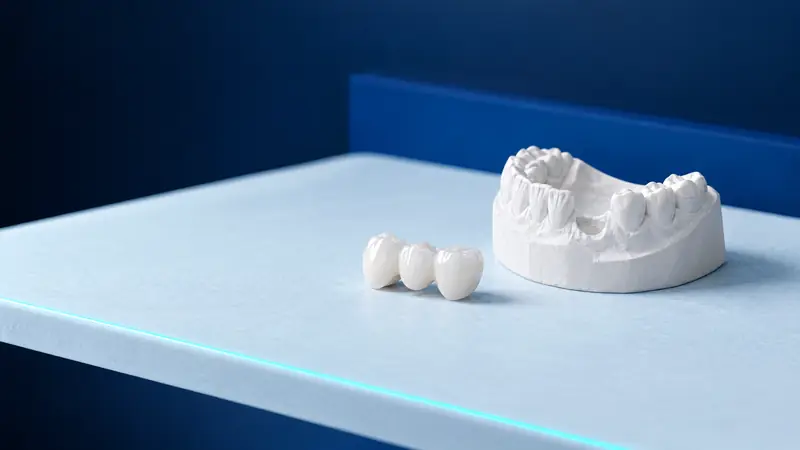
Dental bridge: types, porcelain or zirconia, how it is fitted, how long it lasts and what it costs
A dental bridge replaces one or more missing teeth with a fixed structure supported by the neighbouring teeth or by implants. This article explains how conventional, cantilever and adhesive bridges differ, how treatment runs visit by visit, how long bridges last according to reviews of studies and how to clean the area under the pontic.
Read the article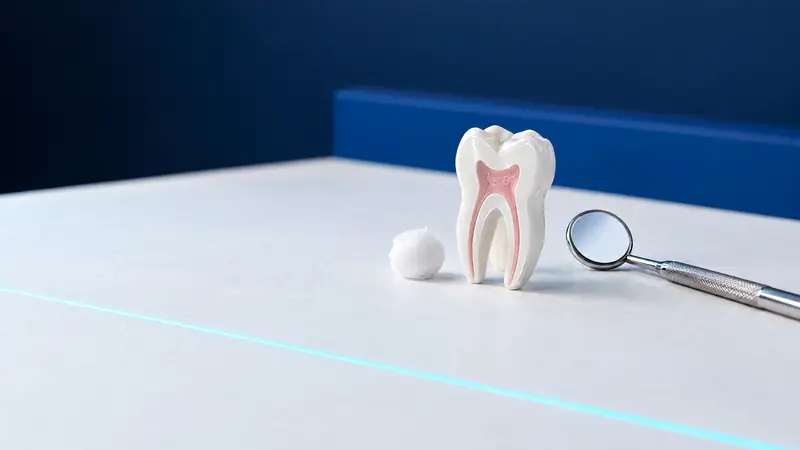
Pulpitis: symptoms, reversible and irreversible inflammation of the pulp, treatment and whether it can go away on its own
Pulpitis usually starts with a brief pain from cold, and it can end in throbbing pain at night or in the death of the tooth. This article explains how to tell reversible from irreversible pulpitis, how a dentist examines the pulp, when vital pulp therapy is enough and why an antibiotic does not help.
Read the article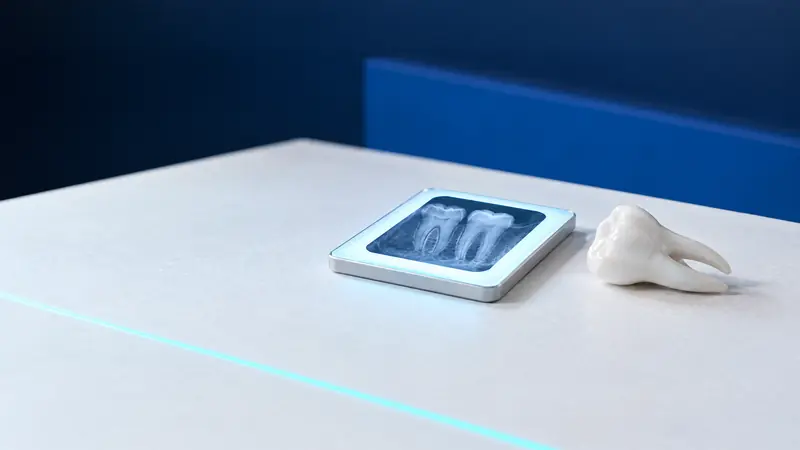
Tooth cyst: how it differs from a granuloma, when root canal treatment is enough and when surgery is needed
A cyst or granuloma at the root of a tooth is often found by chance, on an X-ray taken for another reason, and usually does not hurt. This article explains how these lesions differ, how they are diagnosed, when root canal treatment is enough, when surgery is needed and how long follow-up lasts.
Read the article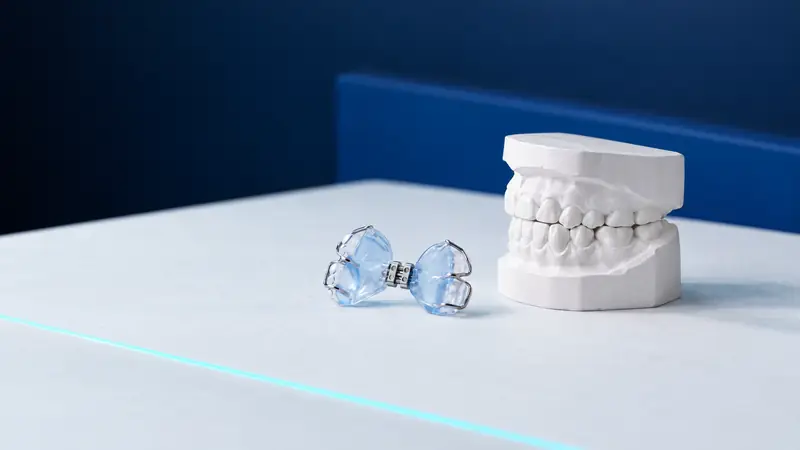
Malocclusion in children and adults: underbite, overbite, crossbite, open bite and deep bite
Malocclusion takes many forms, from crowded teeth to an underbite, and not every one of them needs braces. This article explains how to recognise the most common types, which are treated during growth and which later, when an adult needs surgery, and what the NFZ (Poland’s National Health Fund) funds in the treatment of malocclusion.
Read the article
Is a dentist a doctor? Dentists, dental specialties and who else works in a dental surgery
Yes: under Polish law a dentist is a lekarz dentysta, literally a dental physician, and stomatolog is an everyday name for the same profession. We explain what the Act says, how a professional title differs from a doctorate, which dental specialties exist, who dental hygienists and dental technicians are, and how to check a dentist’s licence to practise.
Read the article
Cracked tooth: symptoms, types of crack, how they are detected and whether a cracked tooth can be saved
A cracked tooth often hurts only on biting or with cold, and the crack itself usually does not show on an X-ray. This article explains the types of crack defined by the endodontic societies, how a dentist detects them, when monitoring is enough, when an onlay or a crown is needed and when the tooth cannot be kept.
Read the article
Implant after tooth extraction: when it can be placed straight away and when it is better to wait a few weeks or months
An implant can be placed on the day a tooth is extracted, after a few weeks or after a few months, and each of these timings has its own conditions and its own risks. This article explains how the ITI consensus classifies implant timing, when an immediate implant makes sense, what the risk to the gum is in the front of the mouth and what to wear until the crown is fitted.
Read the article
Sinus tooth pain or sinusitis from a tooth: how to tell them apart and who to see
The maxillary sinus lies just above the roots of the upper back teeth, so sinusitis can hurt like a tooth, and a diseased tooth can cause sinusitis. This article explains how to recognise each, how the dentist checks whether a tooth is to blame, what to do after an upper tooth is extracted and when to go to the hospital emergency department (SOR).
Read the article
When do milk teeth fall out? The order, a permanent tooth behind a milk tooth and when a dentist removes one
Milk teeth are replaced by permanent ones roughly between the ages of 6 and 12, and this usually happens without any help from a dentist. This article explains the order in which the teeth fall out, what to do about a wobbly milk tooth, when a permanent tooth coming in behind a milk tooth is normal, and when an X-ray or an extraction is needed.
Read the article
Dentist for foreigners in Białystok: the NFZ, the EHIC (EKUZ), Ukrainian citizens and private treatment
A foreigner can have dental treatment on the NFZ (Narodowy Fundusz Zdrowia, Poland’s National Health Fund) if they are insured in Poland, hold a European Health Insurance Card (EHIC, in Polish EKUZ) or, as a Ukrainian citizen, belong to one of the protected groups; everyone else pays for treatment. We explain the rules, with the legal position as of 18 October 2026, which documents to bring and how to prepare for the visit.
Read the article
Temporary filling (a dressing in the tooth): why it is placed, how long it can stay and what to do if it falls out
A temporary filling, also called a dressing, seals the tooth for the time between visits, but it is not meant to be worn for months. This article explains when one is placed, how long it can stay in the tooth according to endodontic guidance, why leaving a dressing too long risks reinfection of the canals and what to do if it falls out.
Read the article
Impacted canine: how to spot it early, when removing the baby canine helps and what surgical exposure involves
An upper canine that does not come through on time most often lies on the palate side, and when it is detected early there are more treatment options. This article explains how to recognise the problem at around the age of 10, when removing the baby canine is enough, what exposure and treatment with braces involve, and what changes in adults.
Read the article
Professional teeth cleaning for children: from what age, air polishing, fluoride varnish and black stain on the teeth
Professional cleaning for a child rarely resembles the adult procedure: most often it means cleaning the teeth, applying fluoride varnish and learning to brush. This article explains from what age and how often to have it done, when air polishing makes sense, what black stain on a child’s teeth is and what the NFZ (Poland’s National Health Fund) funds in prevention.
Read the article
Temporomandibular joint pain: symptoms, a clicking jaw, restricted opening and what actually helps
Jaw pain when opening the mouth, clicking in the joint and restricted mouth opening are most often symptoms of temporomandibular disorders, which in many people go away on their own. This article explains when clicking needs no treatment, what you can do yourself, which methods have evidence behind them, when to seek urgent help and who treats the joint.
Read the article
Smoking and teeth: cigarettes, e-cigarettes, heated tobacco and nicotine pouches, and their effect on gums and implants
Smoking cigarettes increases the risk of periodontitis by about 85%, makes implant failure and complications after tooth extraction more likely, and at the same time masks bleeding gums. We set out what is known about e-cigarettes, heated tobacco and nicotine pouches, how strong that evidence is, and where to get help to stop smoking.
Read the article
Enamel erosion: how it differs from abrasion and wedge-shaped lesions, whether enamel grows back and how to stop it
Enamel erosion is the dissolving of the hard tissues of a tooth by acids from the diet or the stomach, and it often goes hand in hand with wear. This article explains how to tell erosion from abrasion, attrition and wedge-shaped lesions, whether enamel can rebuild itself, when to brush after an acidic meal and how worn teeth are treated.
Read the article
Mouth cancer: symptoms worth showing a dentist, risk factors and how diagnosis works
Most changes in the mouth have harmless causes, and ordinary ulcers heal within 1 to 2 weeks, but a change that does not go away needs to be shown to a dentist or doctor. This article explains which symptoms need checking, what increases the risk, what leukoplakia and erythroplakia are, and how the DiLO card, Poland’s fast-track oncology card, works.
Read the article
Diastema, a gap between the front teeth: in children, in adults, the frenulum and treatment options
A gap between the upper front teeth in a child is most often a stage of development, while in an adult it can be a question of appearance or a sign of gum disease. This article explains where a diastema comes from, when to wait and when to act, what role the frenulum plays, and how braces, bonding and veneers differ.
Read the article
Is fluoride harmful? Fluoride toothpaste, fluorosis, fluoride and IQ, and what the research really says
The fluoride in toothpaste protects against tooth decay, and it can only do harm at doses many times higher than those from daily brushing. We explain how it works, what the Cochrane reviews say, where fluorosis comes from, what the NTP report on IQ actually found and whether fluoride-free toothpaste is an alternative.
Read the article
Dental treatment while breastfeeding: local anaesthesia, X-rays, tooth extraction, general anaesthesia and whitening
Dental treatment while breastfeeding usually needs no break in feeding and no discarding of milk, even after local anaesthesia, an X-ray or a tooth extraction. We explain what LactMed and the guidelines say, when caution is needed, and what the NFZ (Poland’s National Health Fund) covers in the postpartum period.
Read the article
NFZ dentist in Białystok: finding a contracted practice, waiting times and referrals
You do not need a referral to see an NFZ dentist in Białystok, but the practice must have a contract with the Fund. Find out how to use the NFZ search tool, how many treatment sites the region has, how long waits are for orthodontics, oral surgery and periodontics, and what to do about toothache.
Read the article
How much does a dentist appointment cost? Consultations, check-ups, fillings, X-rays and what affects the price
A dentist appointment has no single price: you pay for what the dentist does, with examinations, X-rays, fillings and extractions listed separately. Find out what common items cost at the clinic in Białystok, what a procedure’s price usually excludes, why prices are rising and what the NFZ provides free of charge.
Read the article
Paediatric dentist in Białystok: what they do at each age, what the NFZ covers and how they help a child who is afraid
A paediatric dentist looks after a child from the first tooth to adulthood: preventing decay, treating milk and permanent teeth, dealing with injuries and helping the child get used to the surgery. You will learn what a visit focuses on at each stage of childhood, what a child is entitled to on the NFZ in Podlaskie province and which methods are used with children who are afraid of the dental chair.
Read the article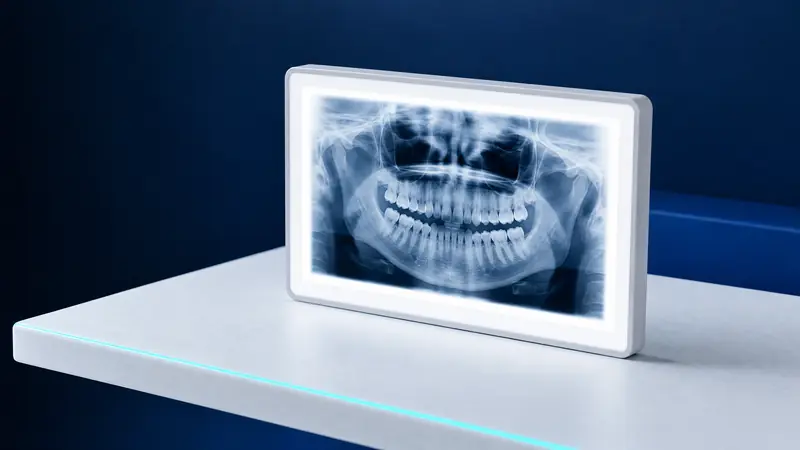
Panoramic dental X-ray: what it shows, referrals, NFZ cover and cost
A panoramic dental X-ray shows all the teeth, roots and jawbones in a single image. This article explains what it can and cannot show, what happens during the examination, when a referral is needed, what the NFZ funds and how to obtain your results.
Read the article
Laughing gas at the dentist: how it works, who it is for, whether it is safe and what it costs
Laughing gas, that is nitrous oxide given with oxygen through a small nose mask, calms you during dental treatment, but it does not put you to sleep and does not replace local anaesthesia. This article explains how it works, who it is for, when it is not given, what side effects it has, what a failed attempt means and what it costs.
Read the article
Oral surgeon: what they treat, when to see one and NFZ care in Białystok
An oral surgeon is a dentist specialising in oral surgery who removes impacted teeth and treats cysts and lesions in the mouth. This article explains how the specialty differs from maxillofacial surgery, whether you need a referral and how to find NFZ-funded care in the region.
Read the article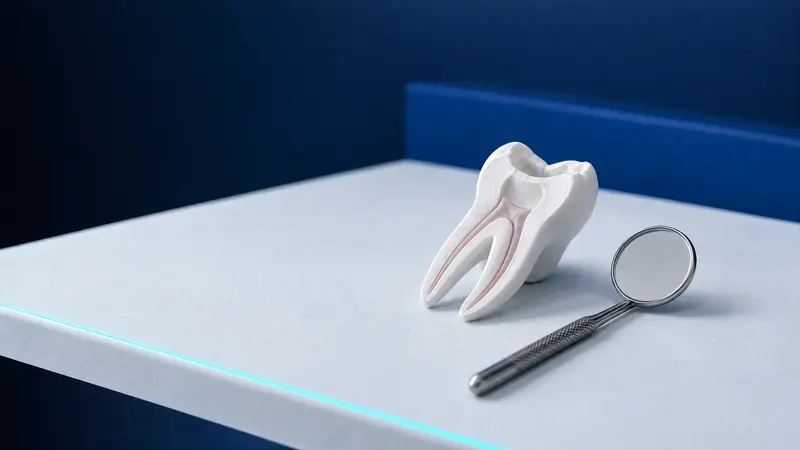
Root canal treatment step by step: what happens, how long it takes, how many visits and what comes next for the tooth
Root canal treatment saves a tooth whose pulp is diseased or has died, and it is made up of a few stages that are repeated from tooth to tooth. You will learn what happens at each of them, how long a visit takes, whether one is enough, how often treatment succeeds and why the tooth usually needs restoring afterwards.
Read the article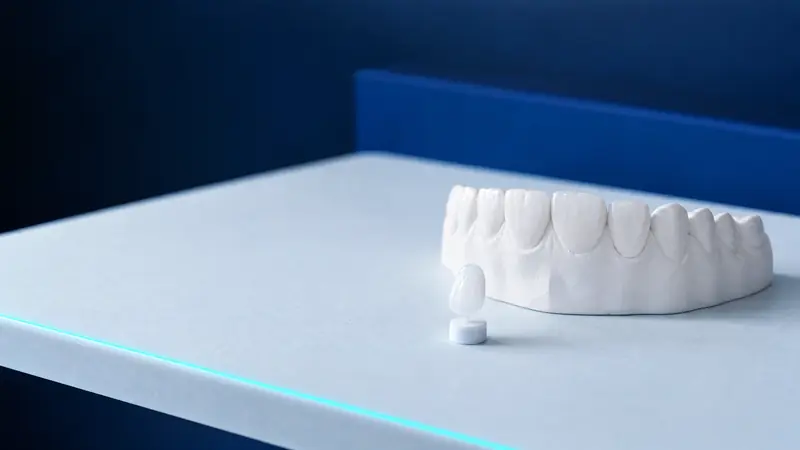
Veneers: what they are, how they are fitted, whether they damage teeth and how long porcelain veneers last
Veneers are thin ceramic or composite shells bonded to the front surface of the teeth to change their colour, shape and proportions. This article explains how veneers are fitted, how much enamel preparation removes, when no-prep veneers are possible, how long they last according to studies and who they are not recommended for.
Read the article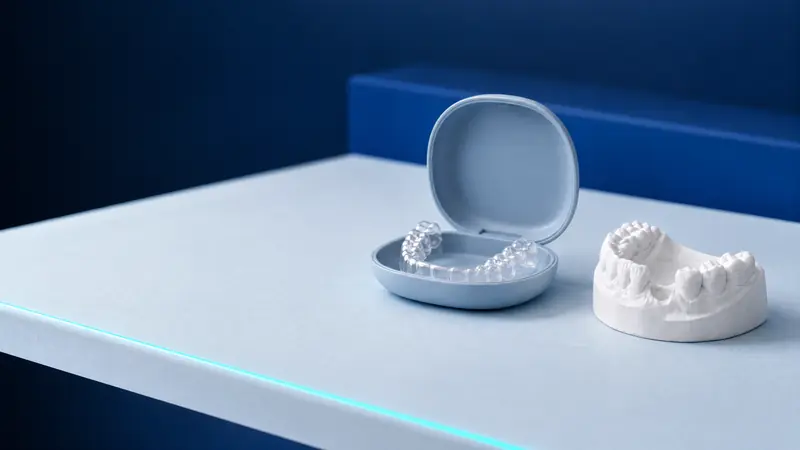
Clear aligners: how they work, treatment step by step and how many hours a day to wear them
Clear aligners move teeth through a series of transparent trays, each changing their position by a fraction of a millimetre. We explain treatment from the scan and digital plan through to retention, how many hours a day you need to wear the trays, when this approach is enough and what the cost includes.
Read the article
Dental abscess: symptoms, types, treatment and when a swollen cheek needs emergency care
A dental abscess is a collection of pus at a root, in a gum pocket or around an erupting wisdom tooth, and needs treatment. Learn how the types differ, how a dentist drains the pus and treats its cause, why antibiotics alone are not enough and which symptoms mean emergency hospital care or a call to 112.
Read the article
Tooth decay: how it develops, what a cavity looks like and whether decay can be stopped
Tooth decay begins with an invisible loss of minerals from the enamel and causes no pain for a long time, and at an early stage it can be stopped without drilling. This article explains how decay develops and what it looks like at each stage, what secondary decay under a filling and root decay are, and how decay is treated in adults.
Read the article
Gingivitis: symptoms, causes and treatment, from home care to seeing a dentist
Gingivitis is very common and, unlike periodontitis, is reversible once its cause is removed. Learn how to recognise it, its different forms, including during pregnancy, with medicines and with braces, what helps at home and when swollen, painful gums need a dentist.
Read the article
All-on-4: fixed teeth on four implants, who it suits, how treatment works and how long it lasts
All-on-4 is a fixed bridge for a whole toothless arch, supported by four implants and often fitted in a temporary version on the day of surgery. This article explains who can have this treatment, how it is planned on a CT scan, what studies say about how long it lasts and how it differs from a denture on implants.
Read the article
Dental X-rays: periapical, bitewing and RVG images, when they are needed, dose, referrals and cost
A dental X-ray is a small X-ray taken with a sensor or plate inside the mouth, showing details of one or several teeth. This article explains how periapical and bitewing images differ, what RVG means, how often X-rays are taken, whether a referral is needed and what they cost.
Read the article
Does root canal treatment hurt? Pain before, during and after treatment, and how long it normally lasts
Root canal treatment has a painful reputation, although studies show that pain usually eases quickly afterwards. Find out why the diseased tooth itself usually hurts most, what the dentist does if anaesthesia is not working well, how long an ache may last and when pain means you should call.
Read the article
Surgical tooth extraction: what it is, when it is needed, whether it hurts and how it heals
Surgical tooth extraction, known in Polish as dłutowanie, removes a tooth or root with drills and elevators and, depending on the situation, may involve cutting the gum, removing part of the bone or dividing the tooth. This article explains when it is needed, how it is done step by step, how long healing takes, which complications studies describe and what it costs.
Read the article
Tooth removal under general anaesthesia: indications, treatment in one session and cost
Most teeth, including wisdom teeth, are removed under local anaesthesia; general anaesthesia is a medical decision made after assessment. This article explains when it is justified for extraction, when sedation is enough, how many teeth can be removed in one session, going home afterwards and what makes up the cost.
Read the article
Dental treatment under general anaesthesia from Łomża, Suwałki or Hajnówka: visits and planning your trip to Białystok
Families from Łomża, Suwałki, Augustów, Hajnówka and Bielsk Podlaski often travel to Białystok for dental treatment under general anaesthesia. This article explains how many trips to plan, the distances involved, what to bring, who qualifies for NFZ funding and how to look after the patient once home.
Read the article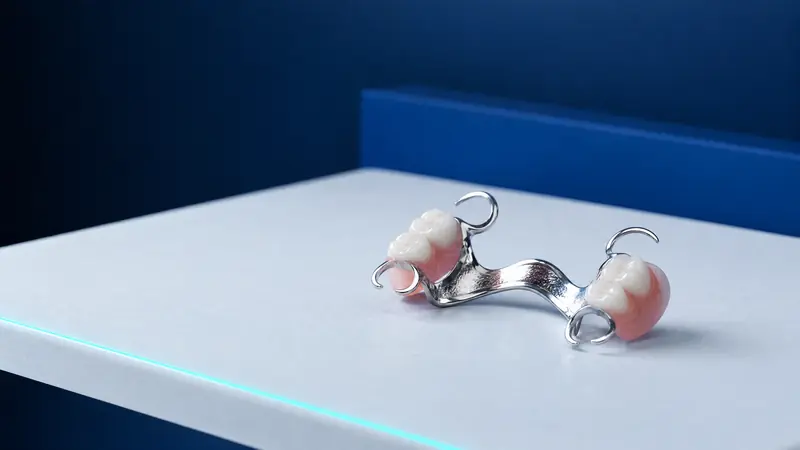
Metal partial denture: components, clasps or attachments, fitting time and lifespan
A metal partial denture is removable and has a cast metal framework that transfers some chewing forces to your own teeth. This article explains its components, the difference between clasps and attachments, how it is made, and what research says about lifespan and care.
Read the article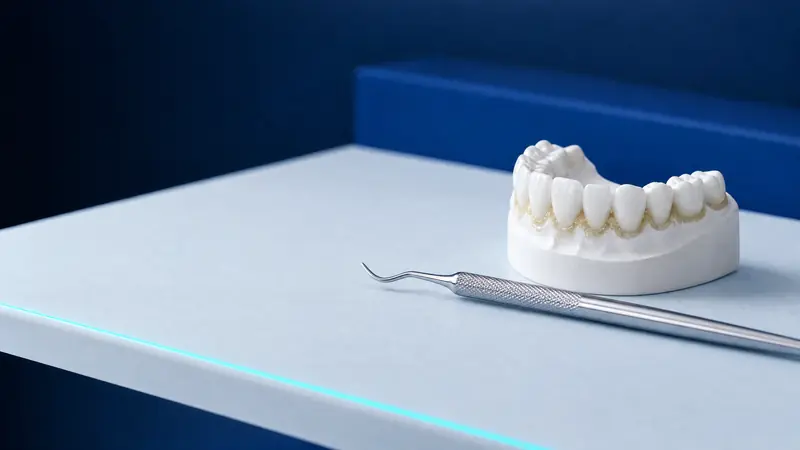
Dental tartar: what causes it, can you remove it at home and how often do you need scaling?
Dental tartar is bacterial plaque that has hardened on a tooth and can no longer be brushed off. Learn how tartar above and below the gum line differs, what problems it causes, why home scrapers are a poor idea, how often to have it removed and what helps slow its build-up.
Read the article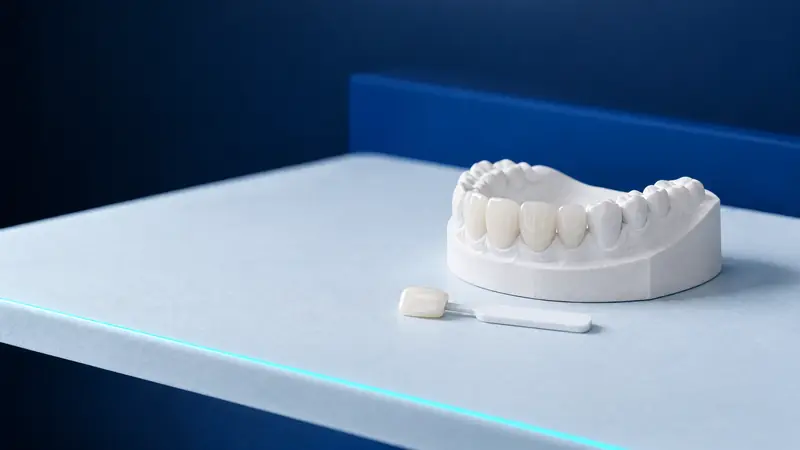
Smile makeover: how the treatment plan is made, in what order and what to realistically expect
A smile makeover is a planned change in the colour, shape or position of the teeth that usually combines several methods of aesthetic dentistry, from whitening to veneers. This article explains how the dentist builds the plan on photographs, scans and a mock-up, in what order the stages are carried out and how to keep the result.
Read the article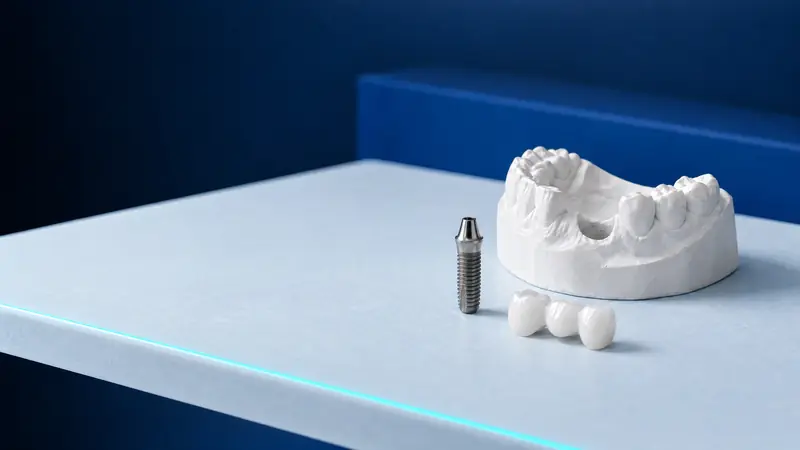
Replacing missing teeth: your options and what happens if a gap is left
A missing tooth can be replaced with an implant, bridge or denture, and sometimes a gap can deliberately be left if it does not affect chewing or appearance. This article explains what happens to bone and neighbouring teeth after tooth loss, the options for one, several or all missing teeth, and what the NFZ funds.
Read the article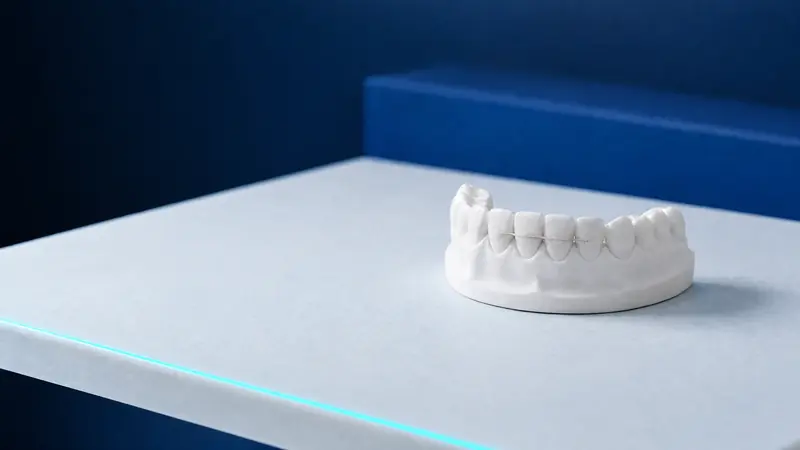
Tooth splinting: when loose teeth need a splint, how it is fitted and how long it stays in place
A loose tooth in an adult is most often caused by periodontitis, an injury or excessive bite forces. Learn how dentists assess mobility, when tooth splinting helps, how long the IADT recommends keeping a splint after injury and what a splint cannot do for gum disease.
Read the article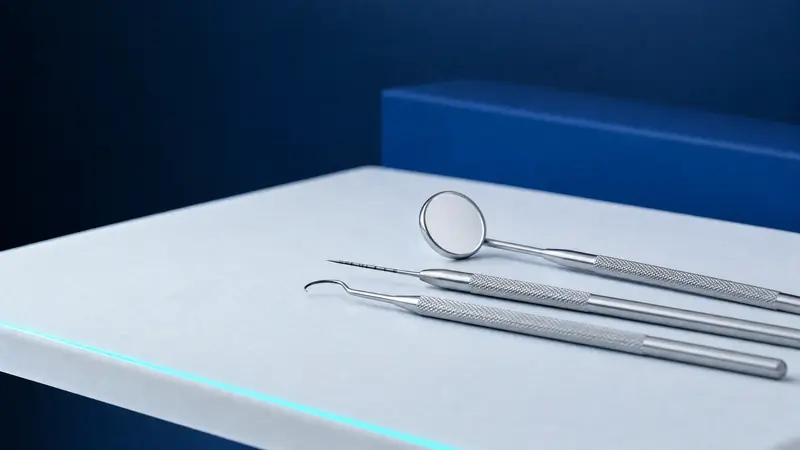
Periodontal curettage: treating gum pockets, closed and open procedures, results and healing
Periodontal curettage removes calculus and bacteria hidden on tooth roots in gum pockets, a core part of treating periodontitis. Learn how closed and open procedures differ, what results the EFP guidelines report, whether treatment hurts, how healing progresses and what the NFZ funds.
Read the article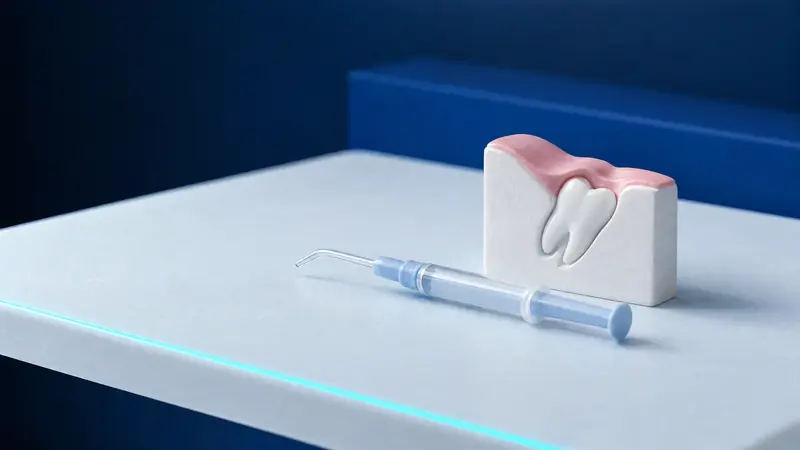
Pericoronitis: inflamed gums around a wisdom tooth, symptoms, treatment and when to seek urgent help
Swollen, painful gums behind the last tooth are most often inflammation around a partly erupted wisdom tooth, called pericoronitis. Learn what causes it, which symptoms need urgent help, how dentists treat it, when extraction is appropriate and what you can safely do at home.
Read the article
Does dental implant surgery hurt? What happens, how long it takes and the first two weeks of recovery
Dental implants are usually placed under local anaesthesia, and studies find that pain and swelling are greatest in the first few days. This article explains what happens on the day of surgery, what to expect day by day, what to eat, how to care for the wound and when to seek urgent medical help.
Read the article
Zirconia or titanium implants: how they differ, what studies show and when ceramic is considered
Zirconia implants, also called ceramic implants, are an alternative to titanium implants, usually asked about by people looking for a metal-free option. This article explains how they perform in studies, how common titanium allergy is, what the limitations of ceramic are and what the phrase “screwless implants” may mean.
Read the article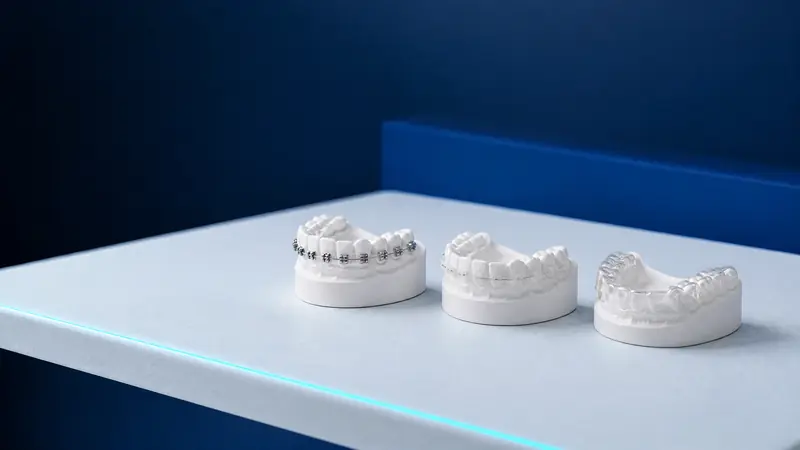
Types of braces: metal, ceramic, sapphire, self-ligating, lingual and clear aligners
Braces differ in bracket material, how the archwire is held in place and which side of the teeth they are bonded to. We compare metal, ceramic, sapphire, self-ligating and lingual braces, as well as removable appliances and aligners, alongside what reviews of studies say about them.
Read the article
Toothache in a child: what to do straight away, what causes it and when to go to the dentist or to the emergency department
Toothache in a child can be a sign of deep decay, an abscess on a milk tooth, an injury or teething, and each of these causes calls for a different pace of action. You will learn what you can safely do at home, how to tell that the matter is urgent, what the dentist will do and where to find help in Białystok at night.
Read the article
Dry mouth: causes, medicines, Sjögren’s syndrome and what to do when saliva runs short
Dry mouth (xerostomia) is reported by roughly one person in five, and it is often caused by medicines, mouth breathing or illnesses such as Sjögren’s syndrome. This article explains how the feeling of dryness differs from a measured lack of saliva, what it means for your teeth and what helps by day and at night.
Read the article
Apicectomy (root-end surgery): when it is needed, what happens and how healing progresses
An apicectomy is surgery to preserve a tooth when root canal treatment cannot be successfully repeated through the crown. Find out when it is suitable and when it is not, how microsurgery works, what studies say about success rates and what to expect in the first few days afterwards.
Read the article
Lump on the gum: a dental sinus tract, an abscess or a growth that needs checking?
A lump on the gum is often the opening of a sinus tract, which drains pus from a dead tooth or one with a persistent infection after treatment, so it usually does not hurt. Learn how it differs from a periodontal abscess, fibroma or bony growth, how a dentist finds the source and when a lump needs prompt assessment.
Read the article
Front tooth repair: restoring a chipped or broken central incisor and choosing the right method
How a front tooth is repaired depends on how much of the crown has broken off and whether the fracture has reached the pulp. This article explains when composite is enough, when a fragment can be reattached, when a veneer or crown is more suitable, how long these restorations last in studies and what the NFZ funds.
Read the article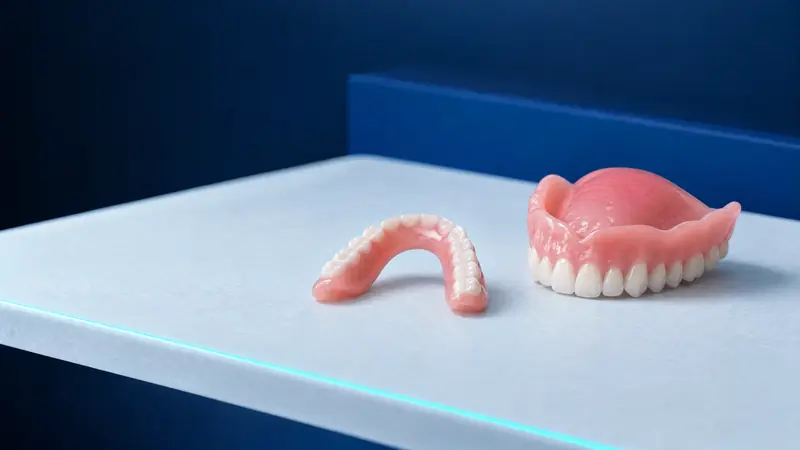
Palateless dentures: does an upper denture need a palate and when can it be avoided?
An upper complete denture usually covers the palate because it provides support and helps retain it. This article explains when a palatal plate can be avoided: with a partial denture supported by natural teeth, an implant denture or a fixed implant bridge, and what you gain and give up.
Read the article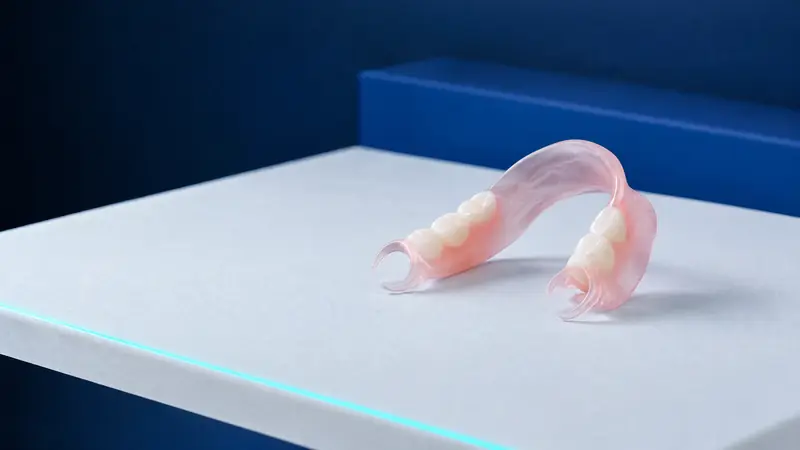
Flexible dentures: nylon, acetal or acron, when they make sense and their drawbacks
A flexible denture, also called a thermoplastic or metal-free denture, is made from injection-moulded resin such as nylon, acetal or acron. This article explains how these materials differ, when such dentures make sense, their limitations for repair and relining, and what research shows.
Read the article
How to choose a dentist: checking registers, questions for your first visit and reading reviews
Choosing a dentist need not depend solely on recommendations and online star ratings. You can check a dentist’s registration and a practice’s entry in public registers within minutes. Find out where to look, what to ask at your first appointment, what your rights are and where to raise concerns.
Read the article
Dental treatment in Poland when travelling from abroad: what fits into one stay and what needs several trips
Dental treatment during a holiday or family visit to Poland can be planned around which procedures fit into one stay and which need healing time between stages. Find out how many appointments and trips are usually needed, what intervals studies and guidelines describe, and how to arrange records, invoices and insurance.
Read the article
Dental clearance before surgery: why oral infections are treated and when to start
Cardiac surgeons, orthopaedic surgeons, transplant specialists and oncologists may ask for a dental clearance certificate before treatment. This article explains why oral infections are treated beforehand, what this involves, how far ahead to plan it, what the certificate usually contains and what the NFZ funds.
Read the article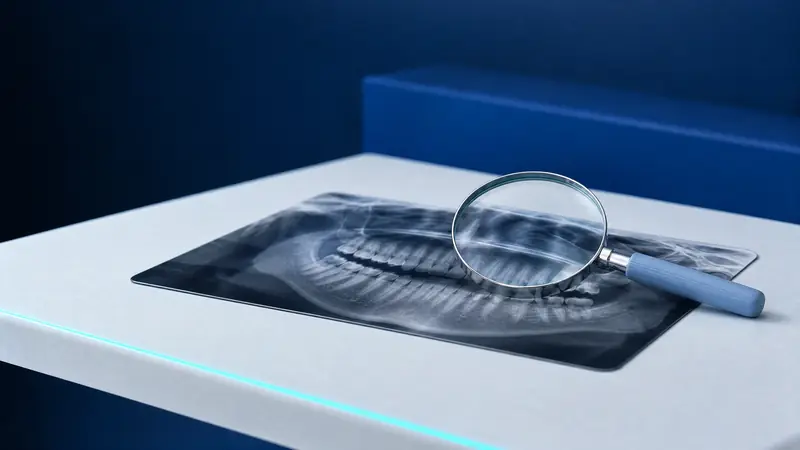
Oral infection foci: what they are, how dentists find them and why doctors ask about your teeth
Oral infection foci are chronic infections that often cause no pain: dead teeth with root lesions, periodontitis or impacted wisdom teeth. Learn why a cardiologist or surgeon asks for them to be excluded, how a dentist looks for them on X-rays and what research says about links between teeth and disease.
Read the article
Crooked teeth: what causes crowding, why teeth shift with age and how they can be straightened
Crooked teeth are most often caused by crowding, when there is not enough room in the arch for all the teeth. We explain its causes, why lower front teeth also become crooked in adults, what problems it can and cannot cause, and ways to straighten crooked teeth, from aligners to tooth extraction.
Read the article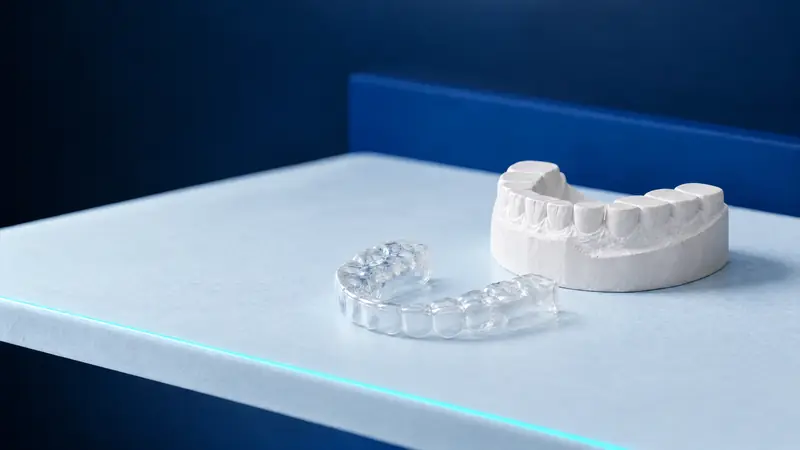
Worn teeth: when tooth wear becomes a problem and how worn teeth are restored
Everyone’s teeth wear down with age, but when they become noticeably shorter, start to chip or hurt, wear becomes a problem that needs a plan. This article explains when worn teeth need treatment, how a dentist assesses the degree of wear, what restoration with composite or ceramics with a raised bite involves and what determines its cost.
Read the article
Lost filling or crown: what to do straight away, how soon to see a dentist and what a repair costs
A lost filling or crown is rarely an emergency, but an exposed tooth decays and breaks more easily. This article explains what to do in the first few hours, how to protect the tooth until your appointment, why fillings and crowns come out, when to seek help the same day, what the NFZ covers and where to find help in Białystok.
Read the article
Denture relining: why dentures slip or rub and when a new one is needed
A denture that starts slipping, rubbing or needing more adhesive has usually not changed: the tissues beneath it have. This article explains relining, the difference between soft and hard liners, safe use of denture adhesive, when repair is enough and how to recognise when a new denture is needed.
Read the article
Before tooth extraction: eating, medicines, what to tell your dentist and when to postpone
Preparing for an extraction takes a few minutes and can prevent a last-minute postponement. This article explains whether to eat beforehand, which medicines not to stop, which conditions and medicines to tell your dentist about, how periods, cold sores and smoking affect plans, and how to organise the day after treatment.
Read the article
Tooth root left in the gum: when it can stay, when it needs removal and what treatment involves
A root may remain in the gum after its tip breaks during extraction, after decay destroys the crown, or deliberately to protect a nerve. This article explains when a root can be monitored, when removal or restoration is needed, and what studies say about leaving wisdom tooth roots in place.
Read the article
Bruxism in children: night-time teeth grinding, parasites and when to see a dentist
Many children grind their teeth in their sleep, and it usually eases on its own, but it can also signal problems with sleep or breathing. This article explains how common childhood bruxism is, what it is associated with, what studies say about parasites and when to take your child to a dentist or doctor.
Read the article
Pain after getting braces and the first few days: eating, cleaning your teeth and minor breakages
The first few days with fixed braces usually mean tender teeth, sore cheeks and learning a new way to eat and clean your teeth. We explain how long pain lasts after fitting braces according to studies, what to eat, how to clean around brackets and what to do if a bracket comes loose or a wire starts poking.
Read the article
Dentist for an autistic child: preparing for visits, familiarisation and toothbrushing at home
An autistic child often needs predictability, time and a calm sensory environment to manage a dental visit. This article explains what to tell the practice, how to use a social story and familiarisation visits, how to brush teeth with sensory sensitivities and when treatment under general anaesthesia is considered.
Read the article
White coating on the tongue: causes, yellow and black coatings, geographic tongue and how to clean your tongue
A white coating on the tongue may be ordinary debris that lessens once you clean your tongue, but it can also be a sign of thrush or of a lesion that needs looking at. This article explains what white, yellow and black coatings mean, what geographic tongue is, how to clean your tongue and when to see a dentist.
Read the article
Oral thrush (oral candidiasis): thrush in babies and adults, thrush under a denture, symptoms and treatment
A white coating in the mouth, a burning feeling or a reddened palate under a denture are common signs of an infection with Candida yeasts. This article explains the forms of oral thrush, who gets it most often, how to tell thrush from milk residue in a baby’s mouth and what to do to stop thrush coming back.
Read the article
Tooth pain under a crown: causes and whether treatment is possible without removing it
A crowned tooth still has living pulp or treated root canals, so it can hurt for the same reasons as other teeth: pulp inflammation, decay at the crown margin, root infection or a crack. Learn how a dentist finds the cause, when treatment is possible through a crown and when it needs removing.
Read the article
Antibiotics for teeth: when dentists prescribe them and when they will not treat pain or an abscess
Antibiotics do not treat toothache or pulpitis; for an abscess, they help only if infection is spreading or causes fever. Learn what ADA and SDCEP guidance and Cochrane reviews say, when antibiotics are given before treatment, what heart conditions and joint replacements mean, and why not to use leftovers.
Read the article
Tooth broken at the gum line: can it be saved, and what happens if only the root remains?
When a tooth breaks at or below the gum line, its future depends on how much healthy tissue can be exposed above the gum and how long the root is. This article explains how a dentist assesses the tooth, what clinical crown lengthening and orthodontic or surgical extrusion involve, and when removing the root is more appropriate.
Read the article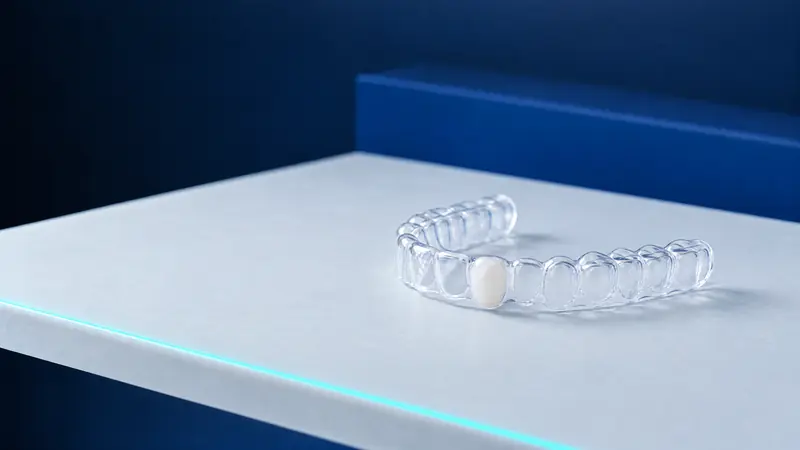
Immediate dentures and other temporary teeth after extraction: what to wear while you heal
An immediate denture is one of several ways to avoid a gap while the gum and bone heal after a tooth is removed, or while you wait for an implant. This article explains the differences between an immediate denture, a clear retainer with a tooth, a temporary bridge and a temporary crown on an immediate implant, how long they are worn and what they cost.
Read the article
Platelet-rich fibrin (PRF) in dentistry: what it is, how it is prepared and what research shows
Platelet-rich fibrin (PRF) is prepared from the patient’s own blood, which is centrifuged before the preparation is placed in a tooth socket or a bone augmentation site. This article explains how it differs from platelet-rich plasma (PRP), how it is prepared and which procedures show benefits in studies and which have mixed results.
Read the article
What age can you have a dental implant? Teenagers, young adults and older people: what determines the timing
A dental implant is placed only after facial bone growth has finished, because earlier placement leaves it behind as neighbouring teeth continue to move with growth. This article explains how the end of growth is assessed, how a teenager’s missing tooth can be replaced until an implant is possible and why there is no upper age limit.
Read the article
Milk tooth injury: what to do when a child has knocked a tooth and it is loose, pushed in or has turned dark
Injuries to milk teeth happen most often between the ages of 2 and 6, and management is often limited to observation and check-ups. You will learn how the 2020 IADT guidelines say a loose, pushed-in, displaced or knocked-out milk tooth should be managed, what a grey or yellow colour means and how long follow-up lasts.
Read the article
Silver treatment of milk teeth (lapisowanie): what it involves, whether it works, why teeth turn black and whether the NFZ covers it
Silver treatment of teeth (lapisowanie) means stopping decay in milk teeth with a silver preparation, without drilling, at the cost of a permanent black stain on the cavity. You will learn how silver nitrate differs from silver diamine fluoride, what studies say about effectiveness, when the method makes sense and when a filling is better, and what the NFZ, Poland’s National Health Fund, covers.
Read the article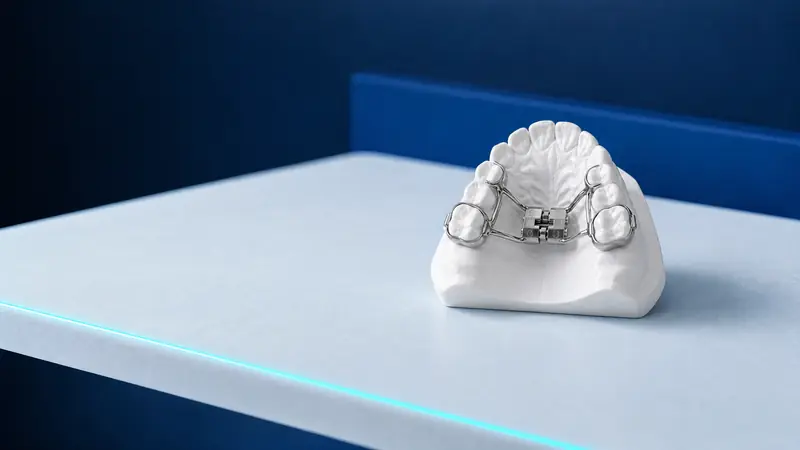
Hyrax expander: how it works, how long it is worn and what to expect
The Hyrax is a fixed expander that widens the upper jaw over a few weeks by separating its two halves at the midpalatal suture. This article explains when it is fitted, the age up to which it works, activation and retention, the gap between the front teeth and the options for adults.
Read the article
Angular cheilitis: cracked mouth corners, causes, treatment, dentures and children
Angular cheilitis causes painful cracks and inflammation at the corners of the mouth. Several factors usually act together: saliva, yeasts or staphylococci, poorly fitting dentures or deficiencies. This article explains the causes, treatment, what to do when dentures are involved or a child is affected, and when to seek medical advice.
Read the article
Tooth devitalisation: what killing the pulp with paste means, whether it is still used and how long paste can stay
Tooth devitalisation means killing the pulp with a paste instead of removing it under anaesthesia. Find out how older arsenic pastes differ from today's paraformaldehyde pastes, why guidelines are moving away from this method, how long paste can stay in a tooth and what to do if you have it now.
Read the article
Broken instrument in a root canal: is it dangerous, and when is it removed or left in place?
A fine file breaking inside a root canal is an uncommon but recognised complication of root canal treatment that can happen in any practice. Find out how often it occurs, what determines the tooth's prognosis, when a fragment is removed, bypassed or left, and what your dentist should tell you.
Read the article
Activated charcoal for teeth, baking soda, lemon and oil pulling: do home teeth whitening remedies work?
Activated charcoal, baking soda, lemon, oil pulling and strips from the chemist promise white teeth without a visit to the dentist. This article explains what reviews of studies say about them, which of these methods wear away or dissolve enamel, what may be sold in the EU without a dentist and what actually removes discolouration.
Read the article
White diet after teeth whitening: what to eat, how long it lasts and whether coffee really spoils the result
The white diet after teeth whitening is the advice to avoid coffee, tea, red wine and other colourings for a while. This article explains where it came from, what laboratory and clinical studies have shown, how long it usually lasts, what to eat and drink, what is known about smoking and sensitivity, and how to make the whitening result last longer.
Read the article
Salivary gland inflammation (sialadenitis): symptoms, salivary stones, treatment and when swelling needs urgent help
A swollen salivary gland is most often caused by a bacterial infection, a viral illness such as mumps, or a stone that blocks the flow of saliva. This article explains how to tell these causes apart, what helps at home, how a stone is removed from a salivary duct and which symptoms need urgent help.
Read the article
Oral leukoplakia and oral lichen planus: a white patch in the mouth, symptoms, risk and treatment
A white patch in the mouth is most often harmless, but leukoplakia and lichen planus are among the conditions a dentist monitors for years. This article explains how to recognise them, how they differ from thrush and from marks left by cheek biting, how often they turn into cancer according to the latest reviews and how they are treated.
Read the article
Lump inside the lip, on the cheek or on the palate: mucocele, fibroma, papilloma and other lesions
Most lumps in the mouth are benign: a mucous cyst after biting the lip, a fibroma caused by irritation, a papilloma or bony growths on the palate. This article explains what they look like, which go away by themselves, how they are removed and which features of a lump are a reason for an urgent appointment.
Read the article
Herpetic gingivostomatitis in children: symptoms, how long it lasts, how to help and when to see a doctor
A high fever, swollen gums and painful blisters in a young child’s mouth are the typical picture of a first infection with the herpes virus. This article explains how long the illness lasts, how to help your child drink, how to spot dehydration, how it differs from mouth ulcers and from hand, foot and mouth disease, and what it means for a dental visit.
Read the article
How to brush a child’s teeth: from when, how much toothpaste, in what position and what to do when a child refuses to brush
Brushing a child’s teeth starts with the first tooth, and a parent usually brushes them up to the age of 7 or 8 and then supervises. You will learn how much fluoride toothpaste to use at each age, in what position to brush a small child’s teeth, what to do when a child refuses, when to start flossing and what studies say about electric toothbrushes.
Read the article
Missing permanent teeth: hypodontia, retained baby teeth, extra teeth and treatment options
A missing permanent tooth germ is one of the most common developmental dental anomalies and usually affects one or two teeth. This article explains which teeth are most often missing, how long a retained baby tooth can last, the treatment options and what an extra, or supernumerary, tooth means.
Read the article
Burning tongue: causes, burning mouth syndrome, stress, menopause and tests
A burning tongue may have an identifiable cause, such as oral thrush, vitamin B12 or iron deficiency, diabetes or dry mouth. When no cause can be found, a clinician diagnoses burning mouth syndrome. This article explains what a dentist checks, which tests a doctor requests and what research says about treatment.
Read the article
Metallic taste in the mouth: causes, medicines, pregnancy, fillings and when to seek help
A metallic taste in the mouth can be caused by gum disease, an infection, medicine or early pregnancy, as well as kidney disease or deficiencies. This article explains how to distinguish these causes, what is known about fillings and galvanic currents, why a bitter taste occurs and when to see a dentist or doctor about altered taste.
Read the article
Mouth breathing in children: causes, snoring, tonsils, the bite and who to see
A child who sleeps with their mouth open and snores often has a blocked nose or enlarged tonsils, rather than simply a bad habit. This article explains what causes mouth breathing, what studies say about its effects on the bite and face, when snoring needs more prompt assessment and which specialist deals with each problem.
Read the article
Speech problems and the bite: lisps, open bite, speech therapy, orthodontics and speaking with braces
Lisps and other speech problems can be associated with the bite, but a bite problem does not determine how a child speaks. This article explains which bite problems are most often linked to speech errors, how interdental and lateral lisps differ, when to see a speech and language therapist or orthodontist, and how appliances change speech.
Read the article
School dentist: pupils’ dental care, parental consent, mobile dental clinics and fissure sealing
Since 2019, every pupil has been entitled to care from a dentist linked to their school, in a school surgery, an external practice or a mobile dental clinic. This article explains exactly what school dentists do, when written parental consent is needed, how to object and how to check who looks after pupils’ teeth in Białystok.
Read the article
Tooth extraction for braces: when it is recommended, which teeth are removed and the alternatives
Removing healthy teeth before braces raises concerns about facial profile, the jaw joints and the stability of the result. We explain when orthodontists recommend extraction, why first premolars are most often removed, what research says about effects on the face and joints, and when non-extraction treatment is enough.
Read the article
Mewing: does it work, what does research say about tongue posture and what really changes the jaw?
Mewing, deliberately pressing the tongue against the palate, is claimed in popular videos to define the jawline and improve the bite. This article explains its origins, what research says, whether it can cause harm and what actually changes jaw shape in children and adults.
Read the article
Dental care for someone with dementia: pain signs, consent, hygiene, dentures and general anaesthesia
As dementia progresses, people find it harder to describe pain and tolerate treatment, so early dental care matters. This article explains how behaviour can signal toothache, who consents to treatment, how to help with toothbrushing and dentures, and when general anaesthesia is considered.
Read the article
How to brush a bedbound person’s teeth: oral care step by step, dentures, dry mouth and pneumonia
Someone confined to bed often cannot brush their own teeth, and neglected oral health contributes to pain and thrush and may be linked to pneumonia. This article explains step by step how to clean the teeth and dentures of someone in bed, what to use, how to relieve dry mouth and which changes to report to a dentist or doctor.
Read the article
Student NFZ insurance and dental care in Białystok: under 26, over 26 and international students
Students can receive free NFZ dental care if insured: usually through a parent until age 26, then through their university, while non-EU students can take out an NFZ agreement. Find out how to check your insurance, what international students pay, what an EHIC covers and what to bring to the dentist.
Read the article
Bisphosphonates and tooth extraction: osteoporosis drugs, denosumab and the risk of osteonecrosis of the jaw
Osteoporosis drugs rarely get in the way of dental treatment, but your dentist needs to know about them. This article explains what medication-related osteonecrosis of the jaw (MRONJ) is, how high the risk is with osteoporosis and with cancer, and how an extraction and an implant are planned.
Read the article
High blood pressure and dental anaesthetic: adrenaline, treatment after a heart attack, pacemakers and other heart conditions
High blood pressure and heart disease rarely rule out a dental anaesthetic or treatment, but they change how both are planned. This article explains whether an anaesthetic with adrenaline is safe, at what blood pressure a procedure is postponed, when teeth can be treated after a heart attack and whether dental equipment interferes with a pacemaker.
Read the article
Chemotherapy, radiotherapy and your teeth: dental care before, during and after cancer treatment
Cancer treatment changes the mouth: chemotherapy affects the lining of the mouth and immunity, and head and neck radiotherapy affects saliva and the jaw bones. This article explains what to have done at the dentist before treatment, how to look after your mouth during it and what to watch out for after radiotherapy.
Read the article
Asthma and teeth: inhaled steroids, tooth decay, oral thrush and rinsing after an inhaler
Asthma and inhaled medicines are associated with a slightly higher risk of tooth decay, gum inflammation and oral thrush. This article explains what reviews of studies show, how to rinse after using an inhaler, what a spacer does and what to tell your dentist before anaesthesia or sedation.
Read the article
Dental treatment before pregnancy: what to do when planning a baby or IVF
A dental visit before pregnancy allows decay and gum inflammation to be treated before hormonal changes make problems worse. This article explains what to arrange before conception or IVF, what is known about periodontitis and fertility, and whether dental X-rays or anaesthesia affect trying for a baby.
Read the article
Can you deduct dental treatment from tax? Rehabilitation relief, implants, dentures and invoices
Polish personal income tax has no relief for dental treatment. Rehabilitation relief is limited to people with certified disabilities and a closed list of expenses. We explain when tax authorities have accepted implants or dentures, what a dental invoice must show, how VAT exemption works and why dental treatment is not a business expense.
Read the article
Dental records and patient rights in Poland: copies, consent, complaints and filling guarantees
You have a right to information, consent, confidentiality and medical records, and the first copy of your records is free. We explain how to obtain dental records and X-rays, what further copies cost, when written consent is required, whether fillings have a guarantee and where to complain.
Read the article
Can a 16-year-old go to the dentist alone? Parental consent, grandparents and emergencies in Poland
Teenagers can attend the dentist alone, but until 18 they need parental consent for treatment, and from 16 their own consent is required too. We explain the law, how parents can consent remotely, when a grandparent’s consent is enough and what happens in an emergency.
Read the article
Can you catch an infection at the dentist? Instrument sterilisation, hepatitis, HIV and the actual risk
Infections in dental practices are rare, and reported cases have involved failures in procedures. We explain how instruments are sterilised, what is single-use, how dental unit water is monitored, when hepatitis B vaccination is worth considering and what you can ask at the practice.
Read the article
Can you go to the dentist with a cold? Fever, cold sores, food, medicines and alcohol before your visit
A cold, fever or cold sore does not always mean rescheduling, but discuss a routine appointment with the practice first. We explain when to attend or postpone, whether to eat and brush your teeth beforehand, which medicines to list and why alcohol and pregnancy matter.
Read the article
Sonic or rotating toothbrush: how they differ, what the research shows and how to choose an electric toothbrush
Electric toothbrushes fall mainly into two groups: oscillating-rotating, usually just called rotating, and sonic. This article explains how each type works, what reviews of studies comparing them with each other and with a manual toothbrush show, whether an electric toothbrush harms the gums and how often to replace the brush head.
Read the article
Water flosser: is it worth buying, can it replace floss and how to use one with braces and implants
A water flosser rinses the spaces between the teeth with a jet of water, but its effect is less well documented than that of interdental brushes. This article explains what reviews of studies show, who might find a water flosser useful, how to use it and how to look after the device itself.
Read the article
Mouthwash: do you need it, which one to choose and how long to use chlorhexidine
Mouthwash will not replace a toothbrush and fluoride toothpaste, but in certain situations it can be a useful addition. This article explains how mouthwashes with fluoride, chlorhexidine, essential oils and cetylpyridinium chloride differ, when to use them and what is known about alcohol in mouthwash.
Read the article
Which toothpaste to choose: how to read the label, how many ppm of fluoride, hydroxyapatite toothpaste and whitening toothpastes
There are dozens of toothpastes on the shelf, but protection against tooth decay depends above all on one piece of information on the label: the fluoride concentration. This article explains how to read the ingredients, which ones have a proven effect on sensitivity and gum inflammation, what is known about hydroxyapatite and whether whitening toothpaste is harmful.
Read the article
What is bad for your teeth: sugar, acidic drinks and snacking, and what in your diet helps keep teeth healthy
Teeth are harmed above all by sugar eaten often and between meals, and by acidic drinks sipped throughout the day. This article explains what the WHO guidelines say about sugar, which drinks damage enamel, whether xylitol and sugar-free gum help, and what to eat so that your diet supports healthy teeth.
Read the article
Tooth numbering: reading numbers 11 to 85, tooth 6 and how many teeth we have
Tooth numbering identifies each tooth on an X-ray, in a treatment plan and in records with a single two-digit code. Learn how the FDI system works, which teeth are numbered 6, 36 or 75, how many teeth children and adults have, how many roots they have and how a tooth is built.
Read the article
When can you eat after a filling, root canal treatment, extraction or teeth cleaning? A procedure table
After most dental procedures you can eat the same day, but when and what you eat depends on the material, the anaesthetic and any wound. Learn when you can eat and drink coffee after a filling, root canal treatment, crown, extraction, implant, cleaning, fluoride varnish or whitening, and when to avoid alcohol.
Read the article
Flying after tooth extraction, root canal treatment and implants: how long to wait, and what about diving?
Pressure changes in aircraft and underwater can cause tooth pain, known as barodontalgia, while a recent surgical site faces more difficult healing conditions. Learn how long to wait before flying or diving after a filling, extraction, root canal treatment, implant or sinus lift, and how to plan your trip.
Read the article
Mouthguards and other ways to protect teeth in sport: injuries, sports drinks and dry mouth
A mouthguard protects against injury in contact sports, but sport also affects teeth through drinks, gels and dry mouth. Learn what studies say about mouthguards, how custom-made and boil-and-bite guards differ, how isotonic drinks affect enamel and what to do after a dental injury.
Read the article
Tongue piercings and teeth: cracks, gum recession, infections and what to do if you already have one
A tongue or lip piercing is more than a question of appearance: longer wear is associated with more chipped teeth and receding gums. Learn what research reviews show, how tongue and lip piercings differ, when swelling after piercing is dangerous and how to reduce the risks.
Read the article
