Why do teeth wear down?
Teeth wear down because throughout life they are exposed to acids, to contact between the teeth during chewing and clenching, and to the toothbrush and toothpaste. The UK guidance Delivering better oral health (DBOH, updated in 2025) stresses that tooth wear usually has several causes at once and is a natural part of ageing, and that in most people it does not progress quickly.
The individual types of wear, namely erosion, attrition, abrasion and abfraction, are described in a separate article on enamel erosion, and teeth grinding and clenching in the article on bruxism. This article deals with the situation in which the teeth are already clearly worn and a decision has to be made whether to monitor them or restore them.
Wear is common, but severe wear is rare. DBOH cites a 2009 survey of dentate adults in England, Wales and Northern Ireland: 77% of those examined had some tooth wear, 15% moderate wear and 2% severe wear.
When are worn teeth a problem, and when is it natural wear?
Worn teeth are a problem when the wear has exposed the dentine and is accompanied by symptoms, or is progressing quickly. This is how the revised Tooth Wear Evaluation System, TWES 2.0 (Wetselaar et al., 2020), defines it, adopting the criteria of the European consensus: wear is pathological when it is at least moderate, with exposed dentine, and at least one of the signs on the list is present.
Flattened cusps alone in an older person, without pain and without change over time, are usually physiological wear. The same changes in a 30-year-old, or teeth quickly becoming shorter between check-ups, call for a search for the cause.
- Sensitivity or pain in the teeth.
- Difficulty biting and eating.
- A worsening appearance of the teeth, for example shorter or chipped edges of the incisors.
- Rapid progression of wear during the monitoring period.
- Wear that is unusual for the patient’s age.
- Crumbling of teeth and fillings that threatens their integrity.
- Loss of bite height, when the surfaces on which the teeth meet are worn.
How does a dentist assess the degree of tooth wear?
A dentist assesses worn teeth on a scale that measures how much of the height of the tooth crown has been lost. In the TWES 2.0 system, on the chewing surfaces and incisal edges, grade 0 means no visible wear, 1 wear confined to the enamel, 2 exposed dentine and loss of at most 1/3 of the crown height, 3 loss of more than 1/3 but less than 2/3, and 4 loss of at least 2/3.
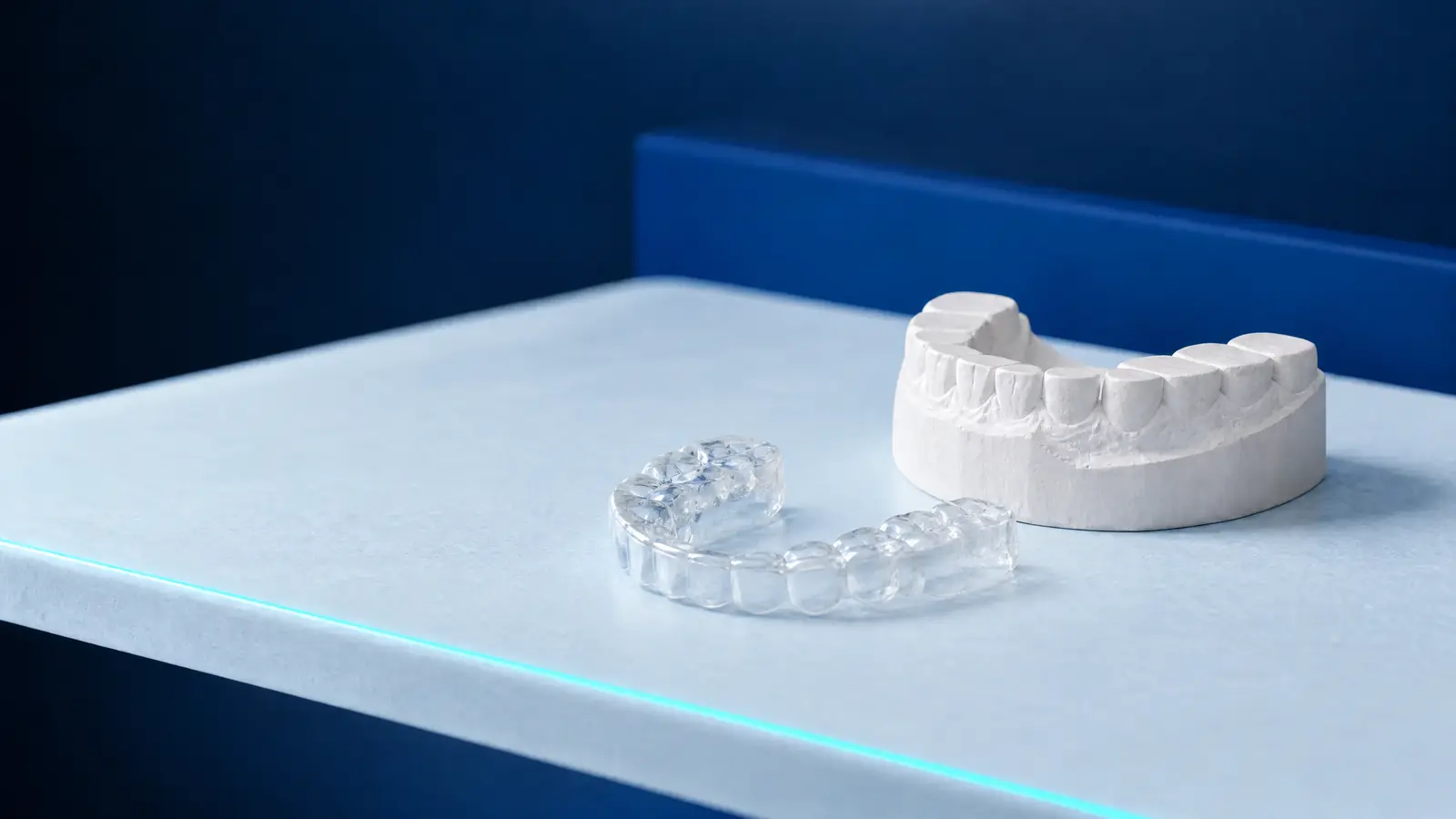
For acid wear, the BEWE index is also used, which is described in the article on enamel erosion. Both systems serve the same purpose, comparing the state of the teeth over time, which is why at the first assessment the dentist usually records the teeth with photographs or models. The table is a rough overview of options, not a scheme for deciding on restoration; treatment also depends on symptoms, the rate of change and the patient’s needs.
| Degree of wear (TWES 2.0) | What can be seen | Possible approach |
|---|---|---|
| 0 to 1: within the enamel | No changes or flattened cusps, enamel preserved | Prevention, finding the cause, check-ups |
| 2: exposed dentine | Dentine visible, crown shorter by at most 1/3 | Monitoring with photographs or scans; restoration if there are symptoms |
| 3: loss of more than 1/3 but less than 2/3 of the crown | Clearly shorter, flat teeth, often sensitivity | Full assessment; restoration if symptoms or progressing wear support it |
| 4: loss of at least 2/3 of the crown | Very short teeth, crumbling edges and fillings | Individual plan; the dentist decides on the extent of restoration and any need to raise the bite |
What are the risks of untreated tooth wear?
The main risks of untreated tooth wear are sensitivity, crumbling of the edges of teeth and fillings, difficulty biting and a change in the appearance of the smile. DBOH notes that sensitivity can appear even with slight wear, especially at the necks of the teeth, and that in itself it does not prove the condition is progressing.
Among teeth that are already cracked, signs of wear may be linked to more frequent symptoms. In a US study by the National Dental PBRN practice network, covering 2,975 teeth with a visible crack, symptoms were more common in teeth with wear extending through the enamel (odds ratio 1.22) and in the teeth of people who clench or grind their teeth (1.30). The study did not measure the risk of a new crack forming; the symptoms of a cracked tooth are described in a separate article.
The longer wear continues, the less tissue remains to which a restoration can be bonded. The 2017 European consensus (Loomans et al.) recommends monitoring to clarify the cause, nature and rate of wear, and the TWES 2.0 system is meant to help identify situations in which restoration may be indicated at an earlier stage.
How are worn teeth restored?
Restoring worn teeth means bringing back the lost height and shape with composite or ceramics, but only once the cause of the wear has been established. The consensus by Loomans et al. (2017) recommends diagnosis, prevention, a conversation about habits and monitoring first, and, when restoration is needed and the patient agrees to it, the least invasive approach possible, based on materials bonded to the tooth.
The cause is treated at the same time: reflux or frequent vomiting is diagnosed by a doctor, an acidic diet calls for a change of habits, and with bruxism the dentist assesses the need for a splint. Without this, even a well-made restoration wears out quickly.
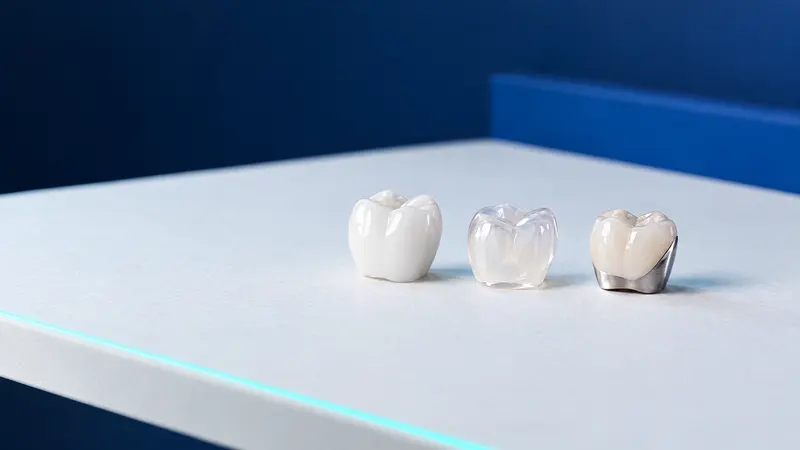
Composite is applied directly in the mouth, in layers or with an injection technique (flow injection); ceramics or composite can also be made in the laboratory as onlays and veneers, and for very damaged teeth as crowns. A 2025 systematic review (Alani et al., 43 studies) found fewer failures with indirect restorations, but noted that they can be more invasive and require more work, while direct composite fails more often but is a minimally invasive method.
A second 2025 review (Chantler et al., 14 publications) came to a similar result: lithium disilicate ceramics had the fewest failures, about 1.8%, and the authors regarded direct composite as a medium-term solution. The dentist chooses the material according to the degree of wear, the bite, habits and the patient’s expectations.
What does raising the bite involve with worn teeth?
Raising the bite means increasing the distance between the jaws by adding material to the teeth, which creates space for restoration without grinding down healthy tissue. A systematic review by Abduo (2012) found that a permanent increase in the vertical dimension, when indicated, is a safe and predictable procedure, and that any symptoms that occur are temporary.
With worn front teeth, the so-called Dahl concept is often used: only the front teeth are restored, at a slightly greater height, and for several months the back teeth do not meet, until they move towards each other by themselves. In the study by Poyser et al. (2007), composite restorations raised the bite by 0.5 to 5 mm, and contact between the back teeth returned after an average of 6.2 months (range 3 to 13) in 14 of 15 patients.
A meta-analysis by Aziz and Locke (2024) reports that contact between the back teeth returned in 85% of cases with this method, and survival of the front composite restorations was 88% over follow-up periods of 2 to 10 years. Before such treatment, the dentist usually checks the new shape and height of the teeth on a model and in the mouth, for example as a trial overlay (mock-up).
Does a splint protect worn teeth?
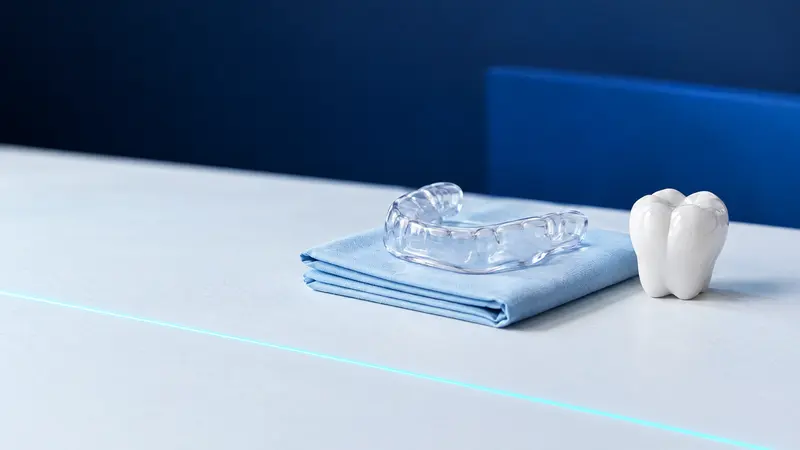
A splint worn at night may protect teeth and restorations from further wear in bruxism, but the evidence for this is weak. A Cochrane review (Macedo et al., 2007) found insufficient evidence that a splint is effective in treating sleep bruxism, while noting that it may bring some benefit with regard to tooth wear.
A more recent review by the UK’s NIHR from 2020 (Riley et al., 52 studies) found that there was not enough evidence to judge whether splints reduce tooth wear in people with bruxism, because none of the included studies measured wear. The dentist decides on a splint individually, especially after extensive restoration; details are given in the article on bruxism.
How much does restoring worn teeth cost?
The cost of restoring worn teeth depends on the number of teeth, the method (composite in the mouth or laboratory work), whether the bite needs raising, the trial overlay and models, and whether a splint is needed after treatment. For a single worn front tooth it means one restoration; for wear across the whole dentition, a plan covering many teeth and several visits.
In the clinic’s price list, “Bonding 1 zęba” (bonding, one tooth) costs 1 000 zł, “odbudowa zęba metodą flow injection” (tooth restoration with the flow injection technique) 800 zł, “Inlay/Onlay/Overlay dwukrzemian litu” (lithium disilicate inlay, onlay or overlay) 1 900 zł, “Korona pełnocyrkonowa” (full zirconia crown) 3 000 zł, “Mock up góra + dół” (mock-up, upper and lower) 1 800 zł and “Szyna relaksacyjna twarda” (hard relaxation splint) 1 250 zł. The final scope and cost are set by the dentist at a consultation, and prices may change.
The NFZ, Poland’s National Health Fund, does not fund onlays or crowns for adults, and light-cured composite is available to adults only with a moderate or severe degree of disability, when medically indicated. The basket of services includes fillings made of glass ionomer cements and, in the teeth from canine to canine, also of chemically cured composite (legal status as of 24 October 2026).
How it works at DentalBlue
At DentalBlue in Białystok, worn teeth are assessed by the dentist during an examination, and the causes of the wear are looked for in a conversation about diet, habits and symptoms. Panoramic and intraoral X-rays are taken in the clinic’s own radiology unit. A “Wizyta bez bólu” (visit without pain, 300 zł) includes a panoramic X-ray, a consultation, an examination and a written treatment plan. The clinic provides conservative and aesthetic dentistry and prosthodontics, so composite restoration, onlays, crowns and a splint are planned in one place. The clinic is open Monday to Friday from 8:00 to 20:00 and on Saturdays from 8:00 to 16:00.
Frequently asked questions
Can worn teeth be lengthened?
Yes. The missing height is rebuilt with composite applied in the mouth or with onlays and veneers made in the laboratory. In the study by Poyser et al. (2007), composite restorations of front teeth raised the bite by 0.5 to 5 mm, and after 2.5 years 6% of them had failed completely.
Can tooth wear be stopped?
It can often be slowed, but the body will not rebuild lost enamel. DBOH notes that once tooth tissue has been lost, the wear is irreversible. Limiting acids between meals, fluoride toothpaste, gentle brushing and treating bruxism all help, and the dentist assesses the rate of wear at later check-ups.
Does raising the bite hurt?
Raising the bite should not hurt, but for the first days or weeks the bite may feel strange and the chewing muscles may tire. The review by Abduo (2012) described such symptoms as temporary. With the Dahl concept, the back teeth do not meet for several months before they move together by themselves.
Are crumbling teeth always a sign of wear?
No. Teeth and fillings also crumble because of decay, cracks and large old fillings. Crumbling of tooth tissue and restorations is, however, one of the signs that lead the TWES 2.0 system to class wear as pathological, which is why it is worth showing it to a dentist.
How long does composite restoration of worn teeth last?
In the meta-analysis by Aziz and Locke (2024), survival of front composite restorations in tooth wear was 88% over follow-up periods of 2 to 10 years. The authors regarded them as a short to medium-term solution that over time needs check-ups, repairs or replacement.
Sources
- Journal of Adhesive Dentistry: Loomans B et al., European consensus on severe tooth wear (2017)
- Journal of Oral Rehabilitation: Wetselaar P et al., Tooth Wear Evaluation System TWES 2.0 (2020)
- OHID: Delivering better oral health, chapter 7, tooth wear (2021, updated 2025)
- Journal of Dentistry: Alani A et al., restorations for moderate and severe tooth wear, a review (2025)
- Journal of Esthetic and Restorative Dentistry: Chantler JGM et al., direct and indirect restorations of the worn dentition (2025)
- Quintessence International: Abduo J, safety of increasing the occlusal vertical dimension (2012)
- Journal of Oral Rehabilitation: Poyser NJ et al., composite restorations of worn front teeth (2007)
- Health Technology Assessment: Riley P et al., splints and other treatments for bruxism (2020)
An informational article. It does not replace a consultation, and treatment decisions are made during a visit.