How do clear aligners work?
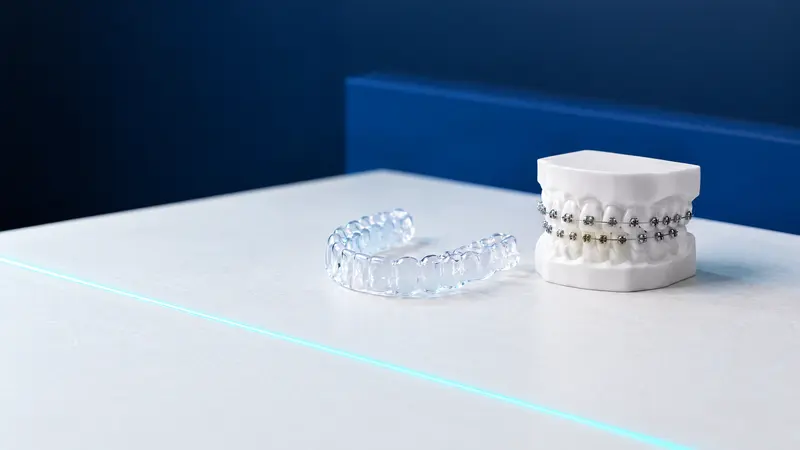
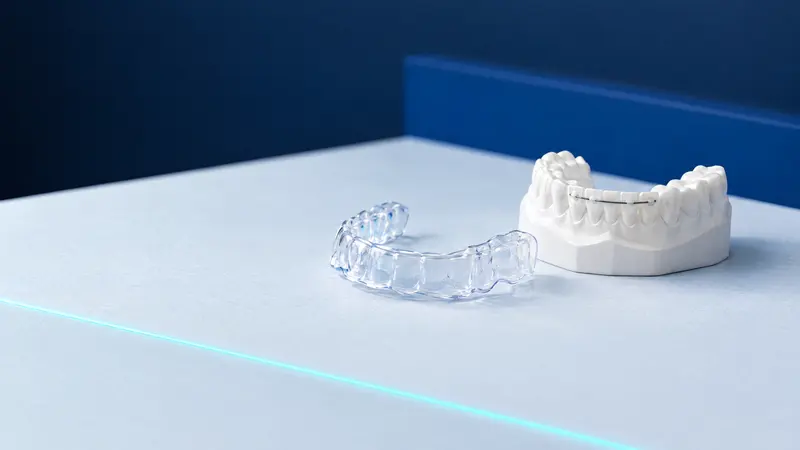
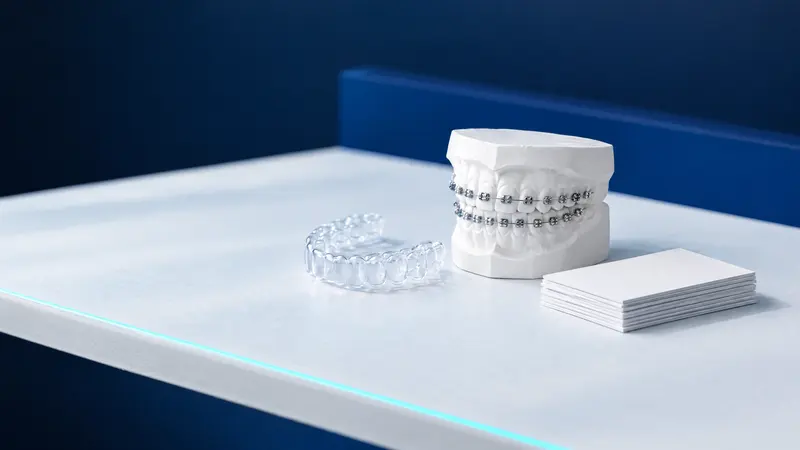
Clear aligners are a series of transparent plastic trays, each with the teeth positioned slightly differently from the previous one. When fitted, the tray applies gentle, constant pressure to the teeth, and the bone around the roots remodels as the tooth moves, just as with fixed braces.
The American Association of Orthodontists (AAO) describes teeth-straightening aligners as almost invisible trays that move teeth a fraction of a millimetre at a time. In a randomised trial published in 2026 (Brown et al.), the standard protocol involved changing the tray every 7 days and movement of 0.25 mm or 2 degrees per aligner.
The entire path of the teeth is planned in advance using computer software, so the number of trays in the plan is known before treatment starts. The plan is a prediction, however: teeth do not always keep up with the simulation, and a refinement may then be needed, involving new scans and an additional series of aligners.
What does aligner treatment involve, step by step?
Clear aligner treatment begins with diagnostic assessment and ends with retention, which means maintaining the result. For most of the treatment, patients change their own trays at home and attend check-ups as agreed with the orthodontist. The table shows the stages in their usual order.
Not every plan includes every stage. Enamel reduction and refinements are needed only in some cases, while the number of trays and appointments depends on the problem, assessed by the orthodontist through an examination, X-rays and scans of the teeth.
| Stage | What happens | When and how often |
|---|---|---|
| Consultation and diagnostic assessment | Examination, X-rays including cephalometry, scans of the teeth | Before deciding on treatment |
| Digital plan and visualisation | Simulation of successive tooth movements and the number of trays | Before ordering the aligners |
| First aligners | Bonding attachments, instructions on wear and cleaning | First treatment appointment |
| Enamel reduction (IPR) | Removing a thin layer of enamel between selected teeth | Only if included in the plan |
| Changing trays | Each successive aligner moves the teeth another step | Usually weekly, according to the AAO |
| Check-ups | Checking whether the teeth are keeping up with the plan | Regularly, as agreed with the orthodontist |
| Refinement | New scans and an additional series of aligners | If the teeth have not reached the planned position |
| Retention | Fixed or removable retainer | From the end of treatment, over the long term |
What are attachments, and why is enamel removed between teeth?
Attachments are small bumps of composite material bonded to selected teeth to give the aligner something to grip. A systematic review of 26 papers (Jedliński et al., 2023) found that attachments significantly improve the achievement of planned movements and the retention of the aligner on the teeth.
According to the same review, particular positions on teeth and attachment shapes can be identified that provide better support for specific movements. The digital plan therefore determines which teeth receive them, rather than a fixed formula.
Interproximal enamel reduction (IPR, also known as stripping) involves removing a thin layer of enamel where neighbouring teeth meet, creating room to align them. A review of 8 clinical studies (Gómez-Aguirre et al., 2022) found no demineralisation, increase in cavities, gum changes or sensitivity after this procedure, although the quality of the evidence was rated as low or very low.
How many hours a day do you need to wear clear aligners?
Clear aligners are worn for at least 22 hours a day, with each tray usually worn for a week, according to the AAO. A tray sitting in its case does not move teeth, so the patient plays a large part in determining the result of treatment.
Keeping to this routine is not easy. In a retrospective study of 2 644 adults (Timm et al., 2021), full adherence, which included wearing aligners for at least 22 hours a day, was recorded in 36% of patients, and poor adherence in 25.7%. The authors were affiliated with an aligner supplier, which should be considered when assessing the findings.
The length of time each tray is worn matters too. In the 2026 study cited above, changing aligners every 3 days with a smaller movement per tray did not improve accuracy, but required more refinements and appointments. The authors considered wear time crucial to treatment effectiveness.
How do you eat, drink and look after your teeth during aligner treatment?
With aligners, you can eat without the restrictions associated with fixed braces, but always after taking them out. The AAO recommends removing aligners for eating and drinking, and for brushing and flossing your teeth.
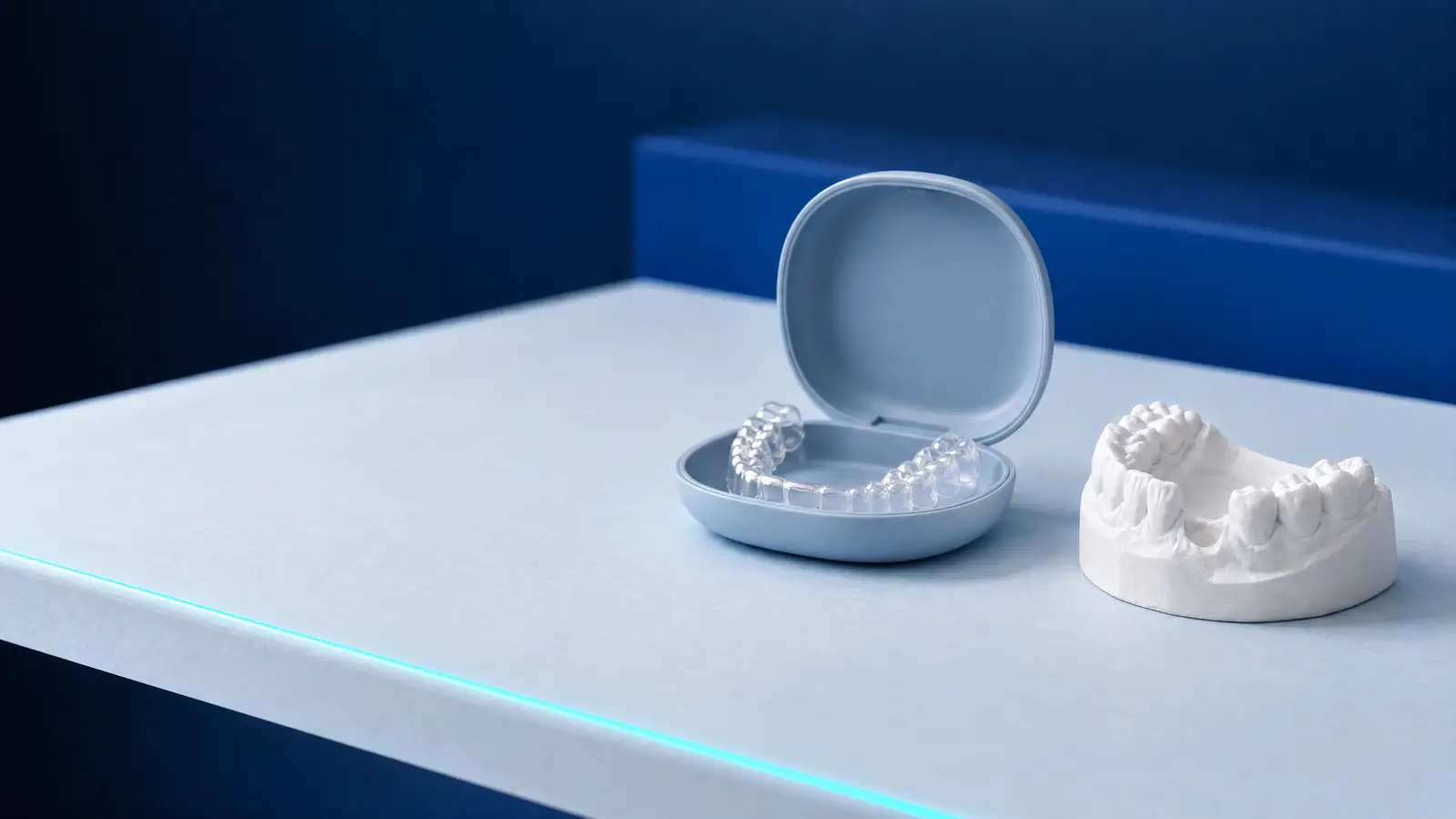
Before putting the trays back in, it is worth brushing your teeth to avoid trapping food beneath them. Clean the trays as instructed by your orthodontist and keep them in their case whenever they are out of your mouth so they do not get lost.
A review of 18 systematic reviews (Yassir et al., 2022) found better gum health during aligner treatment than with fixed braces, and aligners were rated as more comfortable and less disruptive to eating and chewing. Regular dental check-ups and professional cleaning are still needed.
Are clear aligners suitable for teenagers?
Clear aligners are also used in teenagers, but the evidence for this group is weaker than for adults. A systematic review of 32 papers (D'Antò et al., 2025) confirmed that aligners change tooth positions in growing patients, while their effect on the jaw bones was inconclusive.
The same review found no evidence that aligners with a mandibular advancement feature correct skeletal Class II malocclusion as well as conventional functional appliances. In short-term follow-up, however, gum health and bacterial levels were better controlled than with fixed braces.
For teenagers, treatment success also depends on whether they will wear the trays for most of the day and night, including at school. It is worth discussing this openly at the consultation before choosing a method.
In the standard children’s orthodontic package of the NFZ, Poland’s National Health Fund, treatment with removable appliances is funded for children up to their 12th birthday, while fixed braces are explicitly excluded (legal status as of 24 October 2026). The Podlaskie regional branch of the NFZ lists 18 locations providing orthodontic services for children and young people in the region (as of 24 October 2026). After the 12th birthday, retention check-ups and repairs of an appliance made under the NFZ may still be available up to the 13th birthday. Separate rules apply to patients qualified for the orthodontic care programme for children with congenital craniofacial defects.
When are clear aligners not enough?
Clear aligners work best for mild and moderate problems, and produce poorer results than fixed braces in severe cases. This is the conclusion of the review by Yassir et al. (2022), which also found a greater tendency to relapse after aligner treatment.
The AAO notes that aligners are not suitable for everyone, and that fixed braces treat some problems more predictably. A 2025 review of 15 studies (Alhafi et al.) found no difference in treatment quality in non-extraction cases, but fixed braces gave better results in cases involving extractions.
A separate article on aligners and fixed braces compares the two methods point by point. Fixed braces may be the more sensible choice in the situations listed below.
- Severe malocclusions, for which reviews of studies describe poorer results with aligners.
- Treatment involving tooth extractions, where the extraction spaces need to be closed.
- Markedly protruding upper incisors, which the British Orthodontic Society (BOS) considers less suitable for correction with aligners.
- Patients who know they will not wear the trays for most of the day and night.
How much do clear aligners cost, and what makes up the price?
The cost of clear aligner treatment depends mainly on the number of trays in the plan, with diagnostic assessment, visualisation, check-ups, any refinements and retention added to this. The price of a single aligner therefore does not tell you how much the whole treatment costs.
In the clinic’s price list, “Clean aligner- szyna” (aligner tray) costs 900 zł per aligner, “Wizualizacja CA” (CA visualisation) and “Wizualizacja CA Digital” (CA Digital visualisation) cost 350 zł each, “Model drukowany” (printed model) 150 zł, “Model diagnostyczny” (diagnostic model) 260 zł, and a check-up in the Clear Aligner category 200 zł. An orthodontic consultation costs 300 zł, diagnostic scans 300 zł, and a retainer after aligner treatment 500 zł.
The final scope and cost of treatment are agreed at the consultation, and prices may change. The article on the cost of braces breaks down orthodontic treatment costs by stage.
How aligner treatment works at DentalBlue
At DentalBlue in Białystok, orthodontics includes Clear Aligner trays and fixed braces, with a digital treatment plan based on cephalometric analysis. Cephalometric X-rays, panoramic X-rays and, when indicated, CBCT scans are taken in the clinic’s own radiology unit.
Treatment begins with an orthodontic consultation and diagnostic assessment, after which the final scope and cost are agreed. A consultation can be booked by phone.
Frequently asked questions
Do teeth hurt after putting in a new aligner?
Teeth can feel tender after switching to the next tray because they are beginning to move. A meta-analysis of 12 studies (Li et al., 2023) found less pain with aligners than with fixed braces on days 3 and 4 of treatment, but similar pain at the other measurement points. Increasing pain or rubbing against the gum is a reason to contact your orthodontist.
What should I do if an aligner breaks or gets lost?
Contact the practice and, until your orthodontist decides what to do, wear the previous aligner if you have it. This is the advice in recommendations published in 2020 in “Progress in Orthodontics”. Do not move on to the next tray on your own, as your teeth may not be ready for it.
How long does clear aligner treatment take?
The duration of aligner treatment depends on the problem and the number of trays in the plan, so there is no single number of months that applies to everyone. The review by Yassir et al. (2022) suggests treatment may be shorter with aligners than with fixed braces for mild and moderate problems, although studies disagree on this. The expected duration is given in the plan after diagnostic assessment.
Do you need to wear a retainer after aligner treatment?
Yes. A 2016 Cochrane review concludes that almost everyone needs some form of retention after orthodontic treatment, and the review by Yassir et al. (2022) found a greater tendency to relapse after aligners than after fixed braces. The orthodontist decides on the type of retainer and how it should be worn.
Where can I find an NFZ orthodontist for a child in Białystok?
Providers with an NFZ contract for orthodontics for children and young people can be found through the NFZ search tool “Gdzie się leczyć” (where to get treatment). The Podlaskie regional branch advises selecting a district or town, such as Białystok. In the standard children’s orthodontic package, the NFZ funds removable appliances up to a child’s 12th birthday, while fixed braces are excluded from it.
Sources
- AAO: Clear Aligners (2026)
- Clinical Oral Investigations: Brown A et al., changing aligners every 3 or 7 days, randomised trial (2026)
- International Journal of Environmental Research and Public Health: Jedliński M et al., attachments in aligner treatment, systematic review (2023)
- Orthodontics and Craniofacial Research: Gómez-Aguirre JN et al., interproximal enamel reduction, systematic review (2022)
- Journal of Clinical Medicine: Timm LH et al., patient adherence in aligner treatment (2021)
- Clinical Oral Investigations: Yassir YA et al., aligner effectiveness, review of systematic reviews (2022)
- Frontiers in Oral Health: D'Antò V et al., aligners in growing patients, systematic review (2025)
- NFZ Podlaski Oddział Wojewódzki: Leczenie stomatologiczne, locations providing services (2025)
An informational article. It does not replace a consultation, and treatment decisions are made during a visit.