Why can sinusitis hurt like a tooth?
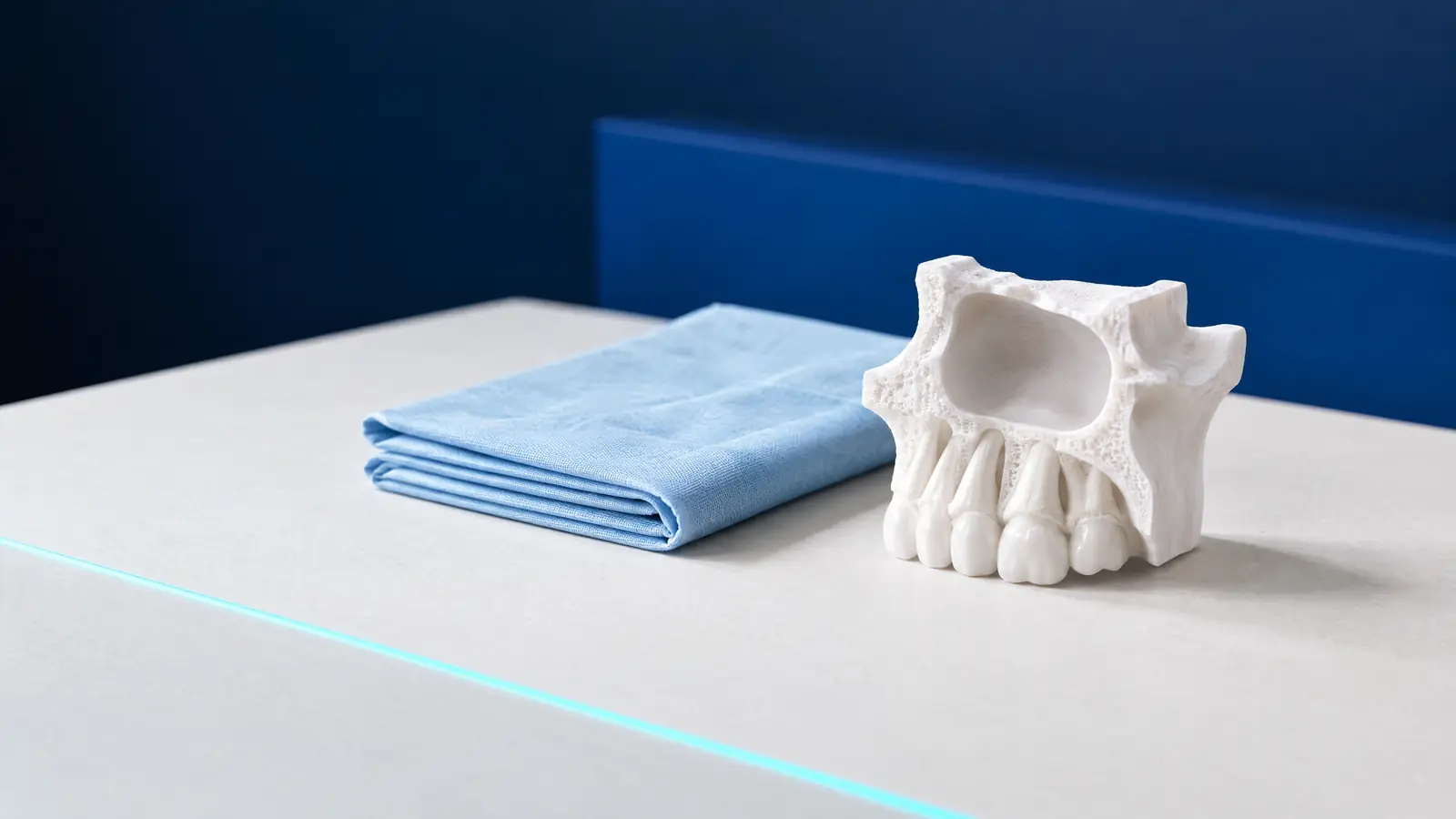
The maxillary sinus is an air-filled space in the bone of the upper jaw, whose floor lies just above the roots of the upper premolars and molars. According to the position statement of the American Association of Endodontists (AAE), the tips of these roots quite often break through the floor of the sinus and are in direct contact with its lining. According to a 2018 review, one of the roots of the second molar usually lies closest to the floor.
That is why toothache is one of the typical symptoms of sinusitis. The UK NICE guideline describes the typical symptoms as a blocked nose, discharge, pain or pressure in the face or teeth and a reduced sense of smell, and the Polish medical portal Medycyna Praktyczna adds that sinus pain gets worse when you bend your head forward, and that with maxillary sinusitis the teeth may hurt and bad breath may appear.
Acute sinusitis usually goes away on its own: NICE gives a typical duration of 2 to 3 weeks, and the UK’s National Health Service (NHS) up to 4 weeks. If symptoms last more than 10 days or get worse after 5 days, Medycyna Praktyczna advises seeing a family doctor.
How do you tell toothache from sinus pain?
Sinus tooth pain and pain from the tooth itself usually differ in the symptoms that come with them, but no single symptom settles the cause. The table brings together the signs described in guidelines and reviews, and the final answer comes from an examination of the tooth and, when needed, by an ear, nose and throat (ENT) specialist.
Lingering pain from cold and pain on biting are symptoms that the AAE associates with inflammation of the pulp and of the tissues around the root. With sinusitis caused by a dead tooth, however, they are often absent, so the absence of toothache does not rule out a dental cause.
| Sign | Points to the sinus | Points to a tooth |
|---|---|---|
| Blocked nose, discharge, reduced sense of smell | Yes, these are the main symptoms of sinusitis according to NICE | When the discharge is purulent and drains from one side |
| Unpleasant smell or taste in the mouth | Possible; the NHS lists bad breath | Common in sinusitis from a tooth |
| Symptoms on one side only, recurring | Sinus pain often affects both sides of the nose | Up to 75% of one-sided maxillary sinusitis has a dental cause |
| Toothache from cold or heat that takes a long time to pass | Not among the sinus symptoms listed by NICE and the NHS | Points to inflammation of the pulp of that tooth |
| Pain on biting on one tooth, a fistula on the gum | Not among the sinus symptoms listed by NICE and the NHS | Points to an inflammatory lesion at the root |
| Onset after a tooth extraction, an implant or a sinus lift | Not applicable | Procedures in the upper jaw are the most common cause of sinusitis from a tooth |
Sinusitis from a tooth: where does it come from and how common is it?
Sinusitis from a tooth, also called odontogenic sinusitis, develops when infection spreads from a tooth, from the area around its root or from the site of a procedure into the maxillary sinus. According to the AAE, the often repeated figure of 10 to 12% of cases has no basis in data; in a study of 244 cases of chronic bacterial maxillary sinusitis a dental cause was found in 40.6%, and in another study in 72% of one-sided cases.
A 2018 literature review reports that in one-sided maxillary sinusitis this proportion can reach 75%. In an analysis of 674 patients, 65.7% of cases were linked to a procedure such as an extraction, implant placement or sinus floor elevation, 25.1% to a lesion at the root tip, and 8.3% to periodontitis, that is, gum disease (Little et al., 2018).
Typical symptoms are purulent nasal discharge, often from one side, an unpleasant smell or taste, facial pain or pressure and a blocked nose. Only about a third of patients report toothache, which is why this cause is sometimes overlooked.
How does the dentist check whether a tooth is to blame?
The dentist checks whether the tooth’s pulp is alive and whether the tissues around the root are inflamed: they carry out a cold test and an electric pulp test, tap and press on the tooth, measure the gum pockets and assess mobility. The AAE stresses that a healthy, vital pulp does not cause sinusitis; it is teeth with a dead, infected pulp or failed root canal treatment that do.
An ordinary intraoral X-ray of the back of the upper jaw can be difficult to interpret, because other bone structures overlap the roots. In one case series, a routine dental examination with X-rays failed to detect odontogenic sinusitis in 86% of cases, and according to the AAE, small field of view cone beam computed tomography (CBCT) considerably improves the detection of such sources. Indications for CBCT and radiation doses are discussed in the article on CBCT and panoramic X-rays.
A 2021 international consensus stresses that diagnosis usually requires two doctors working together: an ENT specialist confirms the sinusitis, most often with nasal endoscopy, and a dentist confirms the dental disease on examination and X-rays (Craig et al., 2021).
How is sinusitis from a tooth treated?
Treatment of sinusitis from a tooth starts with removing its source: the AAE lists endodontic (root canal) treatment, surgery at the root tip or extraction of the tooth. According to the AAE, an antibiotic alone does not remove the cause and is not a definitive solution, and sinus surgery without treatment of the tooth is not enough.
Treating the tooth alone is not always enough either. In a study of 39 patients with one sinus completely affected, symptoms resolved after dental treatment in 20 people, while 19 also needed sinus surgery, which is why check-ups are needed after treatment, and sometimes ENT treatment as well.
Oroantral communication after an upper tooth extraction: what do you need to know?
An oroantral communication is an opening between the mouth and the maxillary sinus, which sometimes forms when an upper molar, wisdom tooth or premolar is extracted, or when a fractured root is retrieved. The British Association of Oral Surgeons (BAOS) describes how fluids then pass from the mouth into the sinus and come out through the nose, and an untreated communication can turn into a fistula and sinusitis.
A small communication, under 2 mm, with no sinus infection may close on its own, but a larger one, over 5 mm, rarely heals without a procedure, and a 2019 review recommends closure within 24 to 48 hours (Parvini et al., 2019). The dentist detects the communication by, among other things, asking the patient to blow air out with the nose pinched; a negative result does not rule it out, and a CT scan gives an accurate picture.
The procedure usually involves moving a flap of gum over the opening under local anaesthesia, and according to BAOS it is successful in 95% of cases. After the communication has been closed, for the period recommended by the surgeon, the simple precautions on the list below apply.
- Do not blow your nose, and do not sneeze with your nose pinched or your mouth closed, because this raises the pressure in the sinus.
- Do not smoke and do not drink through a straw.
- Do not blow up balloons or air mattresses, play wind instruments or dive.
- Eat soft food and avoid hard or sharp mouthfuls that could irritate the wound.
When should you go to the SOR or call 112 with sinus pain and toothache?
Most cases of sinusitis and toothache do not need a hospital, but some symptoms signal a danger that must not be waited out. NICE refers people to hospital with symptoms of severe systemic infection or of complications around the eye socket or inside the skull, and Medycyna Praktyczna points to the hospital emergency department (SOR) with such symptoms, and to calling an ambulance when life is at risk.
Intracranial complications are very rare, but with any of the symptoms on the list go to the SOR or call 112, the emergency number; this is not a situation for an ordinary dental appointment.
- Swelling or redness of the eyelid and the area around the eye, or a bulging eyeball.
- Double vision, restricted eye movement or a sudden deterioration in vision.
- Severe headache, swelling over the forehead, a stiff neck or neurological symptoms, for example partial paralysis.
- A high fever with rapidly increasing facial swelling.
- Difficulty breathing, speaking or swallowing: call 112 straight away.
How it works at DentalBlue
At DentalBlue in Białystok, sinus X-rays, intraoral X-rays and CBCT scans are taken in the clinic’s own radiology unit, and root canal treatment and retreatment are carried out under a microscope. Extractions and surgical procedures are performed under local anaesthesia or, for qualified patients, under general anaesthesia. In the clinic’s price list, “Zdjęcie zatok” (sinus X-ray) costs 100 zł, “Tomografia komputerowa, szczęka lub żuchwa” (CBCT scan, upper or lower jaw) 300 zł and “Plastyka zatoki szczękowej” (maxillary sinus plasty) 300 zł. The dentist sets the final scope and cost after the examination, and prices may change. Confirming and treating the sinusitis itself is the job of an ENT specialist.
Frequently asked questions
Will sinus tooth pain go away on its own?
It usually goes away together with the sinusitis, which according to NICE most often lasts 2 to 3 weeks. If the pain affects one tooth, reacts to cold or biting, or continues after the runny nose has cleared, it is worth showing the tooth to a dentist, because the cause may lie in the tooth.
Which doctor should I see with toothache and sinus pain?
With pain in one tooth, a swollen gum or after a recent procedure in the upper jaw, it makes sense to start with a dentist, and with typical cold and sinus symptoms with a family doctor. A 2021 international consensus stresses that sinusitis from a tooth is usually diagnosed jointly by an ENT specialist and a dentist.
Can I blow my nose after an upper wisdom tooth extraction?
If the dentist has found a communication with the sinus or has closed one, you should not blow your nose or sneeze with your nose pinched or your mouth closed for the recommended period, because this raises the pressure in the sinus (BAOS). After an ordinary extraction, the general advice in the article on what to do after a tooth extraction applies.
Can an implant cause sinusitis?
Yes. Among the causes of odontogenic sinusitis, a 2018 literature review lists implant placement in the upper jaw and sinus floor elevation, and procedures together accounted for 65.7% of cases. Sinus symptoms after such a procedure call for a check-up with the dentist who performed it.
Will an antibiotic cure sinusitis from a tooth?
According to the AAE, an antibiotic alone may bring temporary improvement, but it does not remove the cause, which is infection in the tooth. The tooth itself needs treatment, that is, root canal treatment, surgery at the root or extraction, and medicines are decided by the doctor.
Sources
- AAE: Maxillary Sinusitis of Endodontic Origin, position statement (2018)
- Little RE et al., Laryngoscope Investig Otolaryngol: odontogenic sinusitis, review (2018)
- Craig JR et al., Int Forum Allergy Rhinol: diagnosing odontogenic sinusitis, international consensus (2021)
- NICE: NG79, acute sinusitis, recommendations (2017)
- Medycyna Praktyczna: Zapalenie zatok przynosowych, przyczyny, objawy i leczenie (2022)
- NHS: Sinusitis (sinus infection) (2024)
- BAOS: Oro-antral Communication, patient information (2019)
- Parvini P et al., Int J Implant Dent: closure of oroantral communications (2019)
An informational article. It does not replace a consultation, and treatment decisions are made during a visit.