What is a diastema, and what causes it?
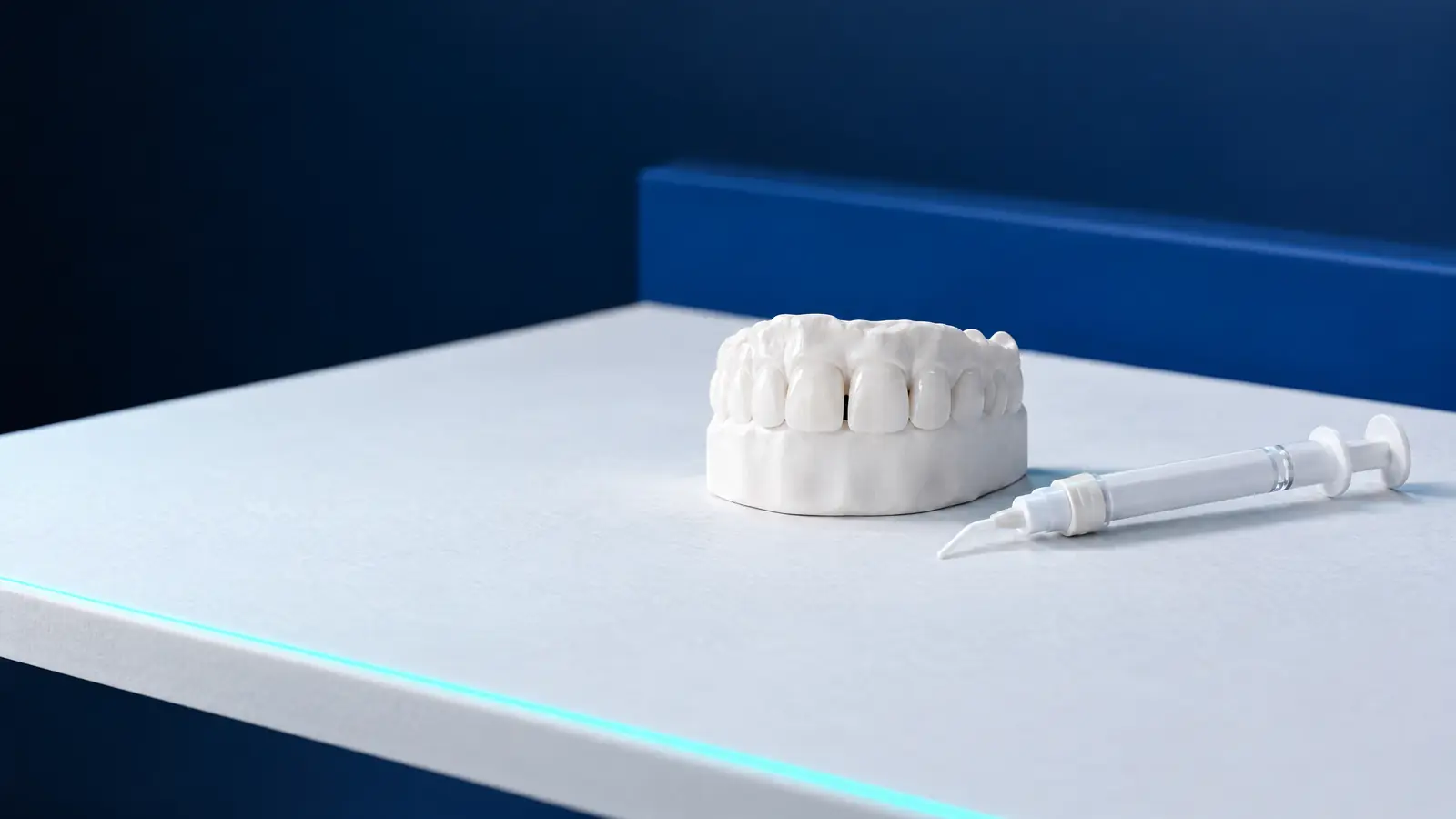
A diastema is a gap between the teeth; the word is most often used for a space between the upper central incisors, the two front teeth. A review in the journal Pediatric Dentistry stresses that in the mixed dentition such a gap is usually part of normal development, while a persistent diastema can have several different causes.
The cause determines whether the gap is monitored or treated, and by which method. The causes most often mentioned are listed below.
- A normal stage of development in a child, before the permanent lateral incisors and canines come through.
- Small or missing lateral incisors: congenital absence of a permanent tooth affects 4.4 to 13.4% of people, and cone-shaped, undersized upper lateral incisors (peg laterals) about 1.8%; where one lateral incisor is like this, the lateral incisor on the other side is missing in more than half of cases.
- A wide, low-attached upper lip frenulum, which according to reviews accounts for only some of the cases.
- Habits such as thumb sucking, and an extra (supernumerary) tooth lodged between the central incisors.
- In adults, drifting of the teeth in periodontitis (advanced gum disease).
Diastema in a child: when to wait and when to act?
In a child, a diastema is usually monitored, because the gap between the front teeth often narrows by itself as the permanent lateral incisors, and later the canines, come through. A 2022 systematic review states that a physiological diastema can close spontaneously once the permanent lateral incisors have come through, and according to an earlier review, moving the teeth with braces is usually put off until the permanent canines have erupted.
Data on how common it is confirm this: a meta-analysis of 77 studies showed that diastema is less common in the permanent dentition than in the mixed dentition, and in a study of 738 adolescents aged 12 and 13 from West Pomerania, only 2.7% still had gaps between their teeth.
It is worth acting earlier when the gap is very large, when a central incisor is coming through in an unusual way or when an incisor is missing. The American Academy of Pediatric Dentistry (AAPD) lists asymmetric or delayed eruption of the incisors and an over-retained milk incisor as signs that a supernumerary tooth may be lodged between the teeth; an X-ray confirms this.
The frenulum and diastema: does it need cutting?
The upper lip frenulum is rarely the only cause of a diastema, and cutting it alone will not close the gap in a child. The AAPD does not recommend the procedure before the permanent canines have come through, and allows it only after the gap has been closed orthodontically or together with treatment with braces; the appearance of the frenulum alone is not an indication.
The frenulum matters above all for how long the result lasts. In a classic clinical study, gaps in patients with an abnormal frenulum reopened considerably more often after closure with braces, and a procedure performed after closure reduced this problem; the timing of the procedure is still not agreed uniformly, however. The types of procedure and healing are described in the article on frenulum release.
Diastema in an adult: a new gap is a signal to have your gums checked
A new gap between the teeth in an adult, one that was not there before, calls first and foremost for a check of the gums and bone. A review in the Journal of Periodontology describes drifting of the teeth as a common complication of moderate and severe periodontitis: it affects 30 to 56% of periodontal patients and is often the very thing that prompts them to make an appointment.
The cause is loss of bone around the teeth, pressure from inflamed tissue and the forces exerted by the tongue, lips and bite. In the early stage, teeth sometimes move back into place by themselves after periodontal treatment, while advanced cases need a periodontist, an orthodontist and a prosthodontist working together.
Closing such a gap with braces begins only once periodontitis is under control; the European Federation of Periodontology (EFP) then recommends retention and lifelong periodontal care. The symptoms and treatment of gum disease are described in the article on periodontitis.
How can a diastema be closed? The methods compared
A diastema is closed with orthodontic braces, composite bonding or veneers, and the choice depends on the cause of the gap, the size and shape of the teeth and the condition of the gums. Methods can be combined: braces align the teeth, and composite added after treatment corrects their shape. The table sets out the options on the basis of reviews and clinical studies.
A missing upper lateral incisor is a special case. The AAPD describes two routes: moving the canine into the place of the missing incisor, or opening up space for a later prosthetic tooth or implant. The first requires more tooth movement and the second less, but the gap has to be held with a temporary replacement until the implant; according to the AAPD, patients usually prefer closing the gap to an implant, and the decision is made after assessing the canine, the bite, the profile and the bone.
| Method | When it fits | Worth knowing |
|---|---|---|
| Monitoring | A child in the mixed dentition, a physiological gap | Often closes once the permanent lateral incisors and canines come through |
| Fixed braces or aligners | The gap results from the position of the teeth or accompanies another malocclusion | No grinding of the teeth; retention is essential after closure |
| Composite bonding | Healthy teeth that are too narrow or small for the gap | Minimally invasive; in studies, 90 to 96% of restorations survived |
| Porcelain veneers | When the colour or shape of the teeth also needs changing | They require enamel preparation; 89% survived an average of 9 years |
| Frenulum procedure | A wide frenulum, usually after the gap has been closed with braces | Not before the permanent canines come through; intended to limit relapse |
| Periodontal treatment | A new gap in an adult with periodontitis | First the inflammation is brought under control, and only then braces |
Treating a diastema with braces: does the gap come back?
A diastema closed with braces tends to reopen, which is why treatment always ends with retention. In a study of 30 patients, the gap between the central incisors reopened in 60% of them, by an average of 0.49 mm, and more often where the gap was initially wider, while the gaps between the central and lateral incisors remained stable.
A 2016 Cochrane review states that almost everyone who has had orthodontic treatment needs some form of retention, and the British Orthodontic Society (BOS) recommends wearing retainers long term. Retention is provided, for example, by a thin wire bonded on the palate side (a fixed retainer) or by a clear tray; the types are described in the article on retention after braces.
Diastema bonding or veneers: what does the research say?
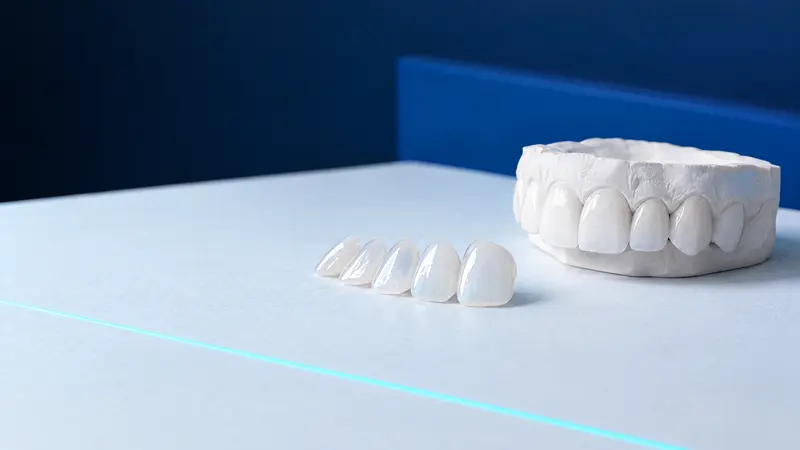
Diastema bonding means adding composite to the side surfaces of the teeth so that the gap disappears in a minimally invasive way. In studies devoted specifically to closing gaps with composite, 90.3% of restorations survived after 4 years in one study, about 93% after 4 years in a second, and 96% over an average follow-up of more than 7 years in a third.
Over time, however, the appearance of composite can deteriorate, especially at the edges; in the longest of these studies, such changes, usually repairable, became more frequent as the years went by, which is why the restorations need check-ups. Porcelain veneers are damaged less often: in a 10-year practice-based study, the annual failure rate after 5 years was 1.4% for ceramic veneers compared with 3.9% for composite ones, but veneers require enamel preparation; a full comparison of the two methods is in the article on veneers and bonding.
How much does closing a diastema cost?
The cost of closing a diastema depends on the method, the number of teeth, the need for gum treatment or braces beforehand, and on retention after treatment. That is why the plan and the estimate are prepared after an examination.
In the clinic’s price list, “Bonding 1 zęba” (bonding, one tooth) costs 1 000 zł and “Licówka pełnoceramiczna” (all-ceramic veneer) 3 000 zł. “Konsultacja ortodontyczna” (orthodontic consultation) is 300 zł, “Retainer stały 1 łuk” (fixed retainer, one arch) 600 zł, and “Frenuloplastyka wędzideł (warga górna, dolna, policzkowe)” (frenuloplasty of the upper lip, lower lip or cheek frenula) 600 zł. The final scope and cost are set at the consultation, and prices may change.
How it works at DentalBlue
At DentalBlue in Białystok, a diastema is assessed for its cause before a method is decided on. The clinic provides orthodontics, that is, fixed braces and Clear Aligner trays planned digitally on the basis of cephalometric analysis, aesthetic dentistry with bonding and veneers, and periodontology, whose price list includes frenulum procedures. The X-rays needed to assess the teeth and bone are taken in the clinic’s own radiology unit. A consultation can be booked by phone.
Frequently asked questions
Is a diastema a type of malocclusion?
Yes, gaps between the teeth are classed as malocclusion, but not every one needs treatment. The American Association of Orthodontists (AAO) notes that a gap on its own usually causes no serious problems, although it can trap food and affect how a person feels. For an adult, the decision to treat is therefore often a question of appearance, as long as the gums are healthy.
Can a diastema be closed with clear aligners?
In many cases, yes. For selected problems, aligners are a good option, and in a 2025 review they did not differ from fixed braces in the quality of the result in treatment without extractions. In complex cases, fixed braces give more predictable results, and after the gap is closed, retention is needed with both methods.
Does diastema bonding damage the teeth?
Bonding adds composite to the tooth and is a minimally invasive method, and damaged composite can usually be repaired. A porcelain veneer requires preparation of the tooth, which according to studies removes 3 to 30% of the crown of the tooth: much less than a prosthetic crown, but more than bonding.
How long does it take to close a diastema with braces?
According to the BOS, treatment with braces takes 6 to 30 months, and very difficult cases longer; the time depends on the cause of the gap and the scope of treatment. Once the braces come off, retention begins, which is worth taking particularly seriously with a diastema, because a gap between the central incisors tends to come back.
Is a diastema in a child caused by thumb sucking?
It can be, but more often it is simply a stage of development. A 2022 review recommends ruling out thumb sucking and missing teeth before deciding on a procedure, and a 1995 review lists habits among the causes of a persistent diastema. The assessment, and an X-ray if needed, are best left to a paediatric dentist or an orthodontist.
Sources
- Pediatric Dentistry: Huang WJ, Creath CJ, the midline diastema, causes and treatment (1995)
- Int J Pediatr Otorhinolaryngol: Tadros S et al., the upper lip frenulum and diastema, systematic review (2022)
- AAPD: Policy on Management of the Frenulum in Pediatric Patients (2022)
- AAPD: Management of the Developing Dentition and Occlusion in Pediatric Dentistry (2024)
- Journal of Periodontology: Brunsvold MA, pathologic tooth migration in periodontal disease (2005)
- J Appl Oral Sci: Morais JF et al., stability of diastema closure with braces (2014)
- J Esthet Restor Dent: Korkut B, Türkmen C, composite closure of diastemas, 4-year follow-up (2021)
- Journal of Dentistry: Kim Y et al., composite for closing anterior gaps, follow-up of up to 17 years (2026)
An informational article. It does not replace a consultation, and treatment decisions are made during a visit.