Do tongue piercings damage teeth?
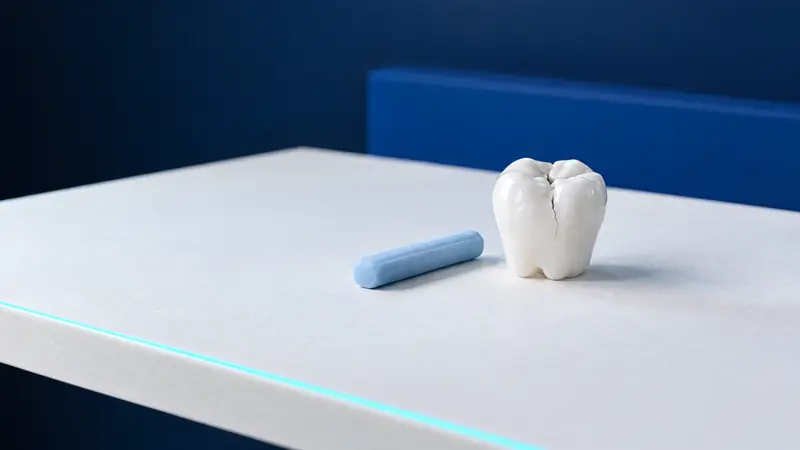
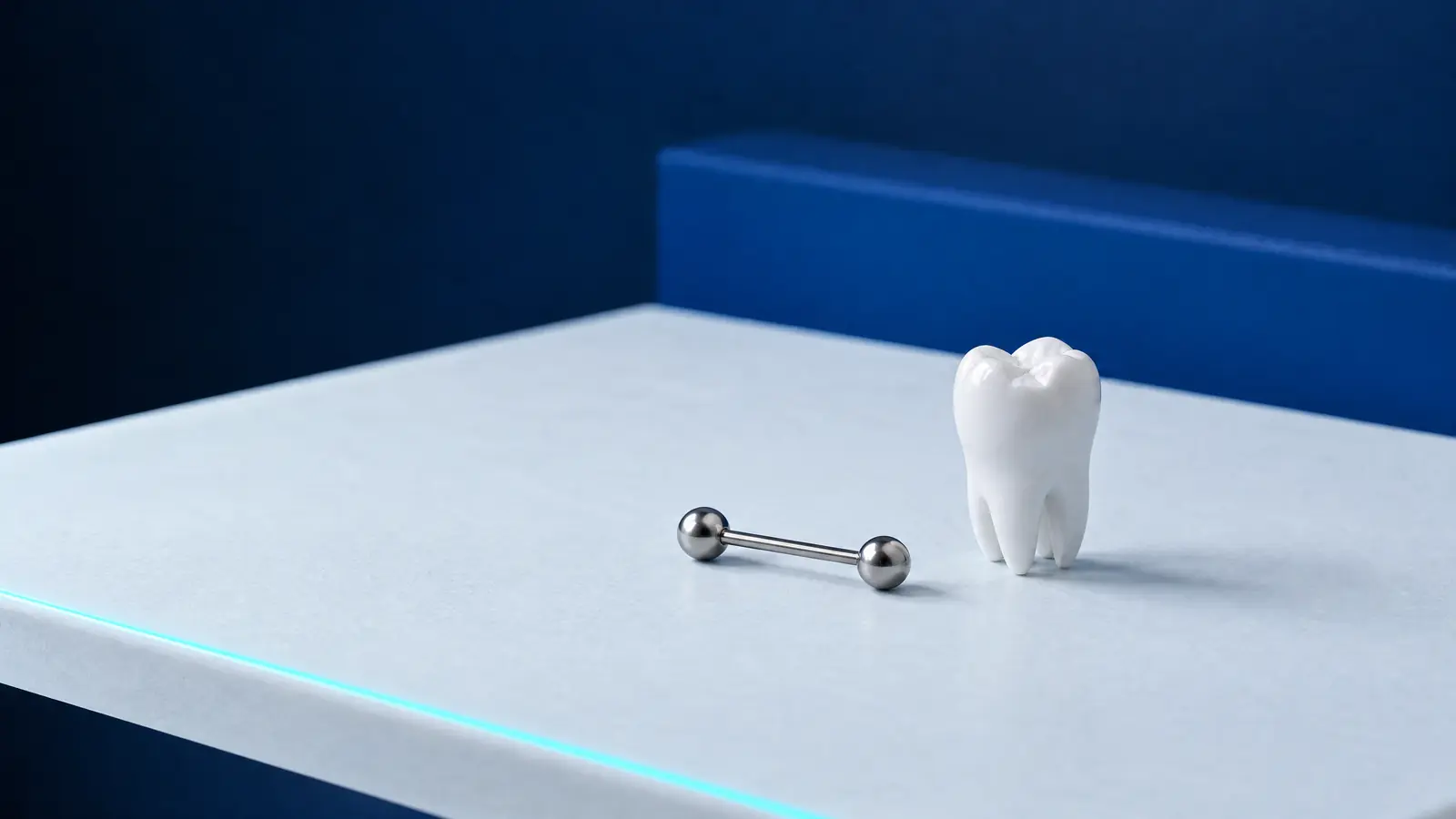
A tongue piercing increases the risk of tooth damage, particularly chipping and enamel cracks. A systematic review by Hennequin-Hoenderdos et al. (2016), covering 15 publications, reports tooth damage in up to 37% of people with tongue piercings, with a risk 2.44 times higher than in people without a piercing.
In a German study of 46 soldiers who had worn tongue piercings for an average of 3.8 years and 46 without piercings, enamel cracks affected 15% of teeth in the first group versus 4.5% in the second, and enamel craze lines 9.1% versus 4.8% (Ziebolz et al., 2012). A 2023 review recorded tooth chipping from tongue piercings in 10 of 25 studies analysed.
The piercing ball strikes the teeth. The ADA warns that both biting hard on jewellery and repeatedly tapping it against teeth can damage them. The article on cracked teeth explains diagnosis and treatment.
Tongue piercings and gum recession
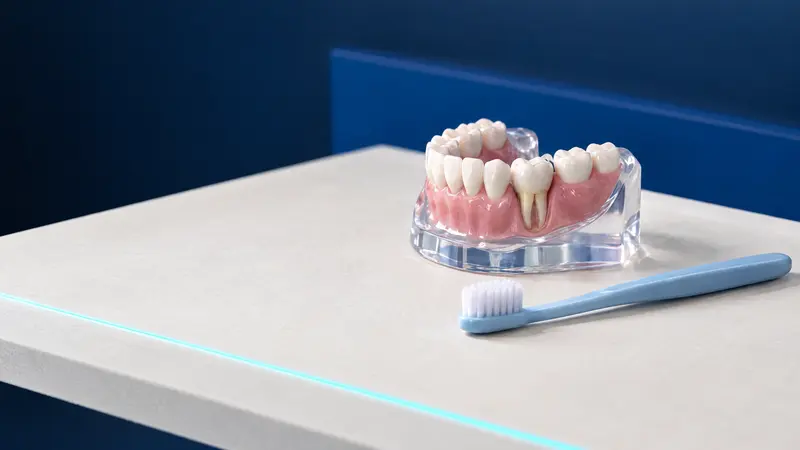
Tongue piercings are also associated with receding gums, or recession, usually on the inside of the lower front teeth. The 2016 review found recession in 44% of people with tongue piercings, with a risk 2.77 times higher than without one. In Ziebolz’s study, recession affected 7.7% of teeth in piercing wearers versus 1.5% in the comparison group; 74% of recession sites were on the tongue-facing surfaces of the lower front teeth.
A 2024 systematic review (Difloe-Geisert et al.), covering 8 studies and 408 patients, found more recession at teeth next to a tongue piercing in all 4 studies that assessed this. Some studies also found deeper gum pockets and greater attachment loss.
An exposed tooth neck may be sensitive to cold, and progressing recession needs monitoring. The article on gum recession describes its consequences and treatment.
Lip piercings and gums: how do they differ from tongue piercings?
Lip piercings damage teeth less often, but are associated with gum recession about as often as tongue piercings. In the 2016 review, 26% of people with lip piercings had tooth damage and 50% had recession; their recession risk was 4.14 times that of people without a piercing.
A study by Plessas and Pepelassi (2012), involving 110 people with 110 lip piercings and 51 tongue piercings, found tooth defects more often with tongue piercings, while recession was similarly frequent at both sites. Both tooth damage and recession became more frequent with longer wear and habits such as biting, rotating, rubbing or sucking the jewellery.
The 2023 review by Masood et al., which collected 25 studies, recorded gum recession in 16 and noted that it particularly affects lip piercings.
What complications can oral piercings cause? Overview
The table brings together complications described in research reviews and ADA and AAPD statements. Frequencies are given where measured; serious infections are known mainly from individual case reports.
| Complication | What studies report | How to reduce risk |
|---|---|---|
| Chipped or cracked tooth | Up to 37% with tongue piercings, 26% with lip piercings | Do not bite the jewellery or tap it against teeth |
| Gum recession | 44% with tongue piercings, 50% with lip piercings | Have gums checked at every dental check-up |
| Swelling and pain after piercing | Swelling described in 9 and pain in 8 of 25 studies | Watch whether swelling decreases each day |
| Infection and bleeding | Each described in 6 of 25 studies | Keep the piercing site clean and watch for infection signs |
| Metal hypersensitivity | Described in 2 studies of metal ion release | Report burning or changes in the oral lining to a doctor |
| Nerve damage | Listed by the ADA and AAPD | Report numbness or altered sensation to a doctor |
| Swallowing or inhaling the jewellery | A risk highlighted by the ADA | Check that the balls are tight, using clean hands |
| Ludwig’s angina, endocarditis | Rare, known from case reports | People at risk of endocarditis: discuss with a doctor before piercing |
When is swelling after a tongue piercing dangerous?
Swelling and pain are common in the first days after a tongue piercing, but swelling that increases rather than subsides needs urgent medical assessment. The ADA warns that the tongue and oral tissues can swell enough to block the airway. The AAPD lists bleeding, swelling, endocarditis and airway obstruction among reported life-threatening complications.
A pierced tongue usually takes 3 to 5 weeks to heal, according to the review by Rojas-Rueda et al. (2025), and the site needs careful hygiene throughout. The same review notes that local infection can develop into an abscess and, in severe cases, a life-threatening infection of the floor of the mouth called Ludwig’s angina.
- Increasing swelling of the tongue or floor of the mouth, difficulty breathing, speaking or swallowing: go to a hospital emergency department (SOR) or call the emergency number 112.
- Bleeding that cannot be stopped with pressure: go to SOR or call 112.
- Fever, chills, shaking or red streaks around the piercing site: the ADA advises immediate contact with a doctor or dentist.
- Foul-smelling discharge, increasing pain or tenderness: seek an urgent medical appointment.
- Jewellery embedded in tissue or impossible to remove: see a doctor or dentist; do not attempt removal yourself.
What should you do if you already have a tongue or lip piercing?
If you already wear a tongue or lip piercing, much depends on how long you have worn it and what you do with it. Plessas and Pepelassi’s study found more tooth damage and recession with longer wear and playing with the jewellery. Recession was also associated with jewellery shape and the length of the tongue piercing’s bar.
Piercing jewellery is usually metal, such as steel or titanium, but may also be plastic, such as Teflon or nylon. The review by Masood et al. (2023) cites limited comparative data in which plastic jewellery was linked to fewer dental complications than metal. This does not mean that plastic removes the risk of damage to teeth and gums, and changing the material does not replace dental check-ups.
The ADA and AAPD give several rules to reduce complication risks:
- Keep the piercing site clean and rinse your mouth after every meal.
- Do not tap the jewellery against teeth, bite it or rotate it with your tongue.
- From time to time, use clean hands to check that the balls are securely tightened.
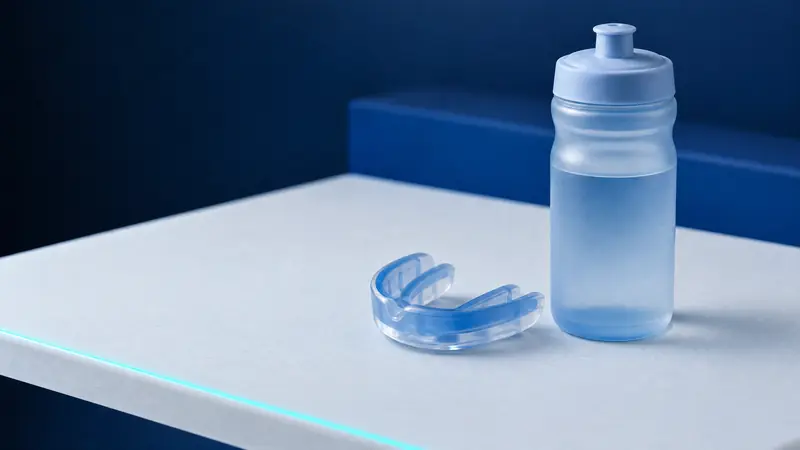
- Remove the jewellery for sport and wear a mouthguard instead.
- Remove oral jewellery before an X-ray, as the AAPD notes it can obscure the image.
- Attend regular check-ups and ask for an assessment of teeth and gums next to the piercing; the ADA also advises considering removal before a problem develops.
What do dental societies say about oral piercings?
In its 2025 policy, the American Academy of Pediatric Dentistry (AAPD) opposes oral piercing and oral jewellery because of disease and complication risks. The AAPD also notes that people at high risk of endocarditis should follow antibiotic prophylaxis recommendations for piercing, as determined by their doctor.
The American Dental Association (ADA) advises against deciding on a piercing impulsively, as it requires ongoing care. It lists risks including infections, such as hepatitis and endocarditis, damage to gums, teeth and fillings, metal hypersensitivity and nerve damage.
Oral piercings are not uncommon: a 2012 systematic review covering 13 publications and 11 249 young adults reports an average prevalence of 5.2%. The tongue was the most frequently pierced site, and women wore oral piercings more often than men (5.6% versus 1.6%).
How it works at DentalBlue
At DentalBlue, a check-up with a tongue or lip piercing may include assessment of the teeth, gums and supporting tissues. The clinic’s own radiology unit takes intraoral and panoramic X-rays; it is advisable to remove oral jewellery beforehand. The clinic provides periodontology, preventive care and professional cleaning, and cosmetic dentistry. For a first visit without symptoms, “Wizyta bez bólu” (visit without pain) includes a panoramic X-ray, consultation, examination and written treatment plan; it costs 300 zł in the clinic’s price list. The dentist determines the final scope and cost of treatment, and prices may change.
Frequently asked questions
How long does a tongue piercing take to heal?
According to a 2025 review, healing usually takes 3 to 5 weeks. The site needs careful hygiene throughout, and swelling should gradually subside; increasing swelling, fever or foul-smelling discharge warrant an urgent medical appointment.
Should you remove a tongue piercing for sport?
Yes. The ADA recommends removing oral jewellery for sport and wearing a mouthguard. The AAPD adds that removing jewellery before training reduces the risk of injury to the piercing site and allows a mouthguard to be worn without interference.
Can a tongue piercing interfere with dental X-rays?
Yes. The AAPD notes that oral jewellery can obscure part of an image, sometimes requiring another exposure or making diagnosis harder. Remove your piercing before intraoral X-rays, panoramic X-rays or tomography if possible.
Do lip piercings damage teeth?
Less often than tongue piercings, but they can. The 2016 review reports tooth damage in 26% of people with lip piercings and gum recession in 50%; recession risk was 4.14 times higher than in people without a piercing.
How many people have tongue or lip piercings?
A 2012 review of 13 publications, covering 11 249 young adults with a mean age of 20.6, reports prevalence ranging from 0.8% to 12%, averaging 5.2%. The tongue was the most frequently pierced site, and oral piercings were more common in women.
Sources
- International Journal of Dental Hygiene: Hennequin-Hoenderdos NL et al., lip and tongue piercing complications, systematic review (2016)
- International Journal of Dental Hygiene: Hennequin-Hoenderdos NL et al., prevalence of oral piercings in young adults (2012)
- Clinical Oral Investigations: Ziebolz D et al., long-term effects of tongue piercings, case-control study (2012)
- Australian Dental Journal: Plessas A, Pepelassi E, dental and periodontal complications of lip and tongue piercings (2012)
- European Archives of Paediatric Dentistry: Masood M et al., oral piercing complications, systematic review (2023)
- ADA MouthHealthy: Oral Piercings, risks and advice
- AAPD: Policy on Oral Piercing and Oral Jewelry/Accessories (2025)
- Clinics and Practice: Rojas-Rueda S et al., tongue piercings and oral health, review (2025)
An informational article. It does not replace a consultation, and treatment decisions are made during a visit.