What is a smile makeover?
A smile makeover is a treatment plan that changes the appearance of the teeth and gums in several steps, rather than a single procedure. It may include straightening the teeth with an orthodontic appliance, whitening, composite restorations (bonding), veneers, crowns and correction of the gum line, in an order chosen for the particular teeth.
The team of Spear, Kokich and Mathews, bringing together restorative dentistry, orthodontics and periodontology, described in JADA (2006) an approach in which planning starts from the aesthetic goal but also takes into account the structure of the teeth, the bite and the condition of the gums. In practice this means that an attractive shape in a photograph is not enough: the teeth must also meet properly and be easy to clean.
A smile makeover is not a medical necessity but a decision the patient makes after an examination. Before suggesting aesthetic changes, the dentist treats decay and gum disease, because according to the ADA veneers or bonding on diseased teeth can make the problem worse.
Who plans a smile makeover, and is there a specialty for it?
In Poland there is no specialty in aesthetic dentistry. The list of dental specialties in the Minister of Health’s regulation of 4 May 2023 (Dz.U. 2023 poz. 975) covers 9 fields, including prosthodontics, orthodontics, periodontology and conservative dentistry with endodontics, which are the fields an aesthetic plan usually draws on.
For an extensive makeover the plan is often drawn up by several dentists: an orthodontist moves the teeth, a periodontist corrects the gum, and the dentist in charge of the restorations carries out the bonding, veneers or crowns. You can check a dentist’s details in the Central Register of Physicians and Dentists (Centralny Rejestr Lekarzy), which the medical chambers make available to patients online.
According to figures from the Supreme Medical Chamber (Naczelna Izba Lekarska), 1,645 dentists were registered in Podlaskie province, whose capital is Białystok, of whom 1,625 were practising (data as of 30 June 2026, the latest available on 24 October 2026). The register is for checking a dentist’s details, not for judging the quality of treatment.
How the plan is made: photographs, scans, wax-up and mock-up
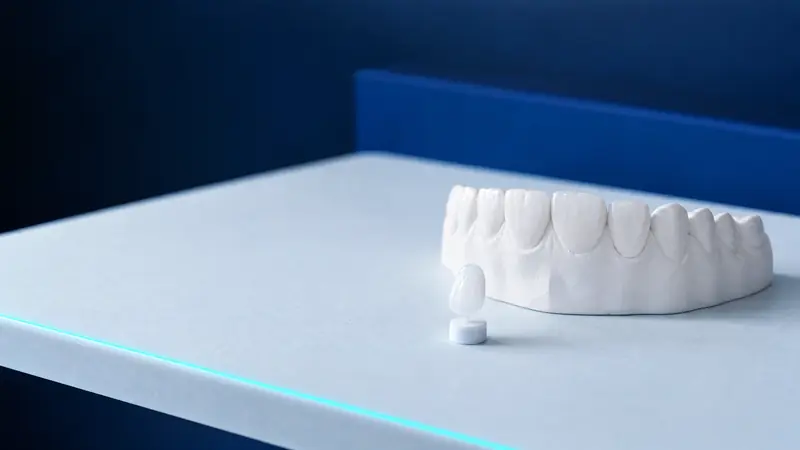
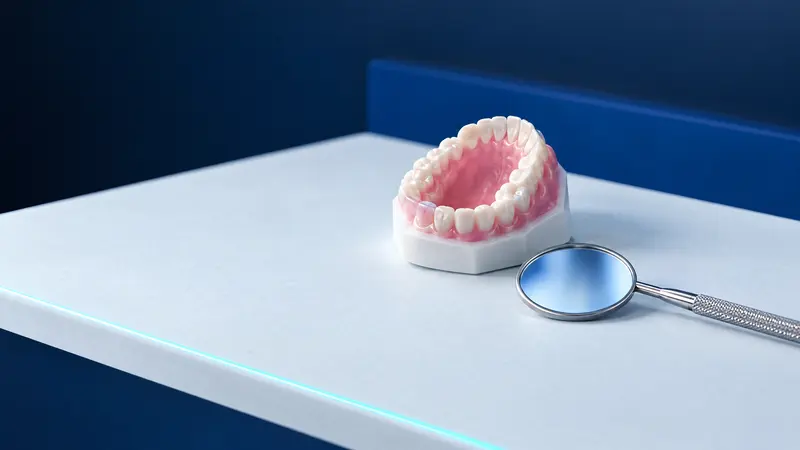
A smile makeover plan is based on an examination, X-rays, photographs of the face and teeth, and impressions or scans on which the dentist or the technician models the target shape of the teeth. This model, made in wax or printed digitally, is called a wax-up, and digital smile design is its counterpart prepared in software on photographs and scans.
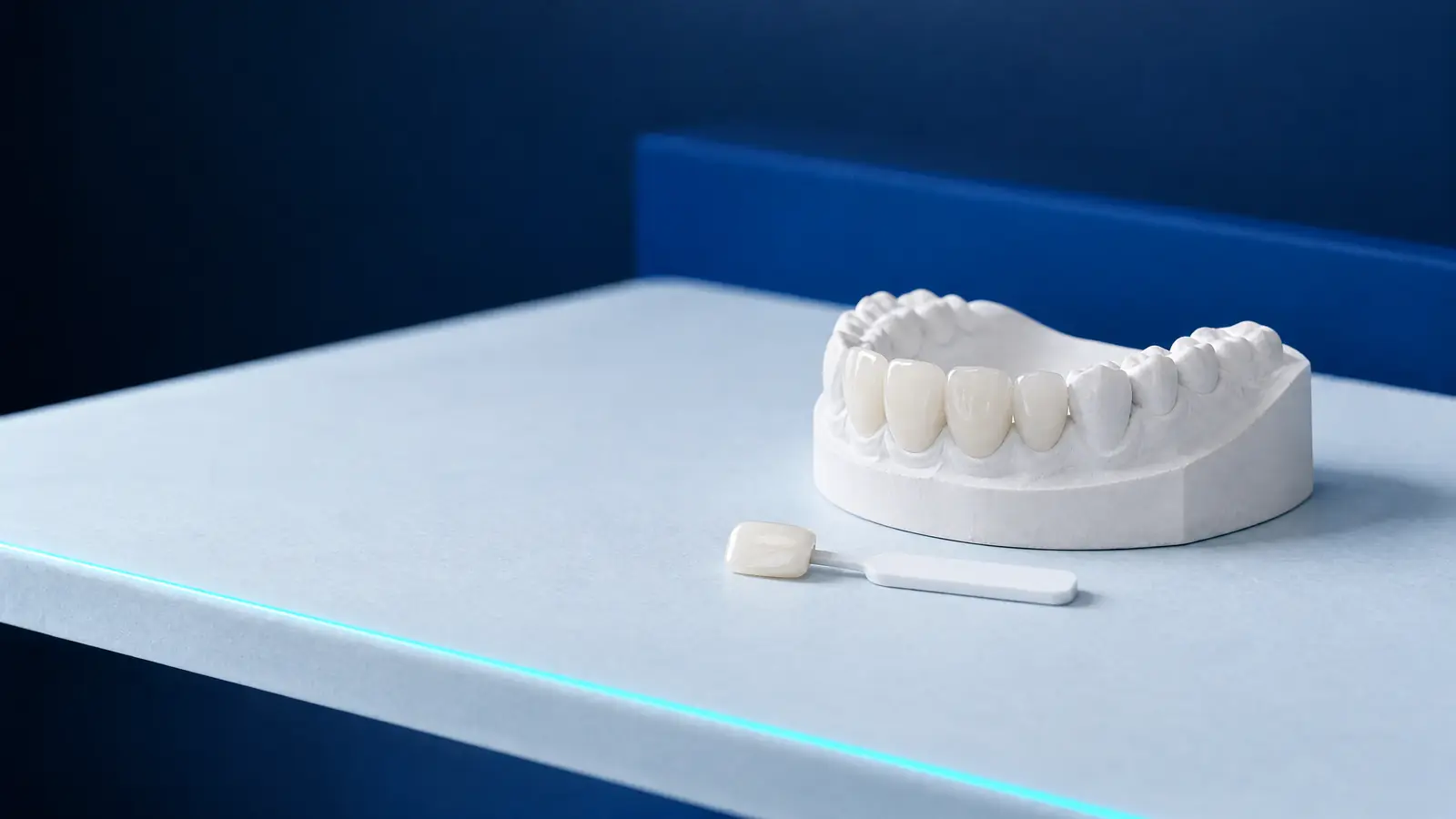
The shape from the wax-up is transferred to the mouth as a mock-up, a temporary overlay of tooth-coloured material in which the patient sees the new teeth in a mirror and in photographs. Gurrea and Bruguera (2014) stress that a plan based on a wax-up, tried in as a mock-up and accepted by the patient then guides both the dentist and the technician, and even the periodontist when the gum is corrected.
A digital design and a mock-up are tools, not a guarantee of the result: what is possible depends on the condition of the teeth, gums and bite. If something in the mock-up does not suit you, the shape can be changed before a single tooth is ground down.
In what order are the stages of a smile makeover carried out?
The stages of a smile makeover are arranged from the least to the most invasive, and from those that change the position of the teeth and gums to those that change their surface. The order matters, because each step depends on the result of the one before.
- First, treatment of decay, gum disease and any inflammation, because without it the other stages have no lasting foundation.
- Then orthodontics, if the teeth are protruding, crowded or rotated, because veneers and bonding change only the surface of a tooth, not its position.
- Next, correction of the gums, for example surgical crown lengthening when the teeth look short because the gum covers them.
- Whitening before restorations, because according to the NHS it changes the colour of natural teeth only, and the colour of composite or ceramic is matched to the shade achieved.
- A break after whitening: a meta-analysis of laboratory studies showed that the bond of adhesive materials to enamel is weakened for about 2 weeks (Savian et al., 2021).
- Finally, bonding, veneers or crowns and, after orthodontic treatment, also retention, that is, wearing a retainer.
Which smile problem, which methods? An overview
The same aesthetic problem can usually be solved in several ways, and the dentist starts with the one that requires the least intervention in the tooth. The table summarises typical situations; the details of each method are described in separate articles, including those on veneers, bonding, diastema and gummy smile.
| Problem | Typical methods | Worth knowing |
|---|---|---|
| Discoloured or yellow teeth | Professional cleaning, whitening and, when that is not enough, bonding, veneers or crowns | Whitening does not change the colour of fillings, crowns or veneers |
| Gaps between the teeth | Orthodontic braces, bonding, less often veneers | Composite for gaps and reshaping: 90.3% after 4 years (Korkut and Türkmen) |
| Chipped or irregular edges | Bonding, veneers | Composite is easy to repair, ceramic resists staining better |
| Crooked or crowded teeth | Clear aligners or fixed braces | Veneers mask only minor irregularities and do not move teeth |
| Gummy smile | Crown lengthening, botulinum toxin, orthodontics, surgery | The method depends on the cause; the effect of the toxin is temporary |
| Worn or short teeth | Composite or ceramic restoration, sometimes with raising of the bite | The cause of the wear has to be found first, as explained in the article on worn teeth |
| A missing tooth in the smile | Implant, bridge, a temporary tooth in the interim | The replacement is planned together with the rest of the smile |
Why does the principle of minimal intervention matter?
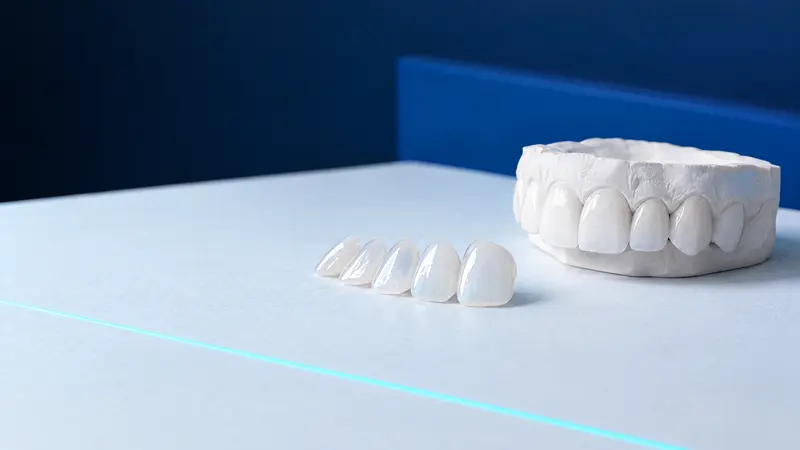
The principle of minimal intervention means that of two methods giving a similar result, the one that removes less healthy tissue is chosen. In a study on models of front teeth, preparation for a full crown removed 63 to 72% of the crown’s tooth structure by weight, while veneer preparations were less extensive (Edelhoff and Sorensen, 2002). Bonding often requires no grinding at all.
Enamel that has been removed cannot be recovered, and every restoration has a limited lifespan and may one day need repair or replacement. That is why whitening is considered first for a change of colour, orthodontics or bonding for gaps, and veneers and crowns when less invasive methods do not give the expected result.
What can you realistically expect from a smile makeover?
The realistic result of a smile makeover is best shown by a mock-up, because it lets you judge the length, shape and proportions of the teeth in the mouth, when speaking and smiling, before any irreversible step is taken. Photographs of other patients do not tell you how your teeth will look, because the result depends on the structure of your face, gums and bite.
Materials change over time: the ADA describes composite as easier to repair but less resistant to staining and wear than porcelain, and any veneer can chip or come off. Composite restorations therefore need periodic polishing and occasional repairs, and ceramic ones need checks of the margins and the bite.
Ceramic veneers are more durable, but they do not last for ever either: in a 2025 review, 93.7 to 96.8% of veneers survived after 10.4 years of follow-up (Klein et al.). An honest plan therefore covers not only the result but also check-ups, possible repairs and their costs.
How do you keep the result of a smile makeover, and what does it cost?
The result of a makeover is maintained by daily hygiene, check-ups and protection of the restorations. After orthodontic treatment retention is needed, as described in the article on retainers after braces, and for people who grind their teeth the dentist may recommend a night splint, because according to the ADA bruxism is one of the situations in which veneers may not be a good choice.
The cost of a makeover depends on the number of teeth, the methods and the preparatory treatment, which is why it is given in a written plan after an examination. The NFZ, Poland’s National Health Fund, does not fund whitening or veneers. In the standard package of services, treatment with a removable appliance is available until the age of 12, and certain retention check-ups and appliance repairs until the age of 13 (regulation of the Minister of Health, t.j. Dz.U. 2025 poz. 615). Separate rules apply to patients with congenital defects of the facial skeleton (legal status as of 24 October 2026).
In the clinic’s price list, “Mock up góra + dół” (mock-up, upper and lower) costs 1 800 zł, “Model diagnostyczny” (diagnostic model) 260 zł, “Wybielanie nakładkowe” (tray whitening) 1 000 zł, “Bonding 1 zęba” (bonding, one tooth) 1 000 zł and “Licówka pełnoceramiczna” (all-ceramic veneer) 3 000 zł. The final scope and cost are set at a consultation, and prices may change.
How it works at DentalBlue
At DentalBlue in Białystok, aesthetic dentistry includes veneers and whitening, and the clinic describes it as conservative by design: enamel stays wherever it can stay. Orthodontic treatment with Clear Aligner trays and fixed braces is planned digitally on the basis of cephalometric analysis, and the price list also includes a mock-up and a diagnostic model. Panoramic X-rays (pantomograms), cephalometric X-rays and other images are taken in the clinic’s own radiology unit. A “Wizyta bez bólu” (visit without pain, 300 zł) includes a panoramic X-ray, a consultation, an examination and a written treatment plan. A consultation can be booked by phone.
Frequently asked questions
How long does a smile makeover take?
It depends on the stages. Whitening and bonding may take a few visits, and veneers also require laboratory work. Orthodontics usually takes longest, and is measured in months. After whitening it is advisable to wait about 2 weeks before restorations are bonded (Savian et al., 2021). The dentist gives the exact schedule in the plan.
Does a smile makeover always mean veneers?
No. Many changes can be achieved with whitening, orthodontics, bonding or gum correction, without grinding the teeth. Veneers are usually considered when less invasive methods do not give the expected colour or shape, and a mock-up lets you check their effect before you decide.
Can I see my new smile before treatment?
Yes, that is what a digital design and a mock-up are for. A mock-up is a temporary overlay of tooth-coloured material that the dentist places over your own teeth to show the planned shape in the mouth. It requires no grinding and is removed after the try-in.
Can I drink coffee after a smile makeover?
You can, but according to the ADA coffee, tea and red wine can stain restorations, especially composite ones. Brushing, check-ups and periodic polishing of the composite help. Ceramic is more resistant to staining, and whitening will no longer lighten veneers or crowns.
Can I have a smile makeover if I have periodontitis?
Periodontitis (advanced gum disease) has to be treated first and the condition of the gums stabilised, because according to the ADA bonding restorations onto diseased tissue can make the problem worse. With receding gums and loose teeth the aesthetic plan changes, and the dentist discusses it after periodontal treatment.
Sources
- Spear FM, Kokich VG, Mathews DP, JADA: interdisciplinary planning of anterior aesthetics (2006)
- Edelhoff D, Sorensen JA, J Prosthet Dent: how much tissue preparation for crowns and veneers removes (2002)
- Gurrea J, Bruguera A, Int J Esthet Dent: wax-up and mock-up in treatment planning (2014)
- Savian TG et al., Oper Dent: bleaching and the bond strength of adhesive materials, a meta-analysis (2021)
- Klein P et al., J Esthet Restor Dent: ceramic veneers, a systematic review and meta-analysis (2025)
- Sejm: Rozporządzenie MZ w sprawie specjalizacji lekarzy i lekarzy dentystów, Dz.U. 2023 poz. 975 (regulation on medical and dental specialties)
- Naczelna Izba Lekarska: Centralny Rejestr Lekarzy, statistical information (as of 30.06.2026)
- ELI: Rozporządzenie MZ w sprawie świadczeń gwarantowanych z zakresu leczenia stomatologicznego, t.j. Dz.U. 2025 poz. 615
An informational article. It does not replace a consultation, and treatment decisions are made during a visit.