Does a mouthguard really protect your teeth?
A mouthguard substantially reduces the risk of dental injury in contact sports. In the meta-analysis by Fernandes et al. (2019), an analysis of 8 studies found injuries to teeth and alveolar bone in 7.75% of mouthguard users versus 48.31% of non-users. An analysis restricted to 3 studies without methodological concerns found 7.5% versus 59.48%; the authors rated the evidence as moderate quality.
A mouthguard acts as a buffer: it separates teeth from the lips and cheeks, protecting soft tissues from cuts, and absorbs part of the impact. The American Academy of Pediatric Dentistry (AAPD) states that the American Dental Association (ADA) and the International Academy for Sports Dentistry recommend mouthguards for 29 sports and activities.
A sports dentistry expert consensus published in the British Journal of Sports Medicine (2015) also considers a custom-made mouthguard an important part of sports involving injury risk. A mouthguard does not remove that risk completely, so every dental injury needs prompt assessment by a dentist.
How common are dental injuries in sport?
Dental injuries in sport are common: the AAPD cites a systematic review in which 10% to 61% of athletes had experienced a dental injury, depending on the sport and study group. Upper incisors account for 50% to 90% of dental injuries; the most frequent injuries are cuts to the lips and oral lining, crown fractures and knocked-out teeth.
The risk depends on the type of contact. In basketball, one of the sports with the highest dental injury rates, injuries mainly arise from player collisions. In baseball, softball and field hockey, over 87% result from a ball or stick impact. Among children, bicycles account for the most sports equipment-related dental injuries, followed by playground equipment, rollerblades and trampolines.
People with protruding upper incisors are at greater risk: the AAPD links more frequent injuries with an overjet greater than 5 mm in permanent teeth and incomplete lip coverage. The table sets out the main sporting risks to teeth and ways to reduce them.
| Risk | Sports and situations | How to reduce it |
|---|---|---|
| Injury in a player collision | Basketball, rugby, football, boxing and martial arts | A well-fitting mouthguard, ideally custom-made |
| Impact from a ball, stick or puck | Baseball, softball, field hockey and ice hockey | Wear a mouthguard for training and matches |
| Falling onto your face | Gymnastics, ice skating, rollerblading, cycling | The ADA says mouthguards also help in non-contact sports |
| Injury with braces | Any contact sport | Choose a guard with your orthodontist; remove removable appliances |
| Tooth decay | Frequent sports drinks and gels during training | Water for hydration, toothpaste with at least 1 400 ppm fluoride |
| Enamel erosion | Endurance sports, sipping acidic drinks throughout training | Fewer acidic drinks; match the drink to its purpose |
| Dry mouth | Intense exercise, mouth breathing | Drink water regularly during training |
| Teeth clenching | Strength training, weightlifting | Have tooth wear and jaw pain checked by a dentist |
Custom-made, boil-and-bite or ready-made mouthguard?
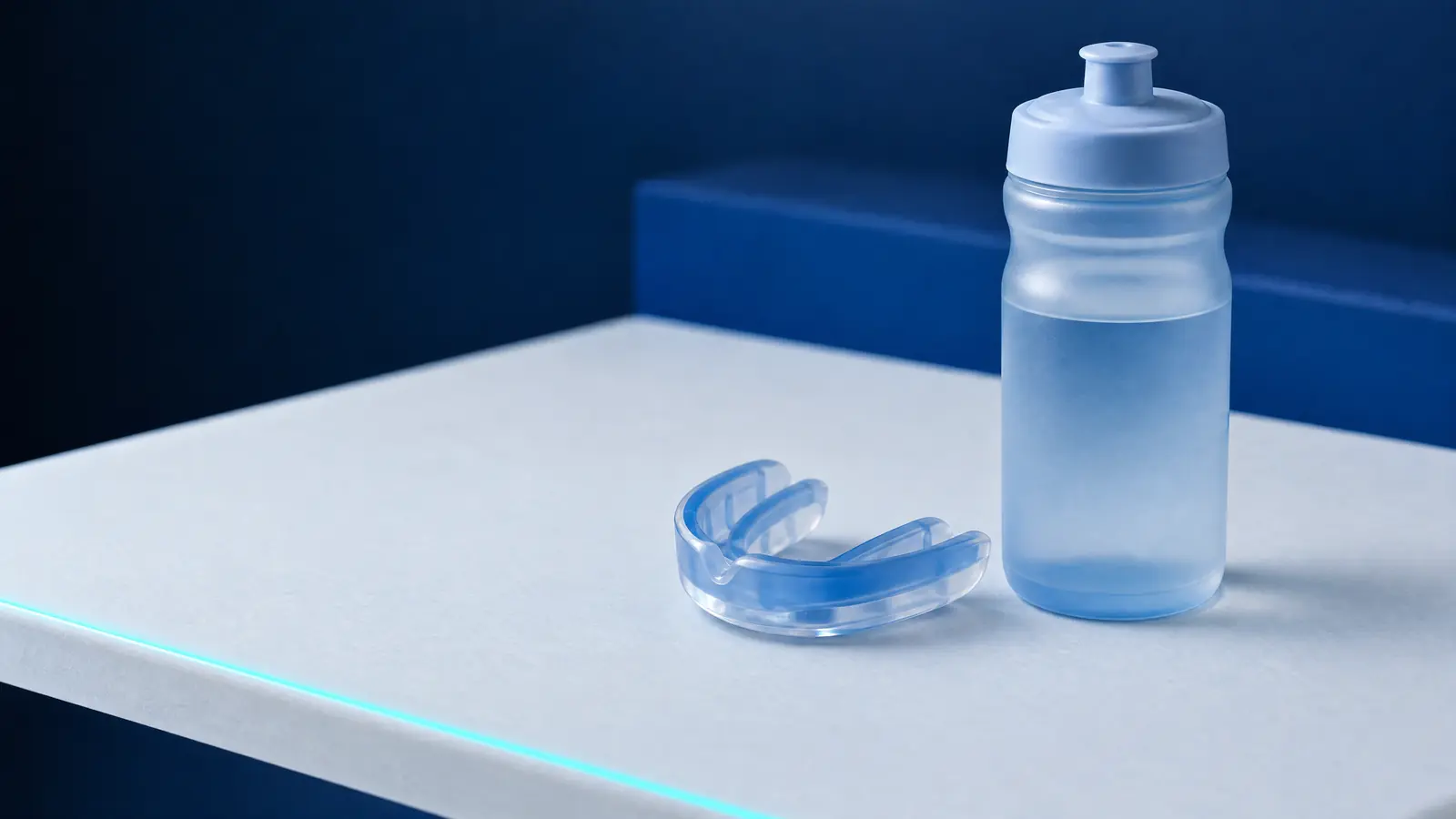
There are three types of mouthguard: ready-made, boil-and-bite guards softened with heat and moulded by biting, and custom-made guards produced by a dentist on a model of your teeth. According to the AAPD, custom-made guards offer the best retention, protection and comfort; if unavailable, a boil-and-bite guard is preferable to a ready-made one.
A boil-and-bite guard is softened in hot water and moulded to the teeth by biting and pressing with the fingers and tongue; the ADA advises following the manufacturer’s fitting instructions closely. Ready-made guards often fit poorly, and clenching to keep them in place makes breathing and speaking harder.
According to the ASTM standard cited by the AAPD, a guard should cover all teeth in at least one arch, usually the upper, except wisdom teeth. A lower guard is recommended for an underbite. A child’s custom-made guard may quickly stop fitting as milk teeth fall out and permanent teeth erupt, so space for changes in the dentition can be allowed during manufacture.
The ADA gives several simple care rules:
- Rinse your mouthguard before and after use, or clean it with a toothbrush and toothpaste.
- Wash it regularly in cool soapy water and rinse thoroughly.
- Store it in a rigid, ventilated container, away from animals.
- Do not leave it in sunlight or hot water.
- Replace the guard when worn, damaged or no longer fitting properly; children and teenagers need replacements more often.
Sports drinks and teeth: do isotonic drinks harm enamel?
Isotonic drinks and energy gels can contribute to decay and enamel erosion when consumed frequently throughout training. The British Journal of Sports Medicine expert consensus (2015) notes that energy drinks usually contain over 10% carbohydrate, isotonic drinks 4% to 8% and hypotonic drinks around 2% or less. Carbohydrates are among the best-established causes of decay, while acidic foods and drinks are the main cause of erosion.
In a study of 35 triathletes and 35 non-exercising controls, athletes had a higher risk of enamel erosion, and decay prevalence among triathletes increased with weekly training time (Frese et al., 2015). At maximal exertion their saliva production fell, reducing a normal source of tooth protection.
The consensus recommends reducing carbohydrate frequency and quantity where possible, matching the drink to its purpose, using water or a hypotonic drink for hydration alone, and using toothpaste containing at least 1 400 ppm fluoride. The article on enamel erosion explores acidic drinks in more detail; the article on what harms teeth explains sugar’s role.
What is elite athletes’ dental health like?
Elite athletes’ teeth often need treatment. Among 278 athletes from 25 sports examined at the London 2012 Olympic Village dental clinic, 55% had decay, 45% enamel erosion, 76% gingivitis and 15% periodontitis; 18% said oral health affected their training and performance (Needleman et al., 2013).
The study examined clinic attendees, but the 2015 consensus states that whole-team studies show similar results. It lists possible causes: frequent carbohydrate intake, oral drying during exercise, reduced immunity after intense training, and limited knowledge and low prioritisation of oral health.
A 2026 research review reports decay in 20% to 56% of athletes, depending on the study. Almost half of the London Olympians had not seen a dentist or had professional cleaning in the previous year; regular check-ups are a simple way to identify problems before the season.
Dry mouth and teeth clenching during exercise
Dry mouth during exercise weakens the teeth’s natural protection. The 2015 consensus notes that dehydration and oral drying during sport can intensify the harmful effects of sugars and acidic drinks by reducing saliva, which has antibacterial effects and helps remineralise enamel.
Some athletes clench their teeth during exertion. In a study of 272 professional weightlifters in India (Riyaz et al., 2026), 68% reported daytime clenching and 64% had signs of tooth wear. However, this is one cross-sectional study and does not prove that training causes wear.
If your jaw hurts after training, you wake with tense facial muscles or notice worn tooth edges, show your dentist; the article on bruxism explains the causes and treatment of teeth clenching.
What if a tooth is knocked out or broken during training?
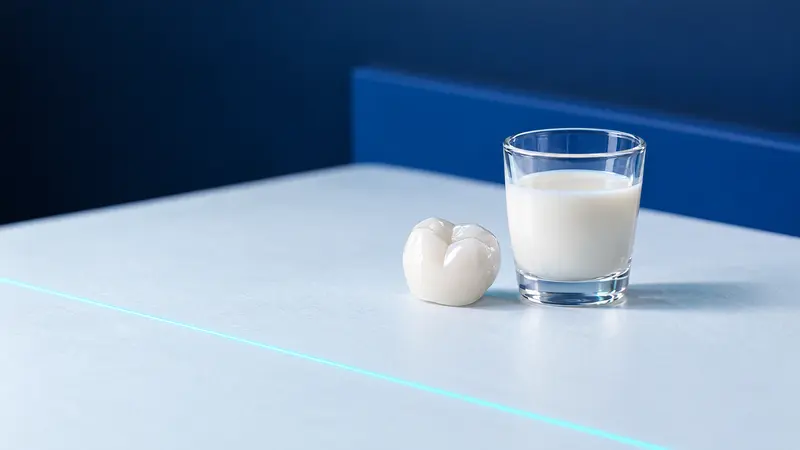
If a permanent tooth is knocked out during training, time matters: according to the International Association of Dental Traumatology (IADT), put it back into its socket as soon as possible or store it in milk, saliva or saline and go straight to a dentist. The article on knocked-out teeth gives detailed advice for avulsed and fractured teeth.
- Pick the tooth up by its crown and do not touch the root.
- If dirty, rinse it briefly in milk, saline or saliva and try to put it back in place.
- If you cannot reinsert it, store it in milk or saliva; do not wrap it in a dry tissue.
- Do not reinsert a child’s knocked-out milk tooth.
- Take any broken tooth fragment to the dentist in water or saline so it does not dry out.
- Loss of consciousness, head injury, uncontrollable bleeding or suspected jaw fracture require emergency help: a hospital emergency department (SOR) or the emergency number 112.
How it works at DentalBlue
At DentalBlue, after a dental injury or if enamel erosion is suspected, the dentist can assess teeth by examination and images from the clinic’s own radiology unit: intraoral X-rays, a panoramic X-ray or a CBCT scan. The clinic provides root canal treatment under a microscope, cosmetic dentistry and prosthodontics. Patients with pain can attend a “Wizytę z bólem” (visit with pain), which includes a panoramic X-ray, consultation, examination and pain relief; the clinic’s price list gives a cost of 340 zł. The dentist determines the final scope and cost of treatment, and prices may change.
Frequently asked questions
Does a child need a mouthguard?
Yes, if they play a sport with a risk of impact or falls. The AAPD notes that children’s custom-made guards can quickly stop fitting during the change from milk to permanent teeth. The ADA adds that children and teenagers need new mouthguards more often than adults.
How long does a mouthguard last?
There is no single replacement interval. The ADA advises asking your dentist when to replace it and doing so immediately if it is worn, damaged or no longer fits properly. It is sensible to check the fit before each season, especially in children.
Do you need a mouthguard with braces?
According to the ADA, a well-fitting guard is particularly important with fixed braces, as a facial impact can damage brackets; it also protects lips and cheeks from cuts. Choose the type with your orthodontist and remove removable appliances for contact sports.
Do energy gels harm teeth?
They can if used frequently. The 2015 expert consensus identifies carbohydrate gels and drinks as important decay risk factors in athletes. It recommends reducing carbohydrate frequency and quantity where possible and using toothpaste with at least 1 400 ppm fluoride.
Is water enough for training instead of an isotonic drink?
For hydration alone, the 2015 consensus recommends water or a hypotonic drink. Drinks with more carbohydrate are best reserved for situations where they are needed for exercise, ideally agreed with a coach or dietitian.
Sources
- Dental Traumatology: Fernandes LM et al., mouthguards and dental injuries in athletes, meta-analysis (2019)
- AAPD: Policy on Prevention of Sports-Related Orofacial Injuries (2023)
- ADA MouthHealthy: Mouthguards, types and care
- British Journal of Sports Medicine: Needleman I et al., oral health of London 2012 Olympians (2013)
- British Journal of Sports Medicine: Needleman I et al., consensus on oral health and elite sport (2015)
- Scandinavian Journal of Medicine and Science in Sports: Frese C et al., endurance training, erosion, decay and saliva (2015)
- Dental Traumatology: Riyaz MM et al., teeth clenching in weightlifters (2026)
- IADT: Save a Tooth poster, first aid for a knocked-out tooth (2024)
An informational article. It does not replace a consultation, and treatment decisions are made during a visit.