Knocked-out tooth: what to do, step by step
A knocked-out permanent tooth is best put back into its socket straight away, at the scene of the accident, because that gives the cells around the root the greatest chance of survival. The 2020 guidelines of the International Association of Dental Traumatology (IADT) call the avulsion of a permanent tooth one of the few true emergencies in dentistry.
The steps below come from those guidelines, and a parent, teacher, coach or the injured person can carry them out. First make sure it is a permanent tooth, because a baby tooth is not put back.
- Stay calm and reassure the injured person.
- Find the tooth and hold it by the crown, the white part; do not touch the root.
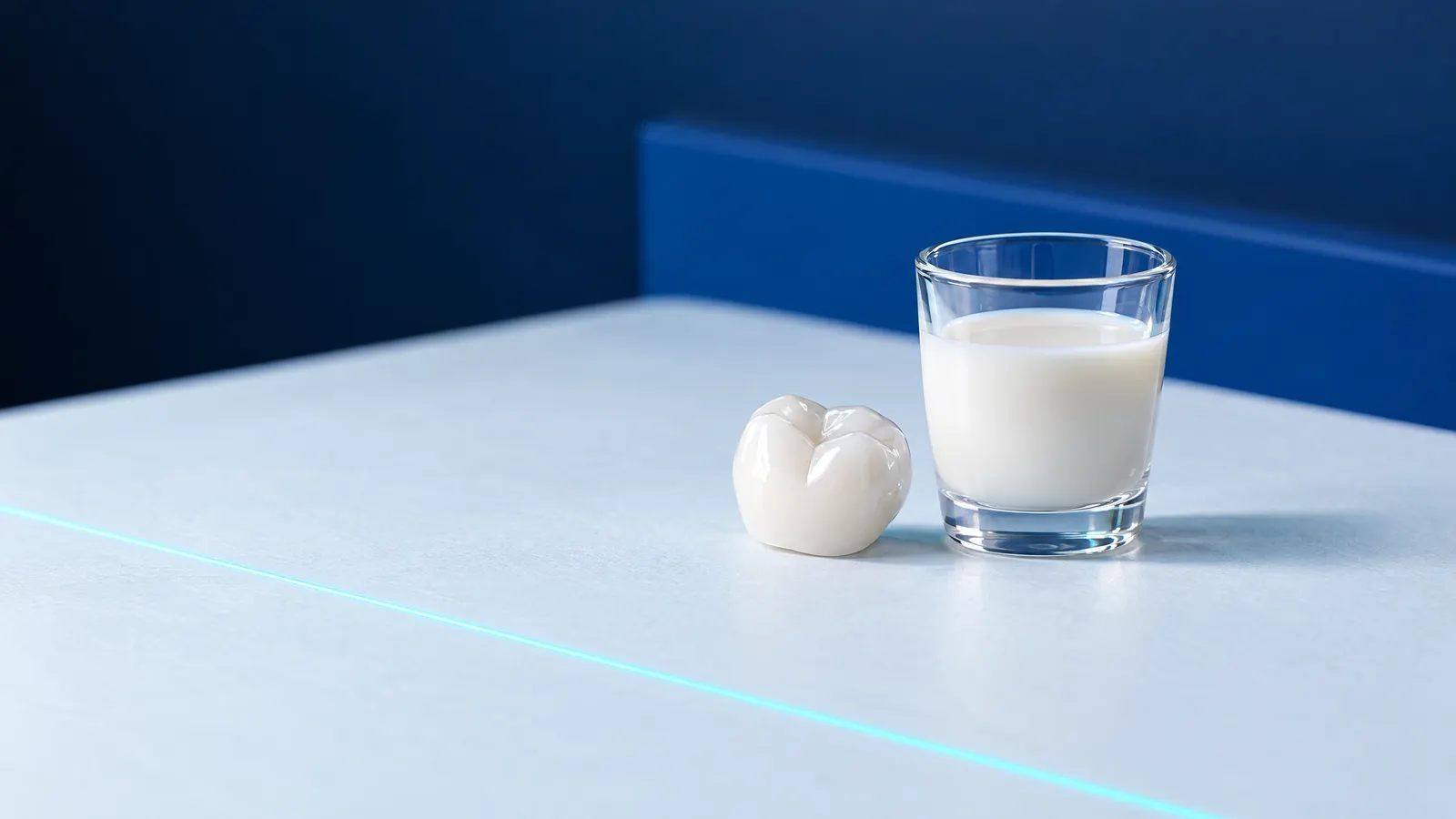
- If the tooth is dirty, rinse it gently and briefly with milk, saline or the injured person’s saliva; do not scrub the root.
- Put the tooth back into the socket in its correct position, straight away, at the scene.
- Ask the injured person to bite on gauze, a tissue or a napkin to hold the tooth in place.
- When the tooth cannot be put back, for example in an unconscious person, place it in a storage liquid as quickly as possible.
- Go to a dentist immediately; the Polish IADT poster “Uratuj ząb” (Save your tooth) speaks of a visit within two hours at the latest.
How much time is there, and what should a knocked-out tooth be kept in?
Saving a knocked-out tooth is a matter of minutes, not hours: the root surface starts drying out after a few minutes, and after 30 minutes dry most of the periodontal ligament cells are dead. According to the IADT, a tooth put back within about 15 minutes has the best chance of living cells, and 60 minutes dry is the threshold after which they are usually dead; even then the dentist usually puts the tooth back.
The storage liquid is there to protect the root from drying out until the visit. The IADT lists, in order: milk, HBSS (a special solution for storing teeth), saliva collected in a cup and saline. Water is a poor choice, but better than keeping the tooth dry.
| How the tooth was kept | What happens to the root cells | What it means |
|---|---|---|
| Put back in the socket within about 15 minutes | They usually stay alive | The most favourable outlook |
| In milk, HBSS, saliva or saline, under 60 minutes dry | Alive but damaged | A poorer outlook, the tooth is usually put back |
| Dry for over 30 minutes | Most cells die | The risk of complications rises |
| Dry for over 60 minutes | Usually dead | The tooth is still usually put back, the outlook is poor |
| Wrapped in a dry tissue | They dry out within minutes | Do not do this |
A child’s knocked-out baby tooth: why is it not put back?
A knocked-out baby tooth is not put back: the 2020 IADT guidelines for primary teeth say so plainly, and the main reason is the risk of the tooth being inhaled. The child should still see a dentist, who will assess the gum, the bone, the neighbouring teeth and the space for the permanent tooth.
A baby tooth that has moved or loosened after a knock often changes colour. According to the IADT, this discolouration may fade over the following weeks or months, and a change of colour alone, without signs of infection, is not a reason for root canal treatment.
A knocked-out permanent tooth in a child is a different matter: you act as you would for an adult, that is, put the tooth back or keep it in milk. If you are not sure whether the tooth is a baby tooth or a permanent one, put it in milk and go to a dentist, who will tell. Dental injuries are common: according to the IADT, they affect one in four school-age children.
Broken or chipped tooth: what to do with the fragment?
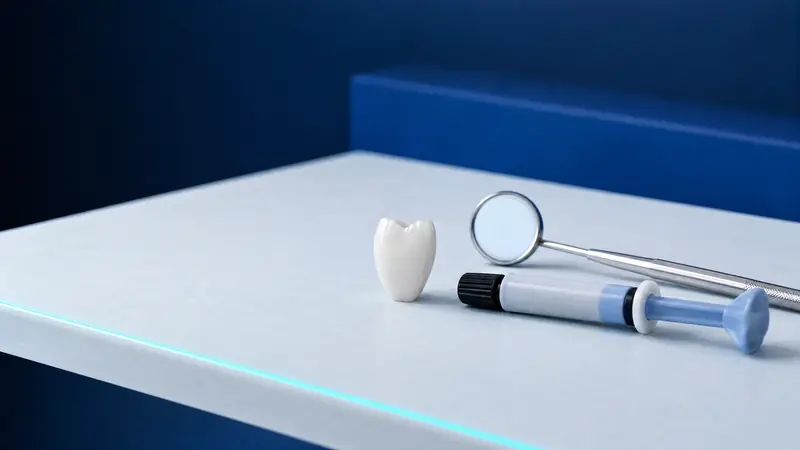
With a broken or chipped tooth, find the fragment and take it to the dentist in water or saline so that it does not dry out. The IADT guidelines on fractures state that an undamaged fragment can be bonded back onto the tooth, and that it is rehydrated for 20 minutes before bonding.
Further treatment depends on how deep the fracture goes. When only the enamel has broken, the dentist bonds the fragment back, or smooths the edge or rebuilds it with composite. When the fracture reaches the dentine but not the pulp, the exposed dentine is covered with a material, and when the fracture lies closer than 0.5 mm to the pulp, a lining is placed first.
Exposed pulp, often visible as a red dot, is sensitive to air, cold and sweet things, and it is treated by partial removal of the pulp or by covering it. A fracture combined with a loosened tooth clearly raises the risk of the pulp dying, which is why the table shows how urgent each situation is.
| Situation | What to do | How quickly |
|---|---|---|
| Permanent tooth knocked out whole | Put it back in the socket or in milk and go to a dentist | Immediately, minutes count |
| Knocked-out baby tooth | Do not put it back; take the child to a dentist | As soon as possible |
| Chipped enamel, the tooth does not hurt | Take the fragment in water or saline | At the earliest available appointment |
| Fracture with pain on cold or a red dot | Do not touch the area, take the fragment | Urgently |
| Tooth pushed out of place or loose | Do not force it back, go to a dentist | Urgently |
| A knock with no visible change | Watch for colour change and pain, book a check-up | Check-up after the injury |
| Head injury with vomiting or loss of consciousness | Call for help | Hospital emergency department (SOR) or 112 at once |
When should you go to the hospital emergency department (SOR) or call 112 after a dental injury?
After a dental injury, go to the hospital emergency department (SOR) or call 112, the emergency number, when the injury involves not only the tooth but also the head, the facial bones or the airway. The list below brings together warning signs from NHS and IADT materials and from guidance after oral procedures; it is a synthesis, not a Polish guideline.
The IADT guidelines also recommend that after a tooth is knocked out, a doctor should assess whether a tetanus booster is needed. Bring your vaccination record or check the date of your last tetanus jab.
- Loss of consciousness or vomiting after a blow to the head.
- Suspected fracture of the facial bones, upper jaw or lower jaw, especially with difficulty breathing.
- Difficulty breathing, swallowing or speaking.
- Bleeding from the mouth that does not stop after 15 to 20 minutes of firm pressure with gauze.
- Suspicion that the tooth or part of it has entered the airway, especially with coughing or shortness of breath.
What does the dentist do after an injury, and how long does treatment take?
After a permanent tooth has been knocked out, the dentist cleans the area, puts the tooth back or checks its position, and holds it in place with a flexible splint for 2 weeks. According to the IADT, a tooth with a fully formed root needs root canal treatment started within 2 weeks of being put back, which is called replantation.
After replantation, the IADT recommends a soft diet at home for up to 2 weeks, brushing with a soft toothbrush after every meal and avoiding contact sports. The follow-up visits are there to catch complications, because the pulp can die with a delay, and the tooth then darkens.
For a child, the NFZ (Poland’s National Health Fund) funds an examination after a dental injury and up to 3 follow-up visits within 6 months, and emergency dental care includes treatment of displaced teeth. Legal position as of 12 October 2026.
Where to get help after a dental injury at night and at weekends in Białystok
In Białystok, NFZ-funded night and weekend dental help is provided at ul. Częstochowska 18/II (15-459 Białystok), run by the provider “Pałac na Wodzie Falkowski”, tel. 85 651 51 70. According to the NFZ search tool “Gdzie się leczyć” (Where to get treatment), it is open Monday to Friday from 19:00 to 7:00 the next morning, and round the clock on Saturdays and Sundays; as of 12.10.2026.
The search tool does not give opening hours for public holidays that fall on weekdays, so call the clinic’s number before you set off. You can check the current list in the NFZ search tool, and the free NFZ helpline, 800 190 590, will also point you to the nearest clinic.
How it works at DentalBlue
DentalBlue in Białystok is open Monday to Friday from 8:00 to 20:00 and on Saturdays from 8:00 to 16:00, and is closed on Sundays; with an injury, call reception before you come: 85 748 00 50. A visit in pain includes a panoramic X-ray in the clinic’s radiology room, a consultation, an examination and pain relief, and costs 340 zł in the price list. The radiology room also takes intraoral X-rays and CBCT scans when they are needed to assess the injury. The final scope and cost are set by the dentist after the examination, and prices may change.
Frequently asked questions
Can a knocked-out tooth be put back after an hour?
Often, yes. According to the IADT, after 60 minutes dry the cells around the root are usually dead, but putting the tooth back is still usually recommended, although the outlook is then poor. The dentist decides after the examination, so bring the tooth even after a longer time.
Can a knocked-out tooth be kept in water?
According to the IADT, water is a poor liquid for storing a tooth, but better than keeping it dry. The first choice is milk, followed by a special HBSS solution, saliva collected in a cup and saline. Never wrap the tooth in a dry tissue.
What should I do if a tooth has chipped and does not hurt?
Keep the fragment in water or saline and book a visit. The dentist bonds chipped enamel back or rebuilds it with composite, and the IADT recommends check-ups after 6 to 8 weeks and after a year, because even after a minor injury the pulp may die later.
Why has a tooth gone dark after a knock?
A tooth darkening after an injury may mean that the pulp has died, which can happen weeks or months later. In baby teeth the discolouration may fade on its own, while in permanent teeth the dentist checks the vitality of the pulp and assesses an X-ray. The article on dead teeth covers this in more detail.
How common are dental injuries?
According to the IADT, about 25% of school-age children have a dental injury, and 33% of adults have had an injury to permanent teeth. A 2018 review of studies estimates that more than a billion people alive today have had a dental injury.
Sources
- IADT: Fouad AF et al., guidelines for the management of avulsion of permanent teeth, AAPD reprint (2020)
- Dental Traumatology: Bourguignon C et al., IADT guidelines, fractures and luxations of permanent teeth (2020)
- Dental Traumatology: Day PF et al., IADT guidelines, injuries in the primary dentition (2020)
- IADT: poster “Uratuj ząb”, Polish version (2024)
- Dental Traumatology: Levin L et al., IADT guidelines, general introduction (2020)
- Dental Traumatology: Petti S et al., worldwide prevalence of dental injuries, review and meta-analysis (2018)
- NFZ: Gdzie się leczyć, emergency dental care, Podlaskie voivodeship (as of 12.10.2026)
- ELI: Rozporządzenie MZ w sprawie świadczeń gwarantowanych z zakresu leczenia stomatologicznego, t.j. Dz.U. 2025 poz. 615
An informational article. It does not replace a consultation, and treatment decisions are made during a visit.