How does a sonic toothbrush differ from a rotating one?
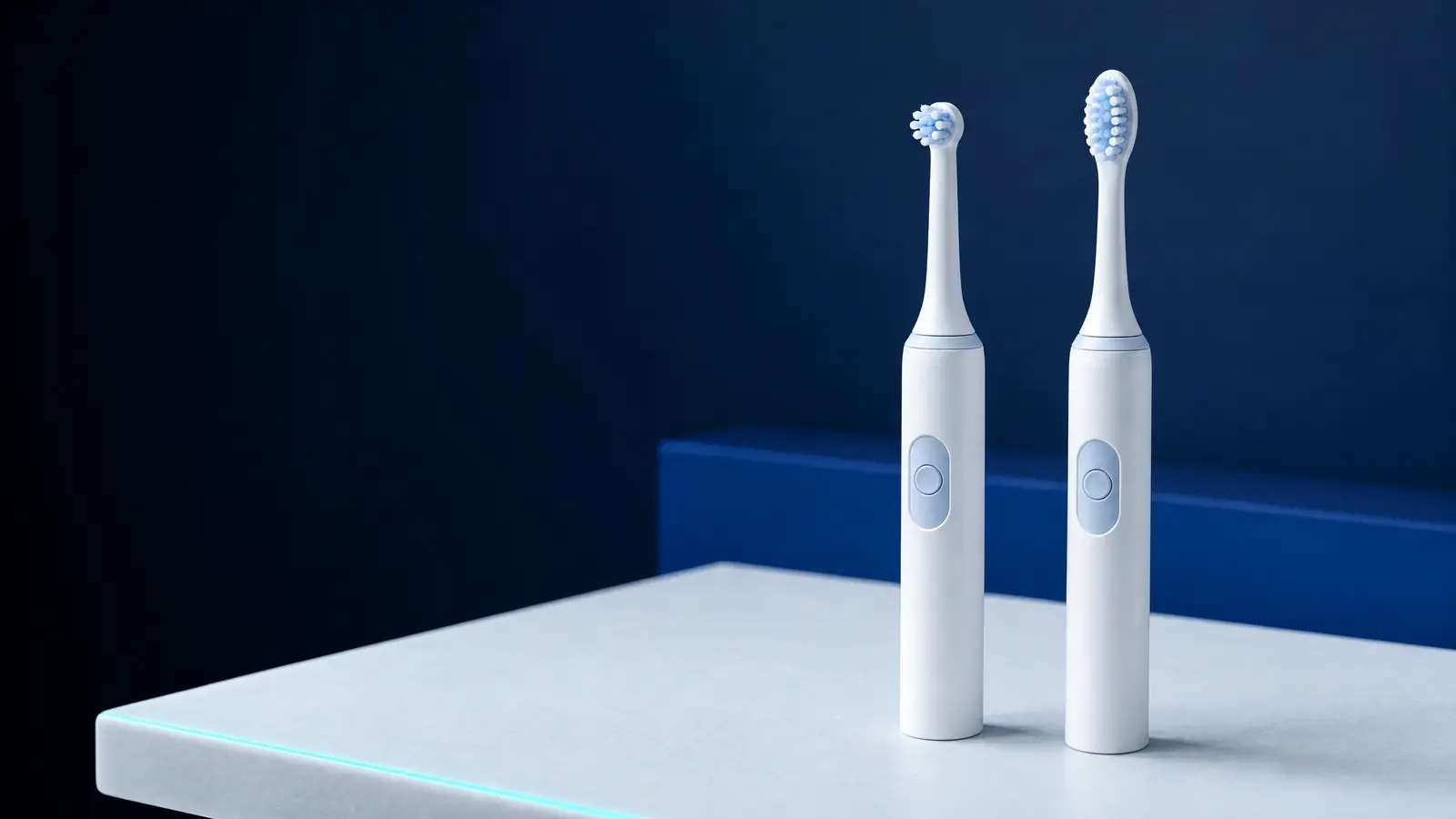
Sonic and rotating toothbrushes are two kinds of electric toothbrush that differ in how the head moves. The rotating toothbrush, called oscillating-rotating in research, has a small round head which, as the Cochrane review describes it, turns alternately one way and then the other.
A sonic toothbrush has an elongated head, similar to that of a manual toothbrush, and its bristles vibrate very rapidly from side to side. In scientific publications it is called a high-frequency sonic toothbrush, and in comparisons with other toothbrushes it is assessed mainly on plaque removal and gum bleeding.
The question of whether to choose a sonic or an electric toothbrush rests on a misunderstanding: a sonic toothbrush is one kind of electric toothbrush. The 2014 Cochrane review also distinguished counter-oscillating, circular, ultrasonic and ionic toothbrushes, but there were few studies of them, 2 to 7 per type, compared with 27 studies of oscillating-rotating toothbrushes.
Does an electric toothbrush clean teeth better than a manual one?
An electric toothbrush removes plaque slightly more effectively than a manual one, but both, used carefully, are enough for daily oral hygiene. The 2014 Cochrane review (51 studies in the meta-analysis, 4,624 participants) reports that after 1 to 3 months electric toothbrushes reduced plaque by 11% and gum inflammation (gingivitis) by 6% more than manual ones, and after more than 3 months by 21% and 11%.
The authors rated the quality of this evidence as moderate and noted that the importance of the differences for long-term dental health remains unclear. Most of the data concerned oscillating-rotating toothbrushes, which significantly reduced plaque and gingivitis both after 1 to 3 months and over a longer period.
A systematic review by Suvan et al., published in October 2026, covered 21 studies comparing the two kinds of toothbrush in adults with gingivitis and describes a clearly greater reduction in bleeding and plaque with electric toothbrushes. The UK’s National Health Service (NHS) points out, however, that both kinds are equally good as long as you brush all the surfaces of your teeth with fluoride toothpaste.
Sonic or rotating toothbrush: what do comparative studies show?
In head-to-head comparisons the rotating toothbrush performs slightly better than the sonic one, but the differences are small. The 2022 meta-analysis by Thomassen et al. (28 publications) concluded with moderate certainty that the oscillating-rotating toothbrush offers a very small advantage over the sonic toothbrush in removing plaque.
The 2023 review by van der Sluijs et al. (32 publications, 38 comparisons) found, in longer studies, a small but statistically significant difference in favour of rotating toothbrushes in the assessment of gum bleeding. The authors noted that 14 of the 32 publications declared a conflict of interest, which is worth bearing in mind given that such studies are often run with the involvement of manufacturers.
An earlier Cochrane review, from 2010, also described a small, short-term advantage of oscillating-rotating toothbrushes over side-to-side toothbrushes, of unclear clinical importance. So if you like your sonic toothbrush and use it carefully, the type of drive alone is no reason to replace it.
Manual, rotating and sonic toothbrushes compared
The table sets out the three kinds of toothbrush on the basis of Cochrane reviews, more recent meta-analyses and the recommendations of the American Dental Association (ADA). The differences in effectiveness are small, so the choice can come down to convenience and to which toothbrush you actually use for the full 2 minutes.
| Feature | Manual | Rotating (oscillating-rotating) | Sonic |
|---|---|---|---|
| Bristle movement | You make the movement yourself | Round head turns alternately in both directions | Elongated head, very rapid side-to-side vibration |
| Plaque compared with manual | Reference point in studies | Less plaque; the most studies (Cochrane 2014) | Ranked ahead of manual in meta-analyses (2022, 2026) |
| Rotating versus sonic | Not applicable | Very small advantage for plaque and bleeding | Slightly weaker results, small difference |
| Safety for the gums | Depends on pressure and technique | No difference from manual in a review of 35 publications | Depends on pressure and technique |
| Who may find it easier | No charging, usually cheaper (ADA) | People with limited hand dexterity or braces (ADA) | People with limited hand dexterity or braces (ADA) |
| Replacement | Toothbrush every 3 to 4 months | Brush head every 3 to 4 months | Brush head every 3 to 4 months |
Does an electric toothbrush damage the gums and enamel?
An electric toothbrush used according to the instructions does not damage the gums any more than a manual one. The 2011 systematic review by Van der Weijden et al. (35 publications) found oscillating-rotating toothbrushes consistently safe compared with manual ones, and in the two studies in which safety was the main aim, gum recession did not differ between the groups.
In a 3-year study by Dörfer et al. (2016), 109 people with existing gum recession brushed with either an electric or a manual toothbrush. Recession decreased in both groups, on average from 2.35 to 1.90 mm with the electric toothbrush and from 2.26 to 1.81 mm with the manual one, with no significant difference between the groups.
The 2015 review by Heasman et al. regarded the link between toothbrushing itself and gum recession and lesions at the necks of the teeth as largely unresolved, but in cross-sectional studies recession was associated with horizontal scrubbing, hard bristles, and the frequency and duration of brushing. A pressure sensor, which signals when you press too hard, can therefore be a practical extra; the causes and treatment of recession are covered in a separate article on gum recession.
Is an electric toothbrush suitable for children and for people with braces?
An electric toothbrush for a child removes plaque slightly better than a manual one, although the difference is small. The 2025 review by Dağdeviren et al. (12 publications, children without braces) pointed with moderate certainty to a small advantage in plaque removal, mainly for oscillating-rotating toothbrushes, with no significant difference in the condition of the gums.
Whatever the type of toothbrush, a parent supervises brushing and finishes cleaning the child’s teeth until at least the age of 7, as recommended by the guidelines of the European Academy of Paediatric Dentistry (EAPD). The ADA notes that an electric toothbrush can be easier to use for children, older people, people with disabilities and people wearing orthodontic braces.
With fixed braces the evidence is weaker. The 2026 meta-analysis by Liu et al. (23 publications) suggests that an electric toothbrush may moderately reduce the amount of plaque, but the certainty of the evidence is low, and an earlier meta-analysis by ElShehaby et al. (2020) found no differences after 4 and 8 weeks.
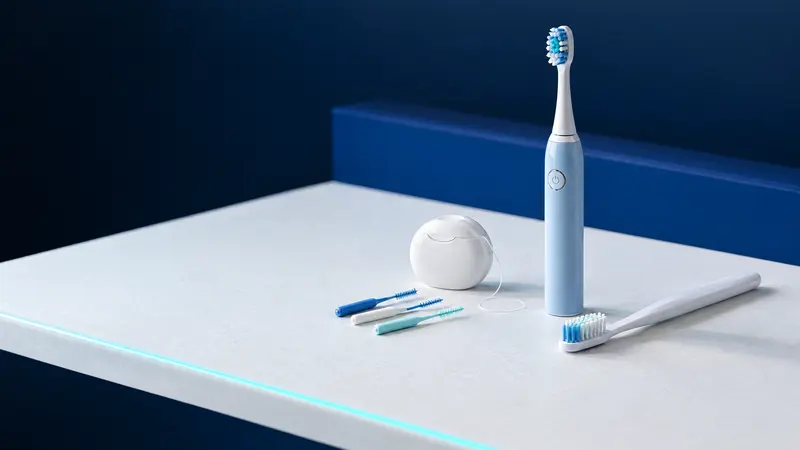
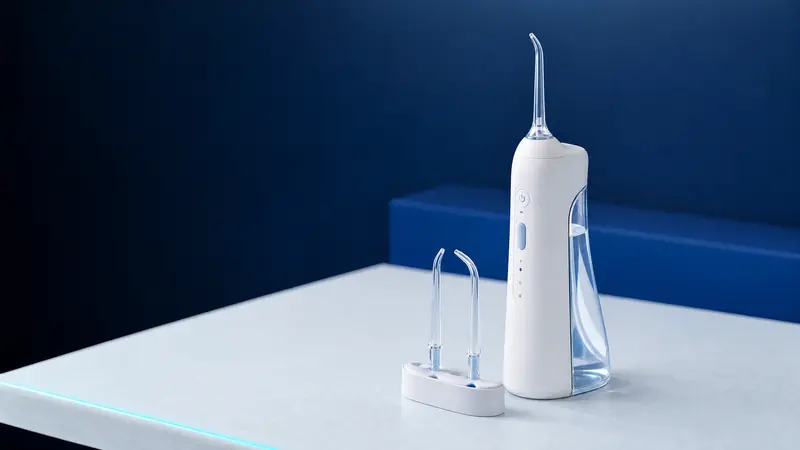
With braces, bridges and implants a toothbrush alone is not enough, because it does not reach well between the teeth and under the parts of restorations. Interdental brushes, floss or, as an extra, a water flosser are also needed.
How often should you replace an electric toothbrush head?
An electric toothbrush head is replaced every 3 to 4 months, or sooner if the bristles are visibly splayed or frayed. The ADA gives this recommendation for toothbrushes, adding that worn bristles clean less effectively; the same rule applies to replaceable brush heads.
The ADA also advises storing a toothbrush upright so that it can air-dry, because a damp toothbrush shut in a container encourages the growth of microorganisms. Toothbrushes should not be shared with other people, so each member of the household should have their own labelled brush head.
Which electric toothbrush: what should you look for when choosing one?
Which electric toothbrush will suit you depends more on a few features and on comfort than on the brand or the number of modes, because the reviews compared mainly the type of head movement. User opinions of sonic and rotating toothbrushes help you judge comfort, noise or battery life, but research reviews say more about effectiveness, and in them the differences are small.
Before buying, it is worth checking for features that make correct brushing easier day to day.
- Soft or medium bristles: the ADA recommends soft ones to limit the risk of abrading the gums, and the UK guidance Delivering better oral health (DBOH) recommends a small head and medium-textured bristles.
- A timer, which helps you keep to the recommended 2 minutes of brushing.
- A pressure sensor, if you tend to scrub hard or have receding gums.
- A head size suited to your mouth, so that it reaches the last molars.
- The availability and cost of brush heads, which you will replace several times a year.
- A comfortable handle that is not too heavy, especially if your hand dexterity is limited.
Toothbrushes and oral hygiene at DentalBlue
At DentalBlue in Białystok, preventive care includes hygiene treatment, fissure sealing and fluoride application, and the clinical team includes dental hygienists. You can bring your toothbrush to a hygiene appointment and ask which areas you miss when brushing. In the clinic’s price list, “Kompleksowa higienizacja (skaling, piaskowanie, fluoryzacja)” (comprehensive hygiene treatment: scaling, air polishing, fluoride) costs 350 zł, and “Kontrola po higienizacji” (check-up after hygiene treatment) 50 zł. The final scope and cost are set at the visit, and prices may change.
Frequently asked questions
Do you brush differently with an electric toothbrush than with a manual one?
Yes, in the details. With an electric toothbrush there is no need to scrub, because the movement of the bristles does the work: simply guide the head along the teeth and the gum line without pressing hard. The time stays the same, about 2 minutes, twice a day, with fluoride toothpaste.
From what age can a child use an electric toothbrush?
Reviews of studies in children do not set a single starting age, and what makes the difference is adult supervision. A parent helps and finishes cleaning the teeth until at least the age of 7 (EAPD) and matches the amount of fluoride toothpaste to the child’s age. The head should be small and suited to the child’s mouth.
Can an electric toothbrush replace floss or interdental brushes?
No. A toothbrush does not reach well into the spaces between the teeth, so the UK guidance DBOH recommends cleaning them every day with an interdental brush or floss, before brushing. A water flosser can be an extra, but its effect is less well documented.
Can the whole family use one electric toothbrush?
Sharing a handle is possible if everyone has their own labelled brush head. The ADA recommends not sharing toothbrushes, because this leads to an exchange of body fluids and microorganisms between people. Store brush heads upright so that they air-dry.
Is it worth buying a more expensive toothbrush with many modes?
Reviews of studies compared mainly the type of head movement, not the number of modes or apps. For dental health, what matters more is a timer, a pressure sensor, a comfortable handle and the availability of brush heads, which you will replace every 3 to 4 months.
Sources
- Cochrane: Yaacob M et al., powered versus manual toothbrushes (2014)
- Cochrane: Deacon SA et al., different powered toothbrushes (2010)
- International Journal of Dental Hygiene: Thomassen TMJA et al., effectiveness of powered toothbrushes, a network meta-analysis (2022)
- International Journal of Dental Hygiene: van der Sluijs E et al., oscillating-rotating versus sonic toothbrushes (2023)
- Journal of Periodontology: Van der Weijden FA et al., safety of oscillating-rotating toothbrushes (2011)
- Journal of Clinical Periodontology: Dörfer CE et al., powered toothbrush and pre-existing gum recession, 3 years (2016)
- International Journal of Dental Hygiene: Dağdeviren F et al., powered toothbrushes in children (2025)
- ADA: Toothbrushes, Oral Health Topics (2026)
An informational article. It does not replace a consultation, and treatment decisions are made during a visit.