What is a water flosser and how does it work?
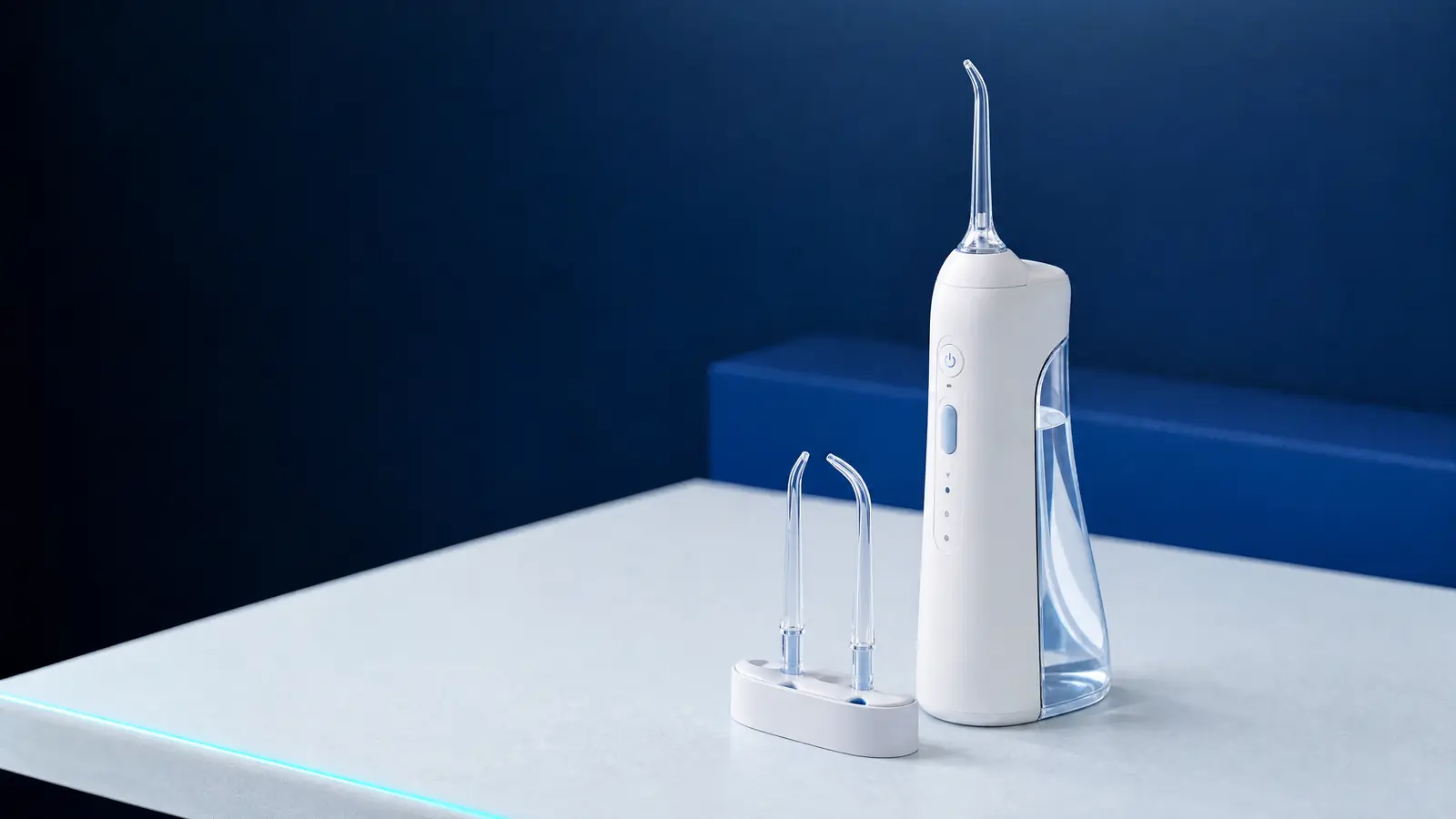
A water flosser is a handheld device that uses a pulsating jet of water to flush food debris and some plaque out of the spaces between the teeth and from the area along the gum margin. The American Dental Association (ADA) describes it as a device that shoots streams of water in regular pulses and counts it among the aids for cleaning between the teeth.
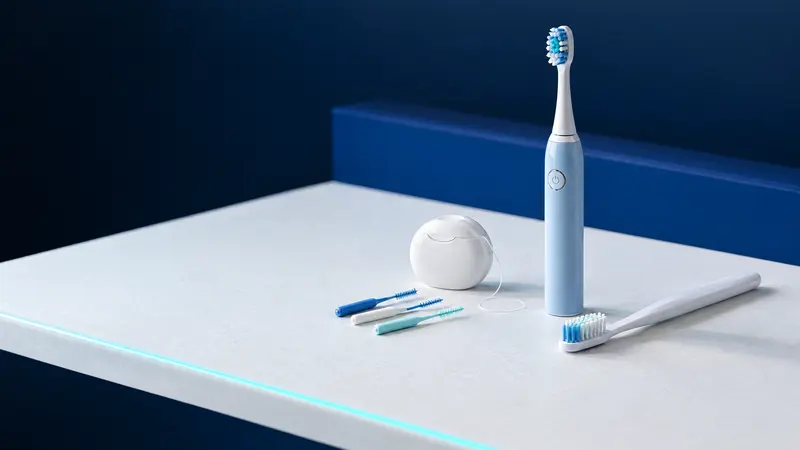
A water flosser does not scrub plaque away the way a brush does. The UK’s Oral Health Foundation points out that interdental brushes and floss mechanically scrape plaque off the tooth surface, which water alone cannot always do, so a water flosser does not replace these tools.
Water flossers are sold as countertop models, with a larger reservoir, and as cordless, battery-powered ones. The reviews of studies discussed below assessed water flossers as a group, without indicating which type of device works better.
Does a water flosser work? What studies show
The effect of a water flosser is poorly documented: a 2019 Cochrane review (35 studies, 3,929 adults) rated the evidence for water flossers as limited and inconsistent. A water flosser added to brushing may have reduced gum inflammation (gingivitis) at one month, but not at 3 or 6 months, and the certainty of this result was very low.
In the same review, a water flosser did not reduce the number of bleeding sites or the amount of plaque more than brushing alone, with low certainty evidence. Similarly, an earlier systematic review by Husseini et al. from 2008 (7 publications) found no beneficial effect on visible plaque, although it described a trend towards improved gum health.
The 2015 review of reviews by Sälzer et al. concluded that floss, toothpicks and water flossers have weak or little evidence of an effect on gingivitis, while moderate evidence relates to interdental brushes, which reduce both plaque and inflammation.
Water flosser or dental floss: which should you choose?
Water flosser or dental floss is a choice in which neither option has a clear advantage, and the first choice is usually interdental brushes. The UK prevention guidance Delivering better oral health (DBOH) recommends cleaning between the teeth every day with an interdental brush where it fits, and with floss or tape where the gaps are tight.
In comparisons with floss, the 2019 Cochrane review found, with low or very low certainty evidence, that a water flosser may reduce gingivitis slightly more after one month. The 2018 network meta-analysis by Kotsakis et al. (22 studies, 10 methods) ranked interdental brushes and water flossers high for reducing gum bleeding, and floss and toothpicks last.
The table sets out the tools for cleaning between the teeth. If you manage interdental brushes well, a water flosser is not necessary; if you cannot use them, it can be a sensible addition.
| Tool | How it cleans | What studies show | When it works well |
|---|---|---|---|
| Interdental brushes | Mechanically scrub plaque off the sides of the teeth | Less plaque and gingivitis, moderate evidence | Gaps they fit into, also around bridges and implants |
| Floss or tape | Mechanically, in tight gaps | Weak evidence of an effect on gingivitis | Tight contacts between the teeth |
| Water flosser | Rinses with a jet of water, does not scrub plaque off | Limited and inconsistent evidence (Cochrane 2019) | Braces, bridges, implants, difficulty with floss |
| Brushing alone | Does not reach well between the teeth | Reference point in studies | Not enough as the only method |
Is a water flosser worth buying?
A water flosser is worth buying above all if you find interdental brushes or floss difficult to use. The Oral Health Foundation writes that some people find a water flosser easier than floss, especially with orthodontic braces, bridges, implants or limited hand dexterity, and the ADA mentions braces and fixed bridges.
If you have no such difficulties and clean between your teeth every day, a water flosser is unlikely to add much. Before you buy one, it is worth asking a hygienist whether the problem is simply an interdental brush of the wrong size.
- You have fixed braces, and it is hard to thread floss under the wire.
- You have a dental bridge or implants, and you find it hard to clean thoroughly around the restorations.
- You have limited hand dexterity, for example because of joint disease.
- You cannot use floss regularly despite trying and having been shown how.
Water flosser with orthodontic braces: does it help?
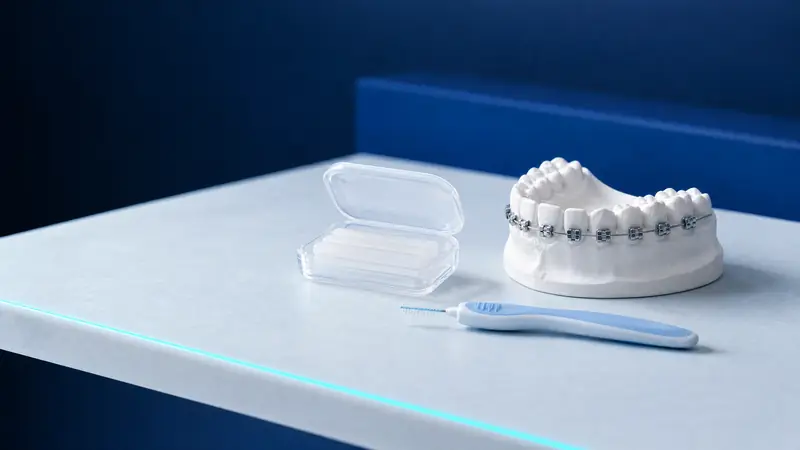
A water flosser can help people wearing orthodontic braces keep their teeth clean, but study results are mixed. The 2024 meta-analysis by AlMoharib et al. (6 studies, 4 of them pooled) showed that a water flosser added to brushing with a manual toothbrush reduced the plaque index and the bleeding index, with no difference in the overall gingival index.
The 2024 meta-analysis by Zarei et al. (7 studies) found no significant improvement when a water flosser was added to either a manual or an electric toothbrush, with low or very low certainty evidence. The 2026 review by Yiamwattana et al. concluded that a water flosser gives no better results than floss in patients with braces.
With braces, what matters most is still thorough brushing around the brackets and the wire with fluoride toothpaste, and interdental brushes where they fit. A water flosser can complement them, especially in places that are hard to reach; the first days with fixed braces are covered in a separate article.
Water flosser with implants: what is known?
A water flosser can be an addition to brushing around implants, but there are few studies. The 2025 review by Gandhi et al. reports that a water flosser plus brushing reduced plaque, the gingival index and bleeding around implants more than brushing alone, and in one of the included studies, after 30 days, reduced bleeding on probing was found at 18 of 22 implants (81.8%) in the water flosser group and at 6 of 18 implants (33.3%) in the floss group. These are the proportions of implants that improved, not the percentage reduction in bleeding.
The 2025 meta-analysis by Bishti et al., based on 2 studies, did not, however, show that a water flosser significantly reduced bleeding or plaque compared with brushing alone; water flossers and interdental brushes fared slightly, though not significantly, better than floss.
Around an implant, what counts is daily, thorough cleaning of the gum margin at the crown and regular check-ups, because the condition of the tissues is assessed by a dentist or hygienist. The factors that affect how long implants last are described in a separate article.
How do you use a water flosser, step by step?
How to use a water flosser is described in the instructions for the specific device, but the general routine is similar. A water flosser is used once a day as an addition to brushing twice a day with fluoride toothpaste and to interdental brushes where they can be used.
- Fill the reservoir with lukewarm water; add mouthwash only if the instructions allow it and a dentist recommends it.
- Start at the lowest pressure and increase it gradually if your gums tolerate it well.
- Lean over the sink and put the tip in your mouth before switching the device on.
- Aim the jet at the gum margin and the spaces between the teeth, moving the tip from the back teeth to the front.
- With braces, guide the jet around the brackets and under the wire, and with implants along the gum around the crown.
- After use, empty the reservoir, rinse the device and leave it to dry.
How do you look after a water flosser so it does not become a source of bacteria?
With daily use a water flosser becomes colonised by bacteria, and this cannot be avoided completely. In a 2021 study by Bertl et al., after only 3 weeks aerobic and anaerobic bacteria, not only from the mouth, were found in the tip or the device, and they were carried along with the water jet.
In a further study by the same team (2022, 24 patients), caries-causing bacteria were detected in more than 95% of samples, and bacteria associated with periodontal disease in 19 to 56%. Neither the way the device was used, nor changing the tip, nor regular cleaning of the device with a chlorhexidine or essential oil mouthwash prevented colonisation, while intensive cleaning reduced the amount of most bacteria.
The authors recommend that each member of the household should have their own device, not just their own tip. Clean the water flosser according to the instructions and do not leave water in the reservoir between uses.
Water flossers and interdental hygiene at DentalBlue
At DentalBlue in Białystok, preventive care includes hygiene treatment, fissure sealing and fluoride application, and the clinic also provides orthodontic and implant treatment. At a hygiene appointment you can ask for help choosing tools for cleaning between your teeth and for an assessment of whether a water flosser makes sense in your situation. In the clinic’s price list, “Kompleksowa higienizacja (skaling, piaskowanie, fluoryzacja)” (comprehensive hygiene treatment: scaling, air polishing, fluoride) costs 350 zł, and “Konsultacja periodontologiczna” (periodontal consultation) 300 zł. The final scope and cost are set at the visit, and prices may change.
Frequently asked questions
Does a water flosser remove tartar?
No. Tartar is mineralised plaque, which is removed at the surgery during scaling. A jet of water does not remove even all the soft plaque, because, as the Oral Health Foundation notes, water alone cannot always scrape it off the tooth surface.
How often should you use a water flosser?
Usually once a day, like any cleaning between the teeth, which the ADA regards as an important part of daily hygiene. A water flosser does not change the rule of brushing twice a day for about 2 minutes with fluoride toothpaste.
Can you put mouthwash in a water flosser?
Only if the device’s instructions allow it and a dentist recommends it. In the study by Bertl et al. (2022), cleaning the water flosser with mouthwash did not prevent bacterial colonisation, and chlorhexidine mouthwash used for longer than a few weeks stains the teeth, according to a 2017 Cochrane review.
Does a water flosser help with bleeding gums?
It may, but the evidence is inconsistent: in the meta-analysis by Kotsakis et al. water flossers ranked high for reducing bleeding, while in the Cochrane review they did not reduce the number of bleeding sites more than brushing. Bleeding gums are a sign of inflammation that is worth showing to a dentist or hygienist.
Is a water flosser useful with a dental bridge?
It can make it easier to clean around the pontic of the bridge, that is the artificial tooth suspended above the gum, because the jet of water reaches where it is hard to thread floss. The ADA lists fixed bridges among the situations in which a water flosser can help; it complements interdental brushes rather than replacing them.
Sources
- Cochrane: Worthington HV et al., home use of interdental cleaning devices (2019)
- International Journal of Dental Hygiene: Husseini A et al., oral irrigation as an adjunct to toothbrushing (2008)
- Journal of Periodontology: Kotsakis GA et al., network meta-analysis of interdental oral hygiene methods (2018)
- International Journal of Dental Hygiene: AlMoharib HS et al., water flossers in patients with fixed braces (2024)
- BMC Oral Health: Zarei Z et al., water flossers and periodontal health during orthodontic treatment (2024)
- BDJ Open: Gandhi G et al., water flossers and peri-implant diseases (2025)
- Clinical Oral Investigations: Bertl K et al., bacterial colonisation of water flossers (2022)
- Oral Health Foundation: Water flossers (2026)
An informational article. It does not replace a consultation, and treatment decisions are made during a visit.