What an implant is made of
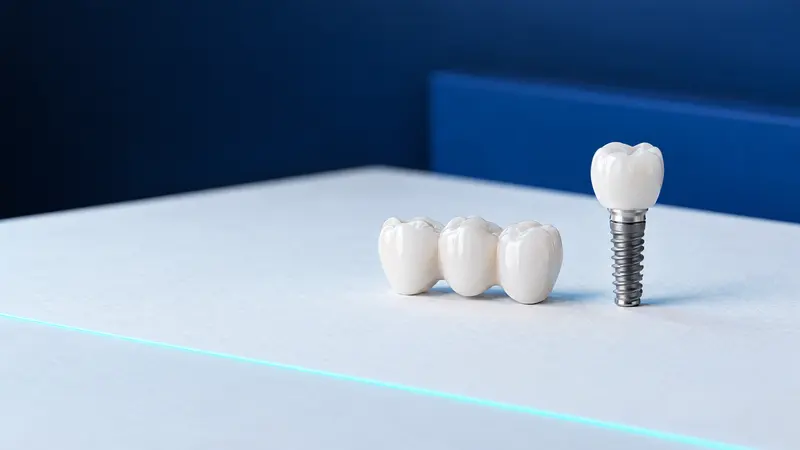
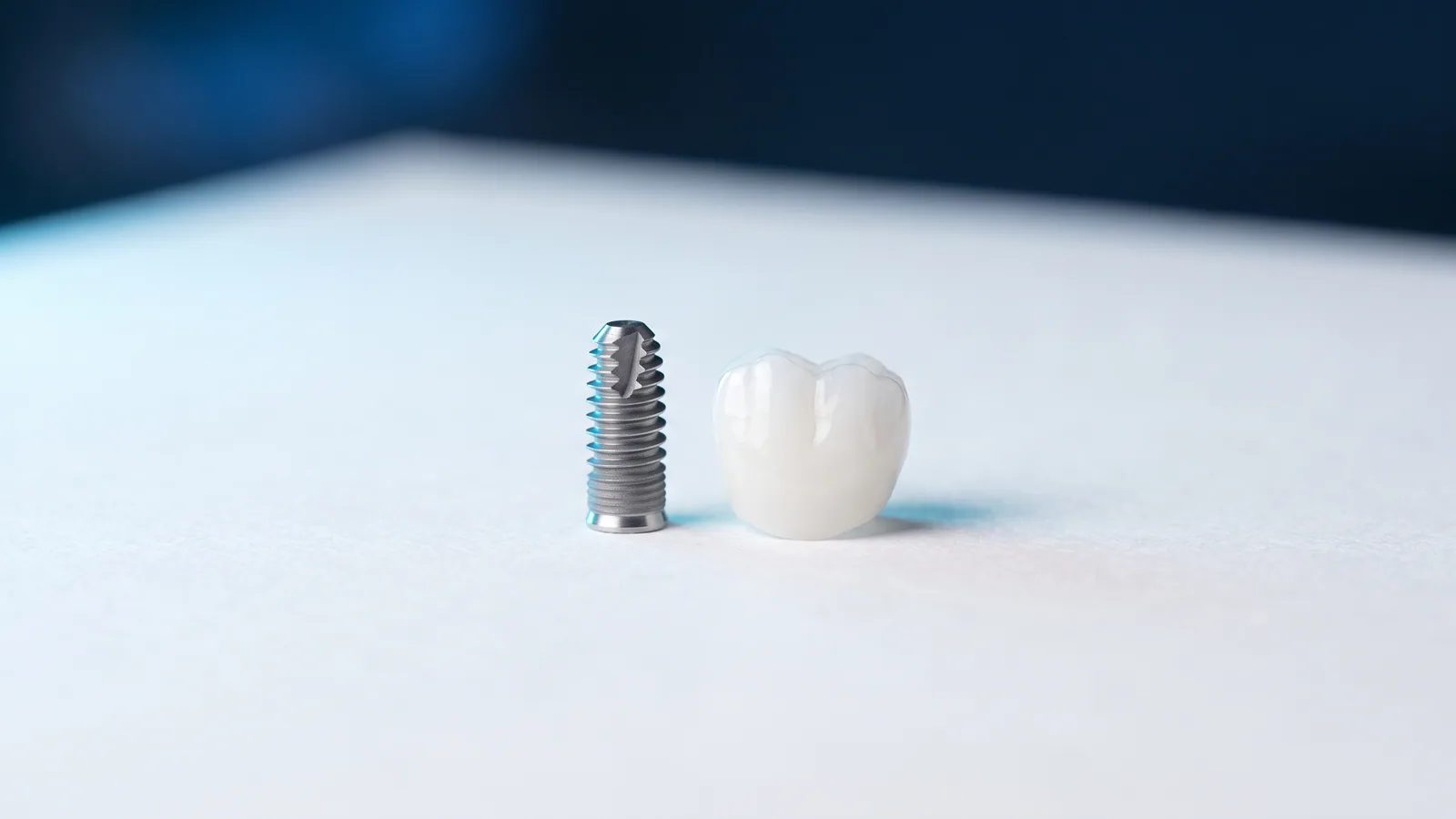
A finished tooth on an implant has three parts. The implant, a titanium screw placed in the bone, takes the role of the root. The abutment, a small component screwed onto the implant, comes up through the gum. The crown, most often zirconia, is what you see and what you bite with. Titanium is used because bone fuses to its surface, which is called osseointegration and is the basis of the whole method.
An implant can replace a single tooth, can be a pillar of a bridge replacing several teeth, or one of two or four implants supporting a denture for a whole arch.
Consultation and the CBCT scan
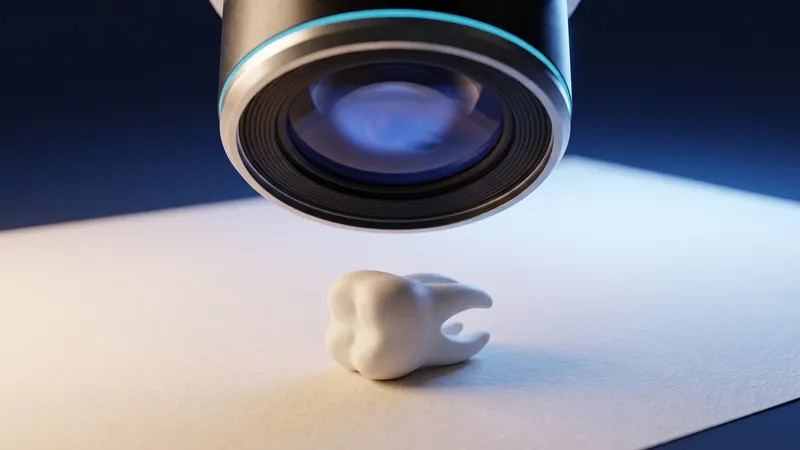
The first step is an implant consultation and a cone beam CT scan (CBCT), taken in the clinic's own radiology unit with no visit elsewhere. A panoramic X-ray shows a flat image, the CBCT shows the bone in three dimensions: its height, width and density, as well as the position of the nerve in the lower jaw and the sinus in the upper jaw. The position, length and diameter of the implant are planned on this image.
In the medical history, general conditions and regular medicines matter, because some of them affect bone healing. So does smoking. None of this rules out treatment, but the dentist has to know it before planning the procedure. The patient leaves the consultation with a written plan: the number of implants, any bone regeneration, the order of stages, the prices.
When there is too little bone
After a tooth is extracted the bone in that place shrinks over time. If it lacks height or width, bone regeneration with a biomaterial is carried out before the implant or together with it. The clinic also uses platelet-rich fibrin, prepared from the patient's own blood, which supports healing. Each of these procedures lengthens the treatment by the healing time, but without enough bone the implant has nothing to hold on to.
The stages of treatment, in order
- Implant placement: a procedure under local anaesthesia, and for patients qualified for general anaesthesia also under an anaesthetic. The implant stays under the gum or with a visible healing component.
- Healing: the bone fuses to the surface of the implant. This usually takes several months and depends on the site, the quality of the bone and whether regeneration was done.
- A check-up after the procedure, free of charge in the clinic's price list.
- Uncovering the implant and placing a healing screw, which shapes the gum around the future crown.
- An impression or a scan and the making of a zirconia crown in the laboratory, colour-matched to the neighbouring teeth.
- Fitting the crown and checking the bite.
Immediate implantation
In selected situations the implant is placed straight into the socket after the tooth is extracted, on the same day, and a 3D-printed temporary crown is fitted on it. The patient does not leave with a gap. The condition is enough healthy bone and no acute inflammation at the site, which the dentist assesses on the CBCT scan. The final crown is fitted once healing is complete.
What an implant with a crown costs
According to the clinic's published price list, an implant consultation costs 300 zł, a CBCT scan of one jaw 300 zł and of both 350 zł. Placing one implant is 3 500 zł, uncovering the implant 300 zł, and a zirconia crown on the implant 3 500 zł. Immediate implantation with a 3D-printed temporary crown costs 5 000 zł, platelet-rich fibrin (two samples) 800 zł. A denture on two implants is 10 000 zł, on four implants 16 000 zł. The patient receives the final plan and its cost in writing after the consultation and the scan.
How to look after an implant
An implant does not decay, but the gum and bone around it get ill in the same way as around your own teeth if plaque builds up. Daily brushing, floss or interdental brushes, professional hygiene at the clinic and regular check-ups with an X-ray are all an implant needs to last a long time.
Frequently asked questions
How long does implant treatment take from start to finish?
From the consultation to the final crown usually takes several months, because the bone needs time to fuse to the implant. Bone regeneration lengthens this, and immediate implantation with a temporary crown shortens the time without a tooth but not the healing time.
Does implant placement hurt?
The procedure is done under local anaesthesia, and for patients qualified for general anaesthesia under an anaesthetic. For a few days afterwards there may be swelling and discomfort, which the prescribed medicines ease.
Can you have an implant at any age?
Implants are placed once bone growth has finished, so in adults. There is no upper age limit; what matters is general health, the bone and hygiene, which the dentist assesses at the consultation.
What instead of an implant?
A single missing tooth can also be replaced with a bridge supported by the neighbouring teeth, and several missing teeth with a removable denture. Each solution has different requirements and a different price, and comparing them for your situation is part of the consultation.
An informational article. It does not replace a consultation, and treatment decisions are made during a visit.