What happens inside a tooth
Under the enamel and dentine, in the middle of every tooth, is the pulp: living tissue with vessels and nerves that runs down the root canals to the bone. When decay reaches the pulp, when a tooth cracks or suffers trauma, the pulp becomes inflamed and then dies. Bacteria then have an open road through the canals to the bone around the tip of the root.
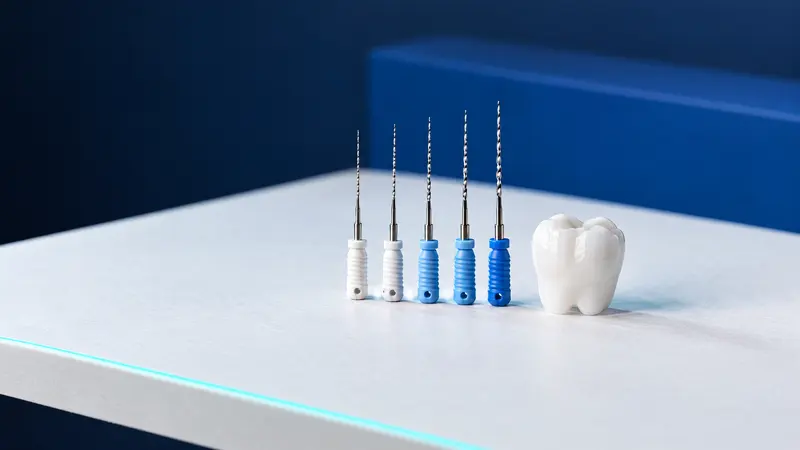
Root canal treatment, or endodontic treatment, means removing the diseased pulp, cleaning and disinfecting the canals along their whole length and sealing them so the bacteria have nowhere to return to. The tooth stays in place and, once restored, keeps working.
The symptoms that point to it
Not every toothache means a root canal, but a few signals appear particularly often. Sometimes there are no symptoms at all and a lesion at the root tip only shows on an X-ray, which is why a check-up with a panoramic X-ray makes sense even when nothing hurts.
- Pain from heat and cold that does not pass in a few seconds but lingers long after the stimulus.
- Spontaneous pain, especially at night, throbbing, that wakes you from sleep.
- Pain on biting or on touching the tooth.
- Gum swelling, a fistula (a small blister on the gum) or a darker colour of one tooth after an injury.
What the microscope adds
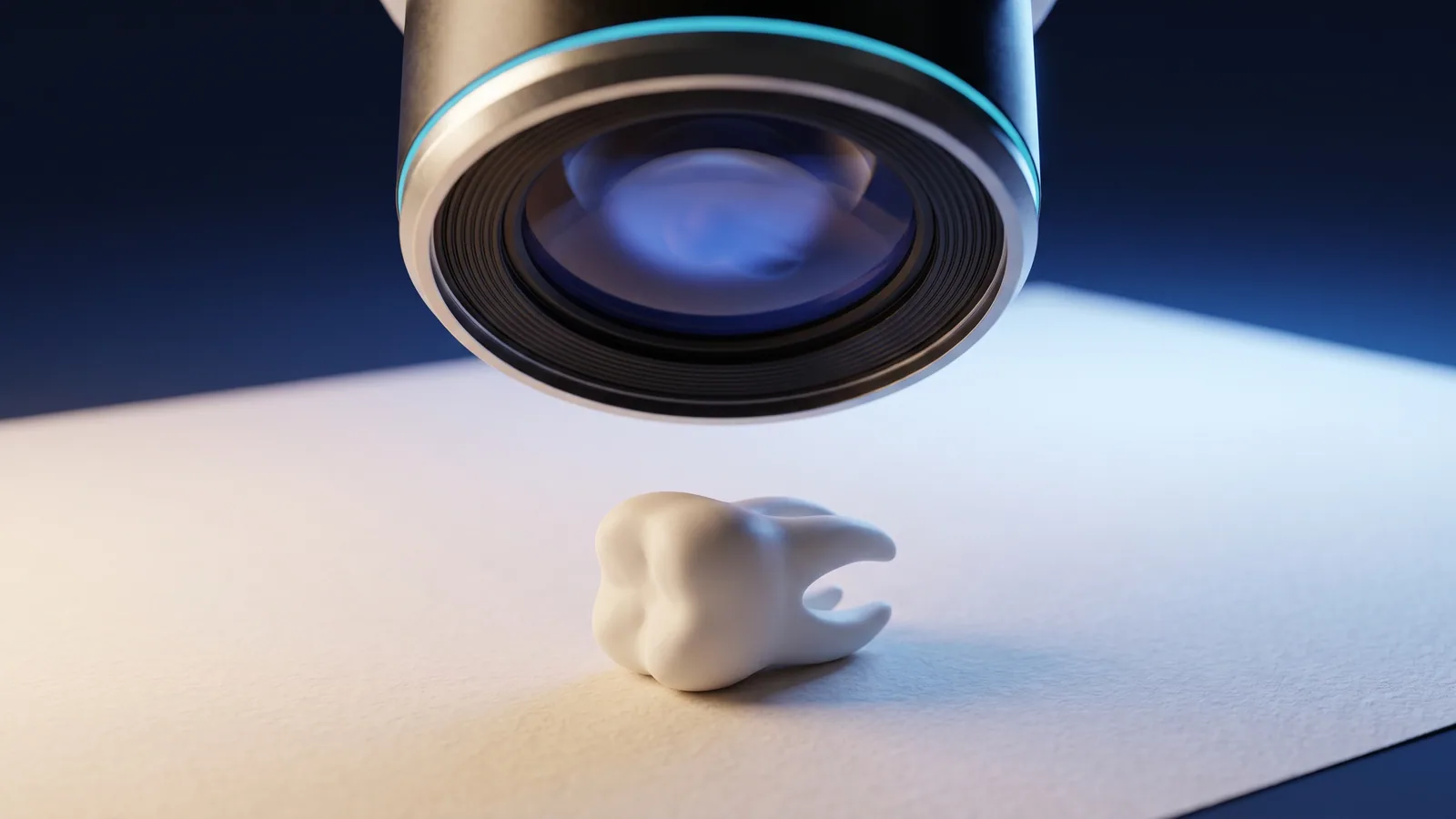
Root canals are fractions of a millimetre across, and their number and shape differ between teeth, and even between the same tooth in two people. Molars often have extra canals that cannot be seen with the naked eye. An operating microscope gives magnification and light aimed straight down the axis of the canal, so the dentist works on what they see rather than on what they feel.
Day to day that means three things: finding additional canals, removing broken fragments of instruments left in a canal from an earlier treatment, and closing perforations. The microscope is also the standard for root canal retreatment, when the first treatment did not remove the infection completely.
How the visit runs, step by step
The sequence is similar whether treatment happens in one session or in two visits with a dressing in between. Which variant is right is decided by the state of the tooth: acute inflammation and a large lesion at the root tip more often call for a dressing and a second visit.
- Diagnostics: an intraoral X-ray (RVG), and for complex anatomy or retreatment a CBCT scan, both in the clinic's own unit.
- Local anaesthesia and isolation of the tooth with a rubber dam, a thin rubber sheet that shuts the tooth off from saliva and bacteria.
- Opening the pulp chamber and locating the openings of all the canals under magnification.
- Shaping and repeatedly rinsing the canals with disinfecting solutions along the full length of the root, measured electronically and on an X-ray.
- Filling the canals with warm gutta-percha, sealed right to the tip, or placing a dressing and filling at the second visit.
- Restoring the crown of the tooth: a composite filling, or with a large cavity an onlay or a crown, because a root-treated tooth is more brittle.
- A follow-up X-ray after a month, or after three months in the case of an extensive lesion.
What root canal treatment under a microscope costs
According to the clinic's published price list, a consultation using the microscope costs 300 zł. The total cost of single-session treatment under the microscope is 1 650 zł for a tooth with one canal, 2 300 zł for two canals, 2 950 zł for three and 3 600 zł for four. Treatment over two visits with a dressing costs 2 100 zł, 3 200 zł, 4 300 zł and 5 400 zł respectively. Root canal retreatment under the microscope is charged per canal: 800 zł for the visit with a dressing and 650 zł for filling the canal with warm gutta-percha. Removing a broken instrument under the microscope is 250 zł per visit.
A visit in pain, which includes a panoramic X-ray, a consultation, an examination and pain relief, costs 340 zł. The restoration of the tooth is priced separately on top of the root canal treatment. The final scope is set after the examination, in writing.
Frequently asked questions
Does root canal treatment hurt?
The procedure is carried out under local anaesthesia. With acute inflammation the anaesthetic works less well, so in such cases the dentist first places a dressing and does the actual canal shaping at the next visit. After the procedure the tooth may be sensitive to biting for a few days.
How many visits are needed?
One, when the tooth qualifies for single-session treatment, or two, when a dressing is needed between visits. On top of that come the visit to restore the crown and the follow-up X-ray after one month or three months.
What if the tooth was already root treated and hurts again?
That is an indication for root canal retreatment, which the clinic carries out under the microscope. It starts with an X-ray, often a CBCT scan, to see whether infection, a broken instrument or an unfound canal remains.
Can the tooth be extracted instead of root treated?
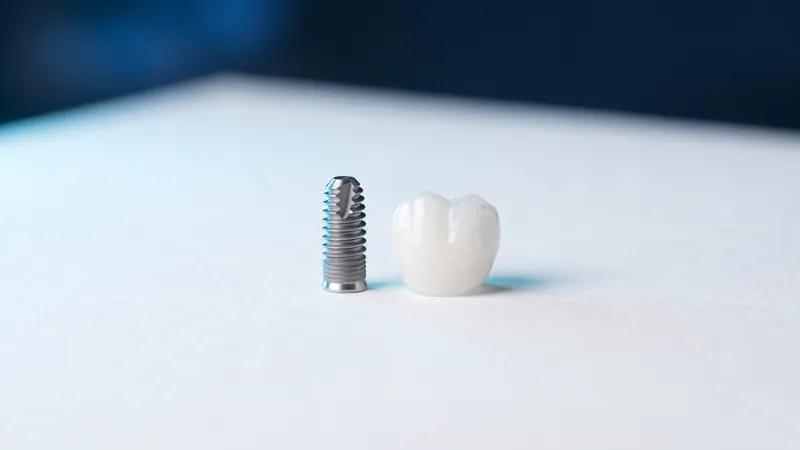
It can, but an extracted tooth then has to be replaced, for example with an implant and a crown, which is a longer and usually more expensive process. Root canal treatment is the way to keep your own tooth, and the decision is made after the examination and the X-ray.
An informational article. It does not replace a consultation, and treatment decisions are made during a visit.