Where the fear comes from
Most often from one of two sources. The first is experience: a visit where it hurt and the dentist did not stop, or treatment in childhood that nobody warned about. The second is lack of control: lying with your mouth open, unable to speak, not knowing what happens next or how long it will take. On top of that comes shame, when the gap between visits has run to years and the patient fears being judged.
Fear has its costs: putting off visits turns a small cavity into a root canal, and a root canal into an extraction. So it pays to treat it like any other medical problem, which means naming it and choosing the tools for it.
A first visit at which nothing is treated
At the clinic, a first visit without pain looks the same for every patient: a panoramic X-ray in the on-site unit, a consultation, an examination and a written treatment plan with the prices of each stage. Nothing is drilled. The patient leaves knowing what needs doing, in what order, how long each stage takes and what it costs, and can think it over at home. According to the clinic's price list this visit costs 300 zł.
At this visit it is worth saying plainly: I am afraid, I had a bad experience, please tell me what you are doing. A dentist who knows this runs the visit differently: shorter stages, a warning before every sound and every touch, breaks.
The stop signal and a pace set by the patient
An agreed gesture, for example a raised left hand, means: stop. The dentist stops, the patient can swallow, breathe, ask. Knowing that stopping is possible at any second lowers fear more than anything else, because it hands back control. It also helps to agree in advance how long the visit will last, and to start with short, simple procedures such as hygiene before the harder ones come up.
Local anaesthesia that works
Modern local anaesthesia is given with a thin needle, often after numbing the gum surface with a gel, and before starting work the dentist checks that it has taken effect. If something hurts during treatment, more can be added. The exception is acute inflammation, in which local anaesthetic works less well: then the dentist first brings the inflammation under control and postpones the actual treatment to the next visit. In the clinic's price list, anaesthesia costs 60 zł, and anaesthesia in endodontics 20 zł.
Inhalation sedation
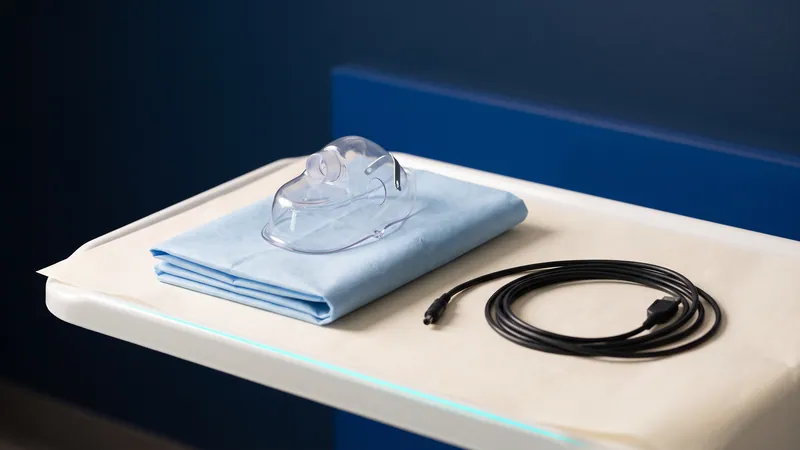
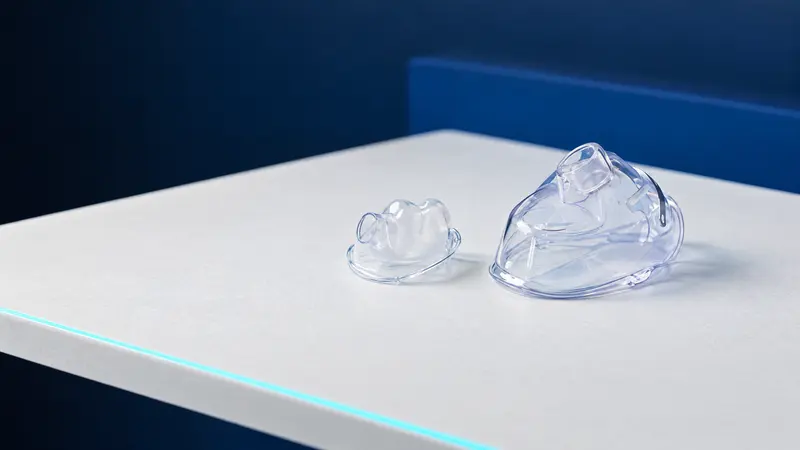
For patients for whom the conversation and local anaesthesia alone are not enough, the clinic offers inhalation sedation: through a small mask over the nose the patient breathes a gas mixture that calms and lowers the feeling of fear but does not switch off consciousness. The patient hears the dentist, can answer and signal, and once the gas is stopped the effect passes quickly. Sedation is an addition to local anaesthesia, not a replacement for it. In the clinic's price list the sedation mask costs 50 zł, and the anaesthesia prices are in the anaesthesia category.
Who general anaesthesia is for
The clinic has its own anaesthesiology department: two anaesthesiologists and anaesthesia nurses in the building. Treatment under general anaesthesia is carried out in four situations: for children who are not able to cooperate in the chair, for patients with a disability, for people allergic to local anaesthetic, and when inflammation is too acute for local anaesthetic to work.
Fear on its own is not on that list. Whether general anaesthesia comes into question in a specific situation is decided at the joint consultation of the dentist and the anaesthesiologist that precedes every date. For most anxious patients the right path is the tools described above, and that is where the conversation starts.
When language is the barrier
Part of the fear comes from not understanding what the dentist is saying. At the clinic you can communicate in Polish, English, Ukrainian and Russian, at reception and in the chair. The team, by name, is described on the team page, so before the visit you know who will be on the other side.
Frequently asked questions
I have not been to a dentist for years. Where do I start?
With a visit without pain: a panoramic X-ray, an examination, a conversation and a written plan. Nothing is treated at it, and leaving the surgery with a plan and prices takes away the biggest ingredient of fear, the unknown.
Can I ask for breaks during treatment?
Yes. A stop signal is agreed before starting, and the dentist stops at every such gesture. A maximum length for the visit can also be agreed in advance.
Is inhalation sedation the same as general anaesthesia?
No. Under inhalation sedation the patient is awake, breathes on their own and talks to the dentist, and the effect passes soon after the mask is removed. General anaesthesia is a sleep led by an anaesthesiologist, with its own qualification and its own team.
Can I be treated under general anaesthesia because of fear?
At the clinic general anaesthesia is used in four situations: children unable to cooperate, patients with a disability, allergy to local anaesthetic, and inflammation too acute. Fear on its own is not on that list, and every case is decided at the joint consultation of the dentist and the anaesthesiologist.
An informational article. It does not replace a consultation, and treatment decisions are made during a visit.