How does sedation differ from general anaesthesia at the dentist?
Sedation differs from general anaesthesia above all in consciousness: under sedation the patient responds to voice, under general anaesthesia not even to pain. The American Society of Anesthesiologists (ASA) describes this as a continuous scale with four levels, from minimal sedation to general anaesthesia.
Inhalation sedation with nitrous oxide at the concentrations recommended by the IAPD, up to 50%, is used for minimal sedation. General anaesthesia lies at the other end of the scale and is a separate procedure: with its own qualification, its own team and its own equipment to support breathing.
- Minimal sedation (anxiolysis): the patient is calmer and responds normally to instructions.
- Moderate sedation, also called conscious sedation: the patient responds purposefully to voice or light touch and breathes without help.
- Deep sedation: the patient responds only to repeated or painful stimuli and may need support with breathing.
- General anaesthesia: the patient cannot be woken even by a painful stimulus, and the airway often needs support.
How does inhalation sedation with nitrous oxide work?
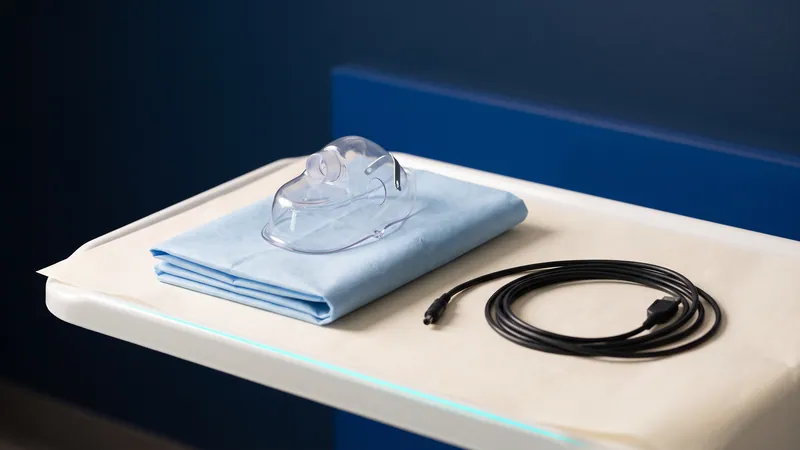
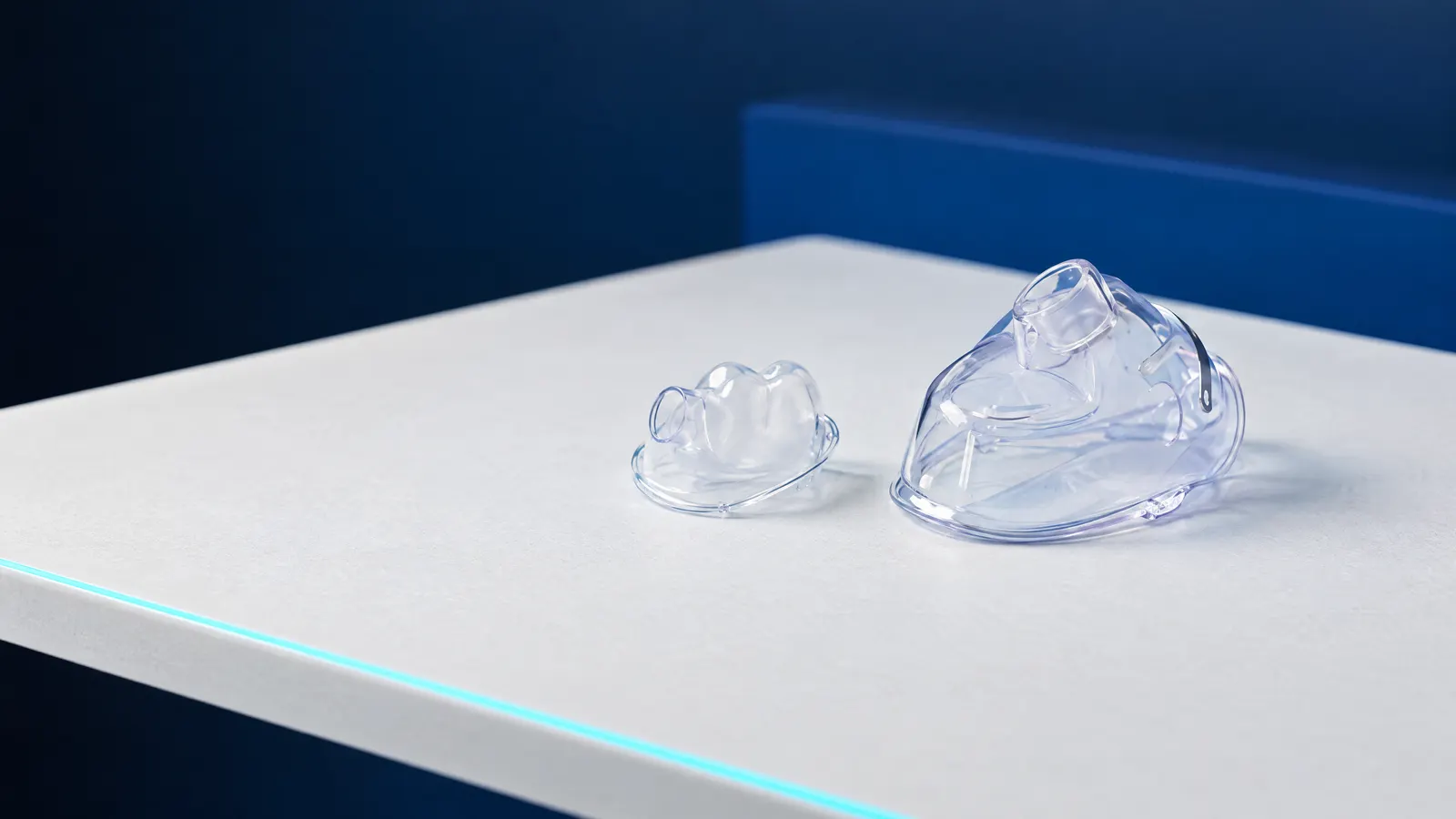
Inhalation sedation means breathing a mixture of nitrous oxide and oxygen through a mask over the nose, which relaxes and reduces anxiety but does not switch off consciousness. Nitrous oxide is sometimes called laughing gas; the patient may feel warmth, a slight tingling and light-headedness.
Guidelines set the proportions of the mixture. The 2024 consensus of the International Association of Paediatric Dentistry (IAPD) recommends up to 50% nitrous oxide for minimal sedation, never more than 70% in any case, with oxygen never below 30%. According to the European Academy of Paediatric Dentistry (EAPD), 30 to 40% is enough for most children, and pure oxygen is given for 2 to 5 minutes before sedation and for 5 minutes after it.
Sedation does not numb the tooth. When the procedure requires it, the dentist also gives local anaesthesia, and sedation helps the patient get through it more calmly.
The effect of nitrous oxide wears off quickly once the gas is stopped, so at the end of the visit the patient breathes pure oxygen and rests for a while. Before sedation you can eat a light meal, and British NHS materials suggest coming with an adult who will take the patient home.
Local or general anaesthesia, or sedation: how do they compare?
The three methods differ in what they switch off: local anaesthesia switches off sensation in one area, inhalation sedation reduces anxiety, and general anaesthesia switches off consciousness. That determines the preparation, the recovery time and whether you can drive after the visit.
The advice on driving comes from British NHS patient materials: 2 hours after inhalation sedation and at least 24 hours after general anaesthesia, in both cases with an accompanying adult. Detailed advice after the visit is given by the treating doctor.
The table describes the typical course. Advice after a particular visit may be stricter, for example after major surgery or with systemic conditions, and then what the doctor says applies.
| Feature | Local anaesthesia | Inhalation sedation | General anaesthesia |
|---|---|---|---|
| Consciousness | Full, the patient talks to the dentist | Preserved, the patient responds to voice | Switched off, no response even to pain |
| What it switches off | Sensation around the treated tooth | Part of the anxiety and tension | Consciousness and awareness of the procedure |
| Who provides it | The dentist | The dental team, gas through a nose mask | An anaesthesiologist with an anaesthesia nurse |
| Preparation | No separate qualification | A light meal before the visit, no heavy eating | Qualification, tests, a break from eating and drinking |
| Recovery | Full consciousness at once, sensation returns gradually | A few minutes of pure oxygen, then brief observation | A few hours of observation before discharge |
| Driving | Usually possible, unless the doctor advises otherwise | Not for about 2 hours | Not for at least 24 hours |
| Who it is for | Most dental procedures | Anxious patients who are able to cooperate | Medical indications established at qualification |
When is local anaesthesia enough?
Local anaesthesia is enough for the vast majority of dental procedures and is the first choice whenever it can work. The patient is conscious, hears the dentist and can give an agreed signal to stop at any moment.
There are a few situations in which local anaesthesia is not enough. With very acute inflammation it works less well, with an allergy to local anaesthetic drugs it cannot be given, and a small child or a person with a disability is not always able to go through a procedure in the chair. Sedation or general anaesthesia is then considered.
When the obstacle is acute inflammation, the dentist may first bring it under control and carry out the actual treatment at the next visit, when local anaesthesia works again. In that situation general anaesthesia is one of the paths, not the only one.
Who is inhalation sedation for, and who is treatment under general anaesthesia for?
Inhalation sedation is for patients who are afraid of treatment but can cooperate: they sit in the chair, open their mouth and signal discomfort. Treatment under general anaesthesia is for those who cannot be treated safely in the chair, and it always requires anaesthesiology qualification.
At DentalBlue general anaesthesia is used in four situations: for children who are not able to cooperate in the chair, for patients with a disability, for an allergy to local anaesthetic, and when inflammation is too acute for local anaesthesia to work. An adult's fear on its own is not on that list.
Sedation is also a step in the rules of the NFZ (Poland's National Health Fund). Since 2026, two criteria for NFZ-funded treatment of children under general anaesthesia require that the child did not cooperate despite pharmacological sedation (§ 4(1a)(3) and (4) of the regulation, Dz.U. 2025 poz. 615). Whether an earlier attempt meets this condition is assessed at qualification.
Does sedation cure fear of the dentist?
Sedation does not cure fear of the dentist; it only allows treatment to go ahead despite it, and the same applies to general anaesthesia. For treating the fear itself, cognitive behavioural therapy has the strongest evidence (Gordon et al., 2013).
In a review of 38 studies of behavioural treatment for dental anxiety, 77% of patients were still attending appointments more than 4 years later (Kvale et al., 2004). That is why sedation is best treated as support on the way to ordinary treatment, not as a permanent solution.
In practice this means a ladder of tools: first a conversation, a written treatment plan and an agreed stop signal, then effective local anaesthesia, then inhalation sedation, and general anaesthesia when there are medical indications for it. A review of studies suggests that cognitive behavioural therapy helps patients accept treatment better than general anaesthesia does, although the quality of this evidence is low (Wide Boman et al., 2013).
How much does inhalation sedation at the dentist cost?
The cost of inhalation sedation is made up of the gas and the mask, plus the price of the procedure itself and of any local anaesthesia. General anaesthesia is charged differently: for the anaesthesiology consultations and for each hour of sleep, plus the procedures carried out during it.
In the DentalBlue price list, the item “Podtlenek azotu” (nitrous oxide) costs 170 zł, “Maseczka do sedacji” (sedation mask) 50 zł and “Znieczulenie” (anaesthesia) 60 zł. A sedation attempt does not always succeed, and for that situation the price list has the item “Nieudana próba sedacji wziewnej” (unsuccessful attempt at inhalation sedation) at 80 zł. For comparison, “Pierwsza godzina narkozy” (the first hour of general anaesthesia) costs 1 500 zł and “Każda kolejna godzina narkozy” (each further hour) 500 zł.
The final scope and cost are set at the consultation, and prices in the clinic's price list may change.
How it works at DentalBlue
All three methods are available at DentalBlue in Białystok. Inhalation sedation with nitrous oxide is an addition to local anaesthesia, not a replacement for it. General anaesthesia is provided by the clinic's own anaesthesiology department: 2 anaesthesiologists and 4 anaesthesia nurses in the building. Every treatment under general anaesthesia is preceded by a joint dental and anaesthesiology consultation with a panoramic X-ray, a medical history, a list of medicines and test results, and the date is set only after it. During the procedure both teams work in the room at the same time, and vital signs are monitored continuously, including during wake-up.
Frequently asked questions
Can I go back to work after nitrous oxide?
Not straight away. British NHS patient materials advise against driving, operating machinery or going back to school or work for 2 hours after inhalation sedation. It is worth coming to the visit with an accompanying adult, and the doctor will give exact advice.
Is inhalation sedation suitable for children?
Yes, inhalation sedation is also used in children who can cooperate and will accept a mask over the nose. According to the EAPD guidelines, a mixture with 30 to 40% nitrous oxide is enough for most children. If the attempt does not succeed, the doctor discusses another path with the parents.
What is oral sedation at the dentist?
It is sedation with a calming drug taken by mouth, in studies most often midazolam. A 2018 Cochrane review concludes with moderate certainty that it improves children's cooperation compared with placebo. The choice of drug and dose is made by the doctor.
Do I need someone to look after me after general anaesthesia?
Yes. According to the NHS, someone should stay with the patient for the first 24 hours after general anaesthesia, and the patient should not drive or ride a bicycle. A child who has had general anaesthesia stays in an adult's care for that whole time.
Do I need to fast before inhalation sedation?
Usually not. British NHS patient materials advise eating and drinking before inhalation sedation, but not having a heavy meal. Before general anaesthesia, by contrast, there is a break from eating and drinking, with times given by the anaesthesiologist.
Sources
- ASA: Continuum of Depth of Sedation, definition of general anesthesia and levels of sedation (2024)
- IAPD: Foundational Articles and Consensus Recommendations, Nitrous Oxide (2024)
- Ashley P et al., European Archives of Paediatric Dentistry: EAPD guidelines on sedation (2021)
- Wirral Community Health and Care NHS: Having dental treatment under inhalation conscious sedation (2025)
- NHS: General anaesthesia (2024)
- Kvale G et al., Community Dentistry and Oral Epidemiology: treatment of dental anxiety, a meta-analysis (2004)
- Gordon D et al., Journal of Anxiety Disorders: a review of treatments for dental anxiety (2013)
- ELI: Rozporządzenie MZ w sprawie świadczeń gwarantowanych z zakresu leczenia stomatologicznego, t.j. Dz.U. 2025 poz. 615 (2025)
An informational article. It does not replace a consultation, and treatment decisions are made during a visit.