What is laughing gas, and how does it work at the dentist?
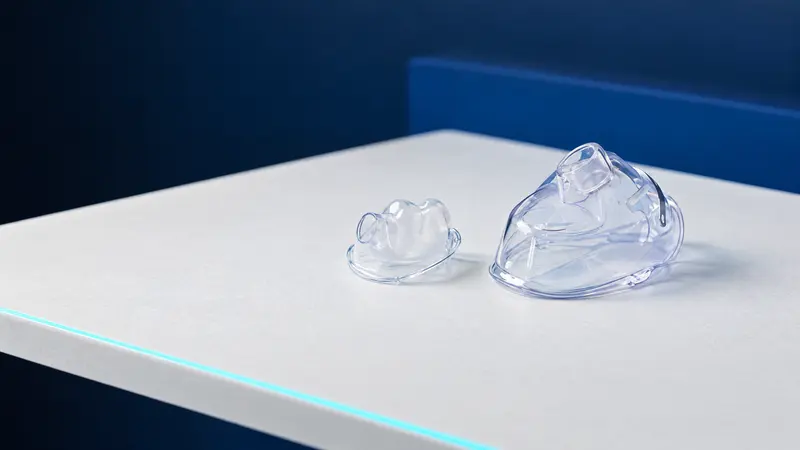
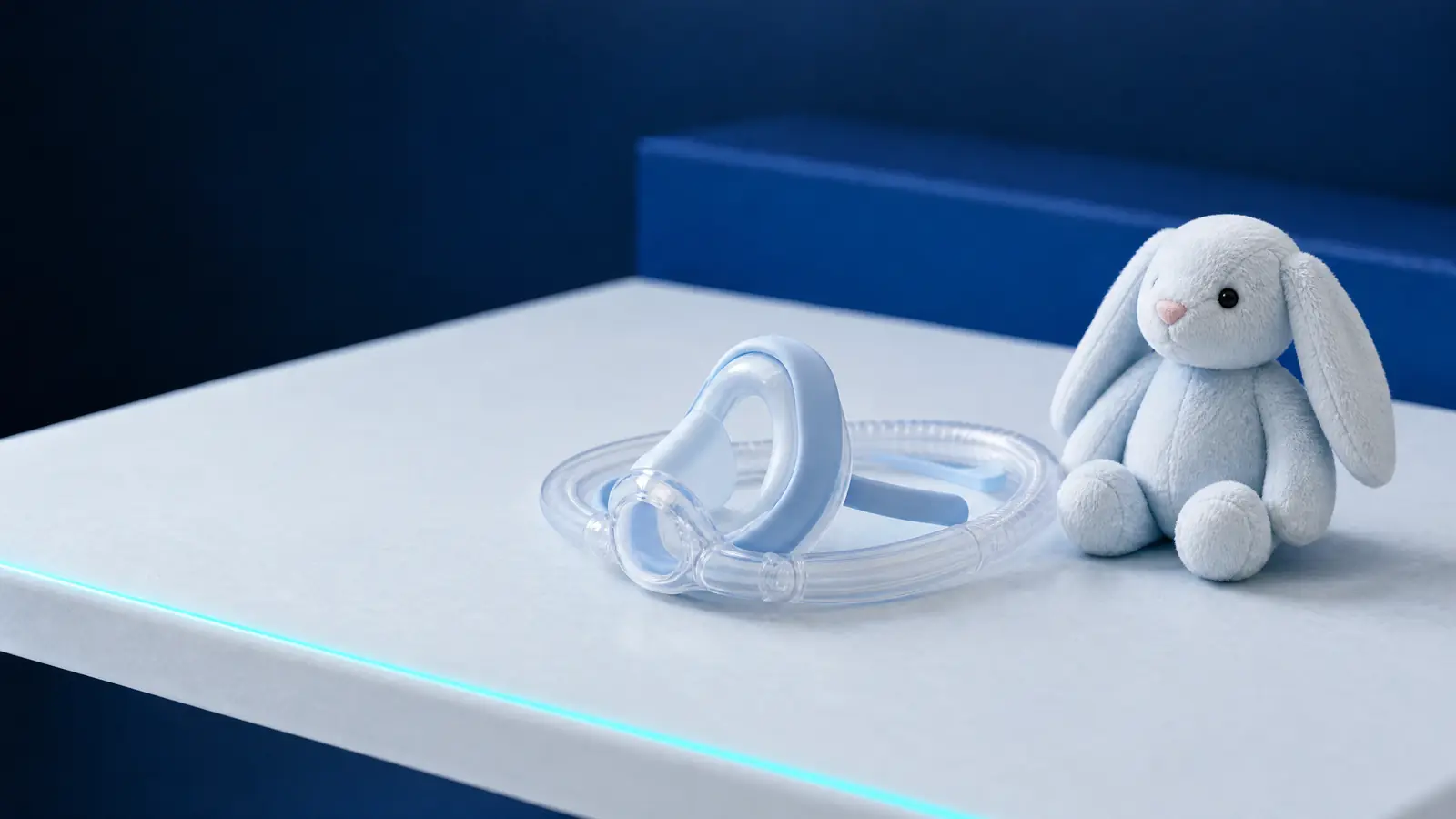
Laughing gas is the everyday name for nitrous oxide (N₂O), which at the dentist is given mixed with oxygen through a small mask over the nose; the method is called inhalation sedation. The mixture eases anxiety and tension, but the patient stays conscious, breathes unaided and answers the dentist’s questions.
In its guideline, revised in 2023, the American Academy of Pediatric Dentistry (AAPD) describes nitrous oxide as the weakest of the anaesthetic gases and a fast-acting one: its effect comes on and wears off within 2 to 3 minutes. The gas does not bind to haemoglobin, is not broken down in the body and is rapidly eliminated through the lungs.
The proportions of the mixture are set out in guidelines. The 2024 consensus of the International Association of Paediatric Dentistry (IAPD) states that no more than 50% nitrous oxide is used for minimal sedation, and that oxygen must never fall below 30%. How sedation differs from general anaesthesia and from local anaesthesia alone is covered in a separate article on sedation and general anaesthesia at the dentist.
Nitrous oxide does not replace local anaesthesia and gives no pain relief after the visit, because it leaves the body quickly. For treatment that could hurt, the dentist therefore also gives a local anaesthetic, and the gas helps the patient accept it more calmly.
How does it feel to breathe laughing gas?
Most patients feel warmth spreading through the body, slight tingling and mild light-headedness, and some children describe a sensation of floating. These sensations are listed both in the AAPD guideline and in patient information from the NHS, the UK’s public health service.
The team judges how the gas is working from the patient’s behaviour. The AAPD lists relaxed arms, legs and jaw muscles, drooping eyelids, a fixed gaze, open hands and a slower pulse, and the main indicator of the depth of sedation remains whether the patient responds to instructions.
Not everyone likes the feeling. According to the AAPD, some patients are unsettled by a sense of losing control, and children with claustrophobia may find the mask tight and unpleasant. The gas can then be stopped, and its effect wears off within a few minutes.
At the end of the visit the patient breathes pure oxygen for at least 5 minutes, as the AAPD and IAPD recommend, to avoid the headache and disorientation linked to so-called diffusion hypoxia. Patients go home once they are back to how they were before sedation, and NHS patient information advises against driving, operating machinery or returning to work or school for 2 hours.
Who is inhalation sedation with nitrous oxide for?
Inhalation sedation with nitrous oxide is for patients who are anxious about treatment or have a strong gag reflex but are able to cooperate: they sit in the chair, breathe through the nose and accept the mask. The AAPD guideline, revised in 2023, lists the following indications.
Assessment starts with a medical history. According to the AAPD, suitable candidates are patients in ASA class I and II, that is healthy or with mild systemic disease, while children with more serious illnesses, airway abnormalities or markedly enlarged tonsils need an individual assessment.
The 2024 IAPD consensus points to children who can communicate, often over the age of 3, and who can manage breathing through the nose. Inhalation sedation is not, however, a solution for a patient who cannot undergo treatment in the dental chair at all; in that case general anaesthesia is considered after assessment by an anaesthesiologist.
- Anxiety or fear of dental treatment.
- A strong, hypersensitive gag reflex that makes treatment difficult.
- Disorders of muscle tone in which involuntary movements occur.
- A situation in which profound local anaesthesia cannot be achieved.
- A long procedure in a child who cooperates but tires in the chair.
When is laughing gas not given?
Laughing gas is usually not given when the patient cannot breathe freely through the nose or has a condition in which nitrous oxide could do harm. The AAPD guideline, revised in 2023, and the 2024 IAPD consensus list the situations below as possible contraindications.
Nitrous oxide expands air-filled spaces, which is why the AAPD also excludes patients with bowel obstruction and people shortly after certain operations, for example on the retina, the skull or the bowel. Asthma is not a contraindication: the gas does not irritate the trachea or the bronchi, and according to the AAPD, reducing stress may even lower the risk of an attack.
Before the visit, tell the dentist about all illnesses, medicines and recent procedures, and about pregnancy. The AAPD recommends that, where there is serious systemic disease, the dentist should if possible consult the patient’s specialist doctor beforehand, and in pregnancy the doctor looking after the pregnancy.
- A runny nose, cough, tonsillitis, sinusitis or an allergy that blocks the nose.
- Chronic obstructive pulmonary disease (COPD).
- A recent middle ear infection or an ear, nose and throat procedure within the last 14 days.
- Raised pressure in the eye (glaucoma) and the period of up to 3 months after retinal surgery.
- The first trimester of pregnancy.
- Treatment with bleomycin, a drug used in chemotherapy.
- Untreated vitamin B12 deficiency, which according to the AAPD is more likely in vegans and vegetarians.
- Severe emotional disorders or substance dependence.
Is laughing gas safe, and what are its side effects?
Given as recommended, laughing gas has, according to the AAPD, a very good safety profile, and acute and chronic adverse effects in patients are rare. The most common of them, nausea and vomiting, are reported in the AAPD guideline, revised in 2023, in 0.5 to 1.2% of patients.
The risk of nausea rises with longer administration, with fluctuating and higher concentrations of nitrous oxide, and after a heavy meal just before the visit. Less common are headache and dizziness, sweating, restlessness or sedation that is too deep. The AAPD cites studies in which adverse effects were associated with concentrations above 50%, administration for longer than 45 minutes and use of the gas as an anaesthetic in major surgery.
In a study covering 688 sedation sessions in 472 children aged 4 to 17, adverse effects occurred in 2.5% of sessions, and nausea and vomiting in 1.2% (Galeotti et al., 2016). The concentration there started at 30% and did not exceed 50%.
The strength of the evidence varies. A 2018 Cochrane review of sedation for children in dentistry rated the comparison of nitrous oxide with placebo as very low certainty evidence, whereas a meta-analysis of 19 clinical trials involving 1,293 patients reports a success rate for inhalation sedation of 94.9%: 91.9% in children and 99.9% in adults (Rossit et al., 2021).
Laughing gas for children: short answers to parents’ questions
Laughing gas works in children just as it does in adults, but the success of sedation depends more on whether the child accepts the mask and breathes through the nose. The AAPD notes that when a child cries continuously or breathes mainly through the mouth, less gas reaches the lungs and the effect weakens.
In the study by Galeotti et al., the child’s age did not significantly affect the success of sedation, but there was a difference between healthy children and children with disabilities: 549 of 628 sessions succeeded in healthy children and 45 of 60 in children with disabilities. The table gathers short answers to questions that parents often ask.
| Parent’s question | Short answer | Based on |
|---|---|---|
| Will my child fall asleep? | No. The child stays conscious, hears the dentist and can answer | IAPD 2024, AAPD 2023 |
| From what age? | When the child can communicate and breathe through the nose, often over the age of 3 | IAPD 2024 |
| Does my child need to fast? | No. A light meal is enough; a heavy one raises the risk of nausea | AAPD 2023 |
| Does the gas numb the tooth? | It does not replace local anaesthesia when treatment could hurt | AAPD 2023 |
| Is it possible with asthma? | Yes. Asthma is not a contraindication | AAPD 2023 |
| Is it possible with a runny nose? | Usually not. A blocked nose weakens the effect of the gas, so the appointment is moved | AAPD 2023, IAPD 2024 |
| How quickly does it wear off? | Within a few minutes, with at least 5 minutes of pure oxygen at the end | AAPD 2023, IAPD 2024 |
| When can my child go back to school? | After 2 hours, and home with an accompanying adult | NHS 2025 |
What does a failed attempt at inhalation sedation mean?
A failed attempt at inhalation sedation means that, although the gas was given, the patient did not become calm enough for treatment, most often because the child did not accept the mask, cried or breathed through the mouth. It is nobody’s fault: in the meta-analysis by Rossit et al., inhalation sedation succeeded less often in children than in adults, and in the study by Galeotti et al., 86.3% of sessions were successful.
After a failed attempt, the dentist discusses the next steps with the parent: another familiarisation visit, a further attempt on a different day, a different sedation method, or treatment under general anaesthesia if there are medical indications for it. General anaesthesia is decided by a joint dental and anaesthesiology assessment, not automatically by one unsuccessful visit.
Since 1 January 2026, the regulation on guaranteed dental services (consolidated text Dz.U. 2025 poz. 615) has given an entitlement to general anaesthesia on the NFZ, Poland’s National Health Fund, to children and young people up to the age of 18, among others, who despite the use of pharmacological sedation do not allow, in the opinion of a specialist in oral surgery or paediatric dentistry, safe root canal treatment, the extraction of a total of 4 teeth or a surgical procedure. Whether an earlier attempt at sedation meets this condition is assessed at qualification (legal status as of 24 October 2026).
In Podlaskie province, the region around Białystok, there are 5 NFZ contracts for dental treatment under general anaesthesia, according to a reply from the Ministry of Health dated 7 April 2026, running from 1 July 2025 to 30 June 2030. In 2025 the average waiting time was 38 days for stable cases and 0 days for urgent ones; these are figures for the whole region (as of 24 October 2026).
How much does laughing gas at the dentist cost, and does the NFZ fund it?
The cost of laughing gas is made up of the price of the gas itself and the mask, plus the price of the treatment and of any local anaesthetic. In the price list of the DentalBlue clinic in Białystok, “Podtlenek azotu” (nitrous oxide) costs 170 zł, “Maseczka do sedacji” (sedation mask) 50 zł and “Znieczulenie” (anaesthesia) 60 zł.
The price list also includes “Nieudana próba sedacji wziewnej” (failed attempt at inhalation sedation) at 80 zł, for situations in which the attempt does not succeed. The final scope and cost are set at a consultation, and prices in the clinic’s price list may change.
The regulation on guaranteed dental services does not list inhalation sedation with nitrous oxide among the services funded by the NFZ (legal status as of 24 October 2026). What the NFZ covers at the dentist is described in a separate article on publicly funded dental services.
Inhalation sedation at DentalBlue
At DentalBlue in Białystok, inhalation sedation with nitrous oxide is available as a complement to local anaesthesia. The first step can be a “Wizyta bez bólu” (visit without pain, 300 zł): a panoramic X-ray, a consultation, an examination and a written treatment plan, at which you can discuss whether inhalation sedation is an option.
When treatment in the chair is not possible, the clinic has its own anaesthesiology department: 2 anaesthesiologists and anaesthesia nurses in the building. Every treatment under general anaesthesia is preceded by a joint dental and anaesthesiology consultation, and eligibility for NFZ funding is confirmed at qualification, on the basis of the patient’s documents. A consultation can be booked by phone on 85 748 00 50.
Frequently asked questions
Can I have laughing gas when I am pregnant?
Not in the first trimester. The AAPD guideline lists the first trimester of pregnancy among the contraindications to nitrous oxide, and for later months recommends consulting the doctor looking after the pregnancy beforehand. Tell the dentist about the pregnancy before the visit; more about dental treatment at this time is in the article on dental treatment in pregnancy.
Can an adult have laughing gas at the dentist?
Yes. Inhalation sedation is also used in adults with anxiety or a strong gag reflex, and in the 2021 meta-analysis by Rossit et al., the success rate in studies involving adults was 99.9%. Sedation does not treat the anxiety itself, it only helps you get through treatment; the treatment of anxiety is covered in the article on fear of the dentist.
Can laughing gas give you a headache?
It can, although this is rare. The AAPD lists headache among the adverse effects, and one cause is diffusion hypoxia after the gas is stopped. Breathing pure oxygen for at least 5 minutes at the end of the visit prevents it. Report a headache that does not go away to the dentist.
Can a child with autism or a disability have laughing gas?
Yes, if the child accepts the mask and breathes through the nose, although sessions succeed less often. In the study by Galeotti et al., 45 of 60 sessions succeeded in children with disabilities, compared with 549 of 628 in healthy children. The AAPD recommends an individual assessment of patients with special health care needs.
Can you drive after laughing gas?
Not straight away. NHS patient information advises against driving or operating machinery for 2 hours after inhalation sedation, and against drinking alcohol for the rest of the day. Come to the visit with an adult who will take you home; the dentist will give you exact instructions.
Sources
- AAPD: Use of Nitrous Oxide for Pediatric Dental Patients, Reference Manual of Pediatric Dentistry (revised 2023)
- IAPD: Foundational Articles and Consensus Recommendations, Nitrous Oxide (2024)
- Rossit M et al., Journal of Dental Anesthesia and Pain Medicine: effectiveness of nitrous oxide sedation in dentistry, a meta-analysis (2021)
- Galeotti A et al., BioMed Research International: nitrous oxide sedation in children, 688 sessions (2016)
- Cochrane: Ashley PF et al., Sedation of children undergoing dental treatment (2018)
- Wirral Community Health and Care NHS: Having dental treatment under inhalation conscious sedation (2025)
- ELI: Rozporządzenie MZ w sprawie świadczeń gwarantowanych z zakresu leczenia stomatologicznego, t.j. Dz.U. 2025 poz. 615 (2025)
- Ministerstwo Zdrowia: reply to parliamentary question no. 15914, treatment under general anaesthesia in Podlaskie province (2026)
An informational article. It does not replace a consultation, and treatment decisions are made during a visit.