How do you plan dental treatment in Poland when travelling from abroad?
Dental treatment during a short stay in Poland starts with a diagnostic appointment as soon as possible after arrival: an examination, necessary imaging and a discussion of treatment options. Only then can the dentist say how many appointments are needed, what can be done straight away and what needs time for healing or laboratory work.
A treatment plan prepared remotely from images and a description is only provisional. It helps estimate how much time to allow for your stay, but the dentist determines the final scope after examination: an image cannot show everything, such as tooth mobility, gum condition or a crack.
Leave a few spare days before departure. Some procedures may need a brief review, for example to adjust a filling that feels too high or assess pain after root canal treatment.
- Before travelling, send or prepare previous dental X-rays, a summary of past treatment and a list of medicines you take.
- Book a diagnostic appointment in the first days of your stay, rather than just before returning home.
- Request a written plan setting out the stages, number of appointments and cost of each stage.
- Agree which stages you will complete in Poland and which reviews a dentist in your country of residence can take over.
- Allow a few spare days for a review or adjustment before departure.
Which procedures fit into a single stay?
Fillings, professional cleaning, an extraction and often root canal treatment usually fit into one stay, as they require no laboratory work or lengthy healing period. After an extraction, Bristol Dental School’s patient leaflet says pain and swelling usually ease within 7 to 10 days, while dissolvable stitches disappear in 2 to 3 weeks.
Root canal treatment can be completed in one appointment or several. A 2022 Cochrane review found no difference in effectiveness between these approaches, but pain within a week was more common after single-visit treatment. It is therefore worth staying a few extra days afterwards.
After root canal treatment, the tooth needs a well-sealed restoration. The dentist sets the date of the check-up and restoration, taking into account the type and condition of the temporary dressing; if the dressing falls out or is damaged, contact the practice before the scheduled date. In the study by Pratt et al. (2016), back teeth crowned more than 4 months after treatment were extracted about 3 times more often.
How many trips does a dental implant need?
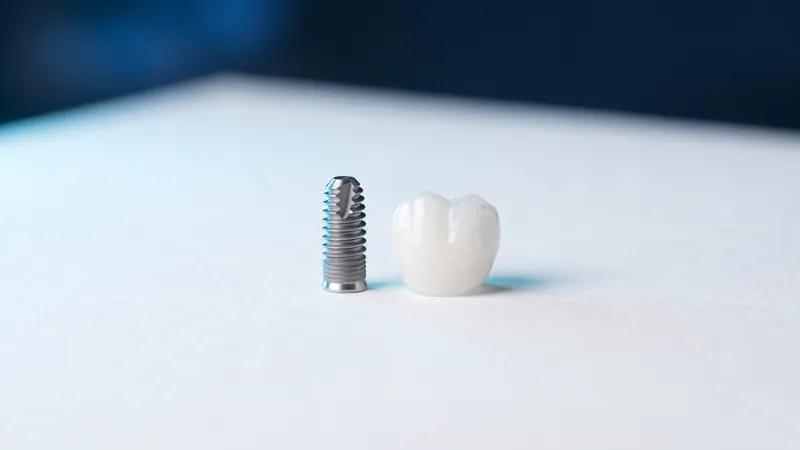
An implant with a crown usually needs at least two trips: the first for consultation, a CT scan and placement, the second for the crown after the implant has fused with the bone. A 2013 Cochrane review states that implants are traditionally left unloaded for 3 to 8 months. It found no convincing difference in failure rates between immediate, early and conventional loading.
If a tooth must first be removed, socket healing adds time. The International Team for Implantology (ITI) consensus of 2018 describes immediate placement on the day of extraction, early placement after 4 to 8 or 12 to 16 weeks, and late placement after more than 6 months. Which option is possible depends on the bone and gum.
When bone augmentation is needed, such as a sinus lift, the schedule becomes longer. Findings in the study by Danesh-Sani et al. (2017) supported allowing around 6 months for graft maturation. The article on dental implants explains the whole process step by step.
Crowns, bridges, dentures and braces: how many appointments and what intervals?
A tooth-supported crown usually needs two appointments, with laboratory work between them that, according to Cleveland Clinic, usually takes 2 to 3 weeks, sometimes longer. A tooth-supported bridge also needs at least two appointments, with laboratory work usually taking 2 to 4 weeks. Both therefore require a longer stay or two trips.
According to the NHS, dentures usually take a few weeks to make, and getting used to them also takes several weeks. Immediate dentures can be made in a few days, but the NHS notes that they often need adjusting or replacing even after a year, as the gums and bone change shape during healing.
Orthodontic appliances are the hardest to reconcile with infrequent trips. The British Orthodontic Society (BOS) states that appointments are usually every 4 to 10 weeks. According to the meta-analysis by Tsichlaki et al. (2016), fixed appliance treatment lasts an average of 19.9 months and requires an average of 17.8 appointments.
Appointments and trips needed: an overview
The number of appointments and trips depends on the treatment and the time needed for healing or laboratory work. The table gives typical figures from studies, guidelines and patient information. The dentist determines your individual schedule after examination.
| Treatment | Typical number of appointments or trips | Interval or healing time |
|---|---|---|
| Filling | 1 appointment | No interval; review if the tooth hurts on biting |
| Professional cleaning | 1 appointment | No interval |
| Tooth extraction | 1 appointment, sometimes a review | Pain and swelling usually ease within 7 to 10 days |
| Root canal treatment | 1 or several appointments | Check-up and restoration date set by the dentist |
| Tooth-supported crown | 2 appointments | Laboratory work usually 2 to 3 weeks |
| Tooth-supported bridge | At least 2 appointments | Laboratory work usually 2 to 4 weeks |
| Denture | Several appointments | Usually made within a few weeks |
| Implant after tooth extraction | Usually 2 or 3 trips | Placement immediately, after 4 to 8 or 12 to 16 weeks |
| Implant crown | A further trip | Traditionally after 3 to 8 months without loading |
| Sinus lift | An additional stage | Graft maturation around 6 months |
| Fixed braces | Appointments throughout treatment | Every 4 to 10 weeks, around 20 months on average |
Which records and invoices should you take after treatment?
After treatment in Poland, take copies of your records and images so that a dentist in your country of residence can carry out follow-up care. The Patient Rights Act allows you to obtain a copy or printout of your records, including on a digital storage medium (art. 27 ust. 1). The first provision of the requested information is free (art. 28 ust. 2a, legal status as of 24 October 2026).
If you need documents in another language, for example for your insurer, ask before treatment. Dentists’ medical services are VAT-exempt, and a practice issues an invoice on request made within 3 months of the end of the month in which the service was provided or payment made (art. 106b ust. 3 of the VAT Act).
- Copies of treatment records and images, preferably electronically.
- A description of procedures and materials used, and an implant’s type and size where applicable.
- Aftercare instructions and the date of your next review.
- An invoice or receipt and proof of payment if you intend to seek reimbursement.
Insurance from another country and dental treatment in Poland
An EHIC (European Health Insurance Card) from another EU or EFTA country covers only medically necessary, unplanned care in Poland, at a practice with a contract with NFZ, Poland’s National Health Fund, on the same terms as NFZ-insured patients. An EHIC does not work at private practices and does not cover a trip made for the purpose of planned treatment; this is how the NFZ describes the rules. The S2 document belongs to a separate route for planned treatment funded by the public system, and you can come for private treatment without it.
You pay for private treatment yourself. Whether you can be reimbursed, and how much, depends on the services your insurance covers and the reimbursement route used; the EU’s Your Europe portal notes that questions about cover and reimbursement can only be answered by the authorities of the country where you have public health insurance. Before you travel, ask your insurance institution or the national contact point in your country of insurance about the reimbursement limit, the documents required and any prior authorisation.
Toothache during your stay and flying after a procedure: what should you know?
If you develop toothache during a stay in Poland, an NFZ-contracted practice provides same-day help to eligible patients. Outside practice hours, emergency dental care is available. The Podlaskie region has 1 such site, in Białystok (Podlaskie NFZ branch, as of 24 October 2026). The article on night-time and weekend dental care gives its address and opening hours.
The NFZ Patient Information Helpline answers around the clock on 800 190 590, or +48 22 125 66 00 from abroad, in Polish, Ukrainian, English and Russian. Swelling of the face or neck that makes breathing or swallowing difficult requires help at a hospital emergency department (SOR) or by calling the emergency number 112.
If you are flying home after a procedure, discuss the flight date with the dentist while planning treatment. A separate article on flying after dental procedures covers advice after extractions, procedures near the sinus and implants.
How it works at DentalBlue
DentalBlue, at ul. Kazimierza Pułaskiego 35 in Białystok, provides CBCT, panoramic X-rays, cephalometry, sinus X-rays and intraoral X-rays in its own radiology unit, and plans implants using CBCT images. “Wizyta bez bólu” (visit without pain, 300 zł) includes a panoramic X-ray, consultation, examination and written treatment plan with stages and the price of each. The dentist determines the final scope and cost, and prices may change. Communication is available in Polish, English, Ukrainian and Russian. The clinic opens Monday to Friday from 8:00 to 20:00 and Saturdays from 8:00 to 16:00; reception: 85 748 00 50.
Frequently asked questions
Can a dental implant be completed during one holiday?
Implant placement takes one appointment, but the crown is usually made after healing. A Cochrane review states that implants are traditionally left unloaded for 3 to 8 months. Immediate loading is possible only in selected situations, which the dentist determines after an examination and CT scan.
Can I send X-rays before travelling to a dentist in Poland?
Yes, previous images and a treatment summary help prepare a provisional plan and estimate the length of your stay. The dentist determines the final plan after examination and decides whether new images are needed based on the quality and date of the existing ones.
How many days after root canal treatment can I return home?
Allow a few spare days. The review by Pak and White (2011) reports pain in 40% of patients after 24 hours and 11% after 7 days. Discuss your flight date with the dentist, and arrange the tooth’s definitive restoration without delaying for many months.
Will I pay for treatment at a private clinic in Poland if I have an EHIC?
Yes. An EHIC works only at practices with an NFZ contract and covers medically necessary care. You pay for private treatment yourself. Ask your insurer or the national contact point for cross-border healthcare in your country of insurance about any reimbursement.
Can a dentist in my own country take over reviews after treatment in Poland?
Yes, many reviews can be carried out by a dentist in your country of residence if they receive copies of the records and images. The Patient Rights Act allows you to obtain these on a storage medium, and the first provision of the requested information is free. Agree before departure which stages require returning to the Polish practice.
Sources
- Cochrane: Esposito M et al., Interventions for replacing missing teeth: different times for loading dental implants (2013)
- ITI: Gallucci G et al., Implant placement and loading protocols, ITI consensus (2018)
- Cleveland Clinic: Dental Crowns (2023)
- British Orthodontic Society: Frequently asked questions (2022)
- NFZ: information for providers applying coordination rules, EHIC and planned treatment
- Your Europe: Planned medical treatment abroad, expenses and reimbursements (2026)
- Sejm: Ustawa o prawach pacjenta i Rzeczniku Praw Pacjenta, t.j. Dz.U. 2024 poz. 581 (art. 27, 28)
- Podlaski OW NFZ: dental treatment, treatment sites (as of 24.10.2026)
An informational article. It does not replace a consultation, and treatment decisions are made during a visit.