What is oral thrush, and what causes it?
Oral thrush, also called oral candidiasis, is an infection of the lining of the mouth with yeasts of the genus Candida, most often Candida albicans. These fungi live in small numbers in the mouth, the digestive tract and on the skin of most people, and cause disease only when the balance is upset by illness, stress or medicines, as Cleveland Clinic describes.
This is why oral thrush is usually a sign that something has weakened local or general immunity: an antibiotic, an inhaled steroid, a denture worn day and night, a dry mouth or poorly controlled diabetes. Antifungal treatment clears the symptoms, but thrush comes back if that cause remains.
Oral thrush in adults is not contagious, the NHS stresses. Cleveland Clinic adds that a person with a healthy immune system rarely passes it on to others, but the infection can pass to people at risk, for example from a breastfeeding mother to her baby and the other way round.
What are the symptoms of oral thrush in adults?
Oral thrush in adults most often causes redness with white patches or a coating that can be wiped off, leaving red, sometimes bleeding areas underneath. The NHS also lists cracks at the corners of the mouth, a change in taste or an unpleasant taste, pain in the mouth, and difficulty eating and drinking.
Cleveland Clinic adds a cottony feeling in the mouth and loss of taste. In some people thrush causes no coating at all, only red, burning areas, for example on the top of the tongue or on the palate under a denture, which is why it is sometimes mistaken for irritation.
Pain or difficulty when swallowing may mean that the infection has spread down to the oesophagus. The NHS then advises seeing a doctor, as it does when symptoms do not clear up after a week of treatment or appear in a person with weakened immunity.
What forms of oral thrush are there?
Oral thrush takes several forms, which differ in appearance and in who is affected. According to Medycyna Praktyczna, the most common is the erythematous, or atrophic, form, not the white patches most people associate with thrush; the table sets out the forms described in this source and in NHS materials.
The chronic hyperplastic form, also called candidal leukoplakia, causes white lesions that cannot be wiped off and therefore has to be distinguished from leukoplakia. Experts at a WHO collaborating centre decided in 2020 that the evidence was not sufficient to classify it as a potentially malignant disorder.
| Form | Who is affected most often | What it looks like |
|---|---|---|
| Pseudomembranous (classic white thrush) | Babies, people after antibiotics, people with weakened immunity | A white or yellowish coating; once wiped off, red, bleeding mucosa |
| Erythematous (atrophic) | The most common form according to Medycyna Praktyczna | Sharply defined red patches, often on the top of the tongue, burning |
| Denture stomatitis | People who wear a denture with a plate, especially day and night | Red dots, then redness of the palate under the denture |
| Angular cheilitis (sore corners of the mouth) | Adults; the NHS lists it among the symptoms of thrush | Cracks and redness at the corners of the mouth |
| Chronic hyperplastic | Smokers, people with a denture or weakened immunity | Firm, white or cream-coloured raised patches that cannot be wiped off |
Who gets oral thrush most often?
Oral thrush most often affects babies, young children, people over 65 and people with weakened immunity, Cleveland Clinic reports. Among the risk factors it lists diabetes, anaemia, HIV infection, cancer, a dry mouth, pregnancy, smoking and poorly fitting dentures, and among medicines corticosteroids, antibiotics and contraceptive pills.
The NHS lists separately long-term use of antibiotics, inhaled asthma medicines, dentures, chemotherapy and long-term illnesses. A meta-analysis by Pu et al. (2026), covering 129 studies and 120,900 adults with asthma or chronic obstructive pulmonary disease, showed that inhaled corticosteroids more than doubled the risk of oral thrush (relative risk 2.29).
With an inhaled steroid, the NHS advises rinsing your mouth with water or brushing your teeth after each inhalation, and according to the NHS a spacer also helps to prevent symptoms in the mouth. Do not stop the medicine on your own, including while thrush is being treated; asthma and teeth are covered in a separate article.
Oral thrush in babies: how to recognise it and what to do
Oral thrush in a baby is a white or creamy coating on the tongue, palate, cheeks and gums, which is easily mistaken for milk residue. Medycyna Praktyczna gives a simple tip: milk residue wipes off without a trace, while wiping thrush reveals reddened mucosa; the NHS describes a coating that looks like cottage cheese and a baby who is reluctant to feed.
Thrush is far more common in babies than in adults, partly because their immune system is still maturing. The NHS advises that a baby under 4 months old with signs of thrush should be seen by a doctor, because not all products are suitable for such young babies; the medicine and how to give it are chosen by the doctor.
With breastfeeding, the infection can pass between the baby and the mother’s nipples. The NHS describes a burning pain in the mother’s nipples after feeds, itching, flaking or shiny skin, and says that a doctor may prescribe treatment for both mother and baby; breastfeeding can continue.
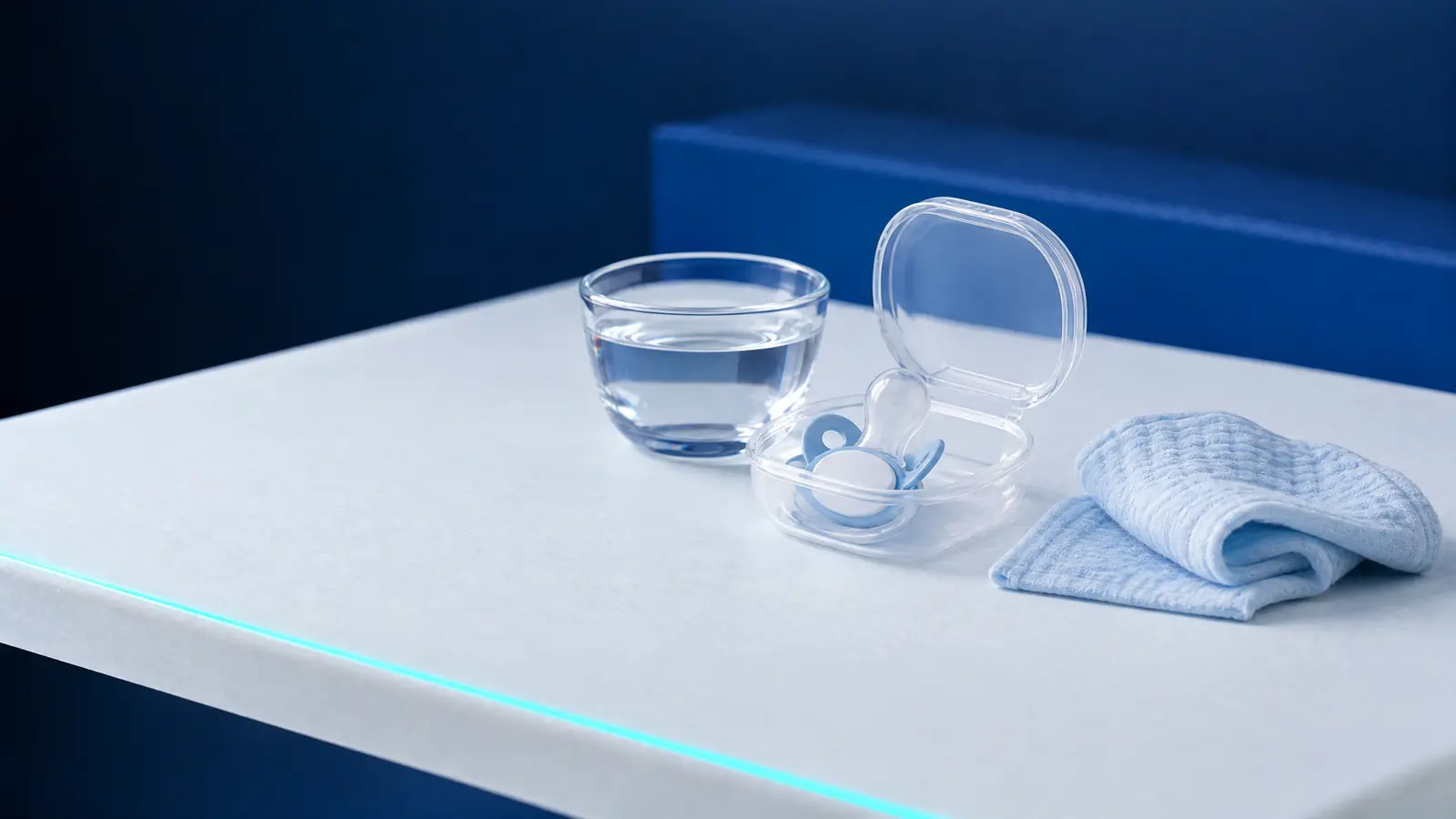
- After each feed, gently clean the gums and the space under the lips with sterile gauze moistened with lukewarm boiled water, especially before sleep (Medycyna Praktyczna).
- Wash and sterilise dummies, bottle teats and toys that the baby puts in its mouth.
- Wash your hands thoroughly, especially after changing a nappy, and use separate towels.
- Change breast pads often, and wash towels, baby clothes and bras at a high temperature.
- Take your baby to a doctor if thrush keeps coming back, the baby is feeding less well or the coating does not clear up after treatment.
Thrush under a denture: why does it come back, and how can it be prevented?
Thrush under a denture, or denture stomatitis, is redness and inflammation of the mucosa covered by the plate of a denture, most often on the palate. The review by Gendreau and Loewy (2011) reports that in different studies it affects from 15% to over 70% of denture wearers, more often older people and women.
The same review lists as the main causes poor denture hygiene, wearing the denture without a break, including at night, deposits on the plate and colonisation of the denture by yeasts, while a poorly fitting denture also irritates the mucosa. The authors stress that an antifungal medicine clears the infection, but thrush comes back once treatment ends if the denture is not cleaned and kept clean.
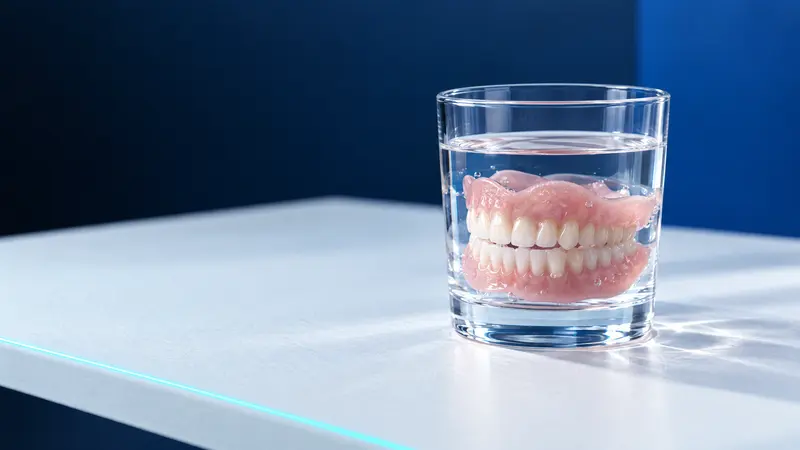
The NHS advises taking the denture out at night, brushing it morning and evening with mild soap or washing-up liquid instead of toothpaste, rinsing it after meals and storing it in water or a denture solution. Cleaning is described in detail in the article on dentures, and when a loose denture needs relining in a separate article.
How is oral thrush diagnosed and treated?
A doctor or dentist usually diagnoses oral thrush from the appearance of the lesions and the history, and when the picture is not typical or thrush keeps coming back, takes a swab for mycological testing, which according to Medycyna Praktyczna gives the definitive diagnosis. With recurrent thrush it is also worth checking for a general cause, such as poorly controlled diabetes.
Medycyna Praktyczna reports that in most cases antifungal medicines applied in the mouth are enough, and oral medicines are used for resistant or recurrent forms. Cleveland Clinic describes typical treatment lasting 10 to 14 days, and the NHS advises seeing a doctor if there is no improvement after a week of using a gel. The choice of medicine and the length of treatment are decided by the doctor or dentist.
Removing the cause is as important as the medicine: adjusting or replacing the denture, changing how it is worn, rinsing the mouth after inhalers, getting diabetes under control or treating a dry mouth. Cleveland Clinic also advises brushing your teeth at least twice a day, seeing a dentist regularly and not smoking. See a doctor or dentist in the situations on the list.
- A baby under 4 months old with a white coating in the mouth.
- No improvement after a week of treatment, or thrush quickly returning once treatment ends.
- Pain or difficulty when swallowing, or a feeling of food getting stuck.
- Thrush in a person with weakened immunity, during chemotherapy or after a transplant.
- A white lesion that cannot be wiped off and does not go away after treatment.
How it works at DentalBlue
At DentalBlue in Białystok, changes in the mouth, including redness under a denture, are assessed by a dentist during a “Wizyta bez bólu” (visit without pain), which includes a panoramic X-ray, a consultation, an examination and a written treatment plan; in the clinic’s price list it costs 300 zł. When the cause is a loose or damaged denture, the price list includes “Podścielenie protezy” (denture relining, 450 zł) and “Naprawa protezy” (denture repair, 500 zł). The final scope and cost are set by the dentist, and prices may change. When thrush points to a general cause, further diagnosis is handled by a family doctor or a specialist.
Frequently asked questions
Is oral thrush contagious?
In adults, usually not. The NHS states that oral thrush in adults is not contagious, and Cleveland Clinic that a healthy person rarely passes it on through kissing. The infection can, however, pass between a baby and a breastfeeding mother’s nipples, which is why, when a baby has thrush, the doctor may also assess the mother.
How can I tell thrush from milk residue?
Wipe the coating with clean gauze moistened with boiled water. Milk residue comes off easily and leaves no trace, while thrush clings to the mucosa, and once it is wiped off red, sometimes bleeding spots can be seen, Medycyna Praktyczna explains. Thrush also appears on the palate, gums and cheeks, not only on the tongue.
Can oral thrush appear after antibiotics?
Yes. Antibiotics upset the balance of bacteria and yeasts in the mouth, and the NHS and Cleveland Clinic list them among the main risk factors for thrush, especially with long-term use. If a white coating or burning appears during or after a course of antibiotics, contact a doctor or pharmacist, and do not stop the prescribed treatment on your own.
Can oral thrush be a sign of diabetes?
It can. Medycyna Praktyczna reports that oral candidiasis can be a complication of diabetes, especially when it is poorly controlled, and Cleveland Clinic lists diabetes among the risk factors. Recurrent thrush without an obvious cause, such as an antibiotic or a denture, is a reason to have your blood sugar checked with your family doctor.
Can I sleep in my denture if I have thrush?
Better not. The review by Gendreau and Loewy (2011) lists wearing a denture day and night among the main causes of thrush under a denture, and the NHS advises taking the denture out every night unless your dentist advises otherwise. Overnight, store the cleaned denture in water or a denture solution.
Sources
- NHS: Oral thrush in adults and babies (2026)
- Cleveland Clinic: Thrush (2023)
- Medycyna Praktyczna: Kandydoza jamy ustnej (2025)
- Medycyna Praktyczna: Pleśniawki jamy ustnej u niemowląt, dzieci i dorosłych (2025)
- Journal of Prosthodontics: Gendreau L, Loewy ZG, epidemiology and aetiology of denture stomatitis (2011)
- BMJ Evidence-Based Medicine: Pu X et al., adverse effects of inhaled corticosteroids, a meta-analysis (2026)
- NHS Best Start in Life: Thrush and breastfeeding (undated, accessed 2026)
- NHS: Dentures (2025)
An informational article. It does not replace a consultation, and treatment decisions are made during a visit.