What does a missing permanent tooth germ mean?
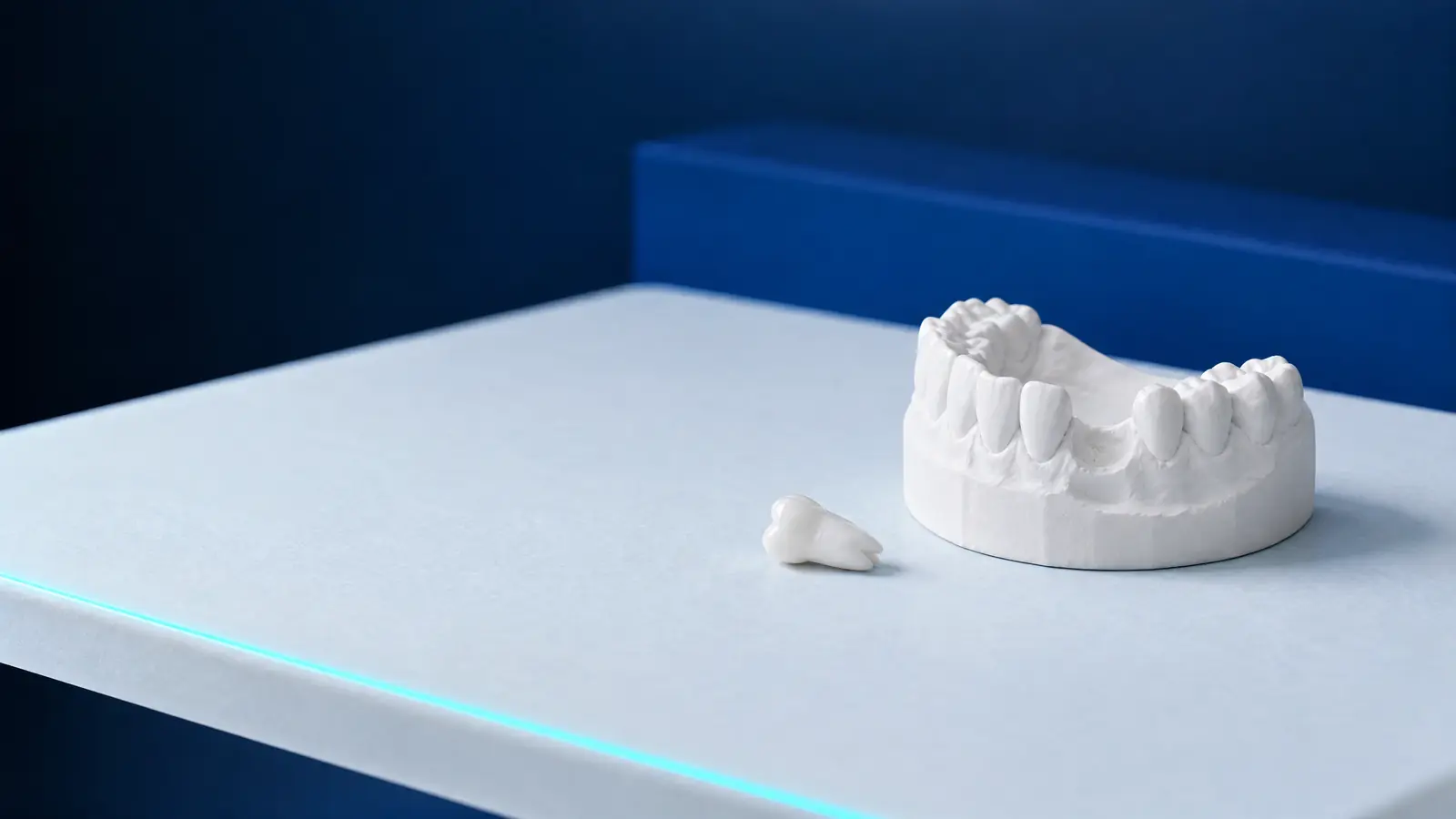
A missing permanent tooth germ means that the structure in the bone from which a permanent tooth should have grown never developed, so that tooth will never appear. The American Academy of Pediatric Dentistry (AAPD) guidelines from 2024 call this hypodontia, the congenital absence of one or more teeth.
Most often, one or two teeth are missing. A 2004 meta-analysis reports this in 83% of people with missing tooth germs. In that analysis, absence on one side was more common than on both, except for upper lateral incisors, which were more often missing on both sides.
The AAPD distinguishes these individual missing teeth from the absence of six or more teeth, called oligodontia, which can be associated with ectodermal dysplasia or other genetic syndromes, and from missing lateral incisors in children with cleft lip and palate. Treatment usually differs in these situations.
How common are missing tooth germs, and which teeth are usually affected?
Missing permanent tooth germs affect around 6 in 100 people. A 2014 meta-analysis excluding wisdom teeth reported an overall prevalence of 6.4%, rising to 7% in Europe, with a slightly higher prevalence in women than men (odds ratio 1.22).
An earlier meta-analysis from 2004, based on studies from Europe, North America and Australia, reported European figures of 4.6% for men and 6.3% for women. Differences between studies reflect region, participants’ ages and methods, which is why the AAPD gives a range from 4.4% to 13.4%.
The ranking of the teeth most often missing is the same in these sources. First comes the lower second premolar, the fifth tooth from the midline in the lower jaw, followed by the upper lateral incisor, the second upper tooth, and then the upper second premolar.
Missing primary teeth are rare: the AAPD reports less than 1%, usually involving the upper incisors and first primary molars. When a primary tooth is missing, its permanent successor is much more likely to be absent too.
How is a missing tooth germ diagnosed? Panoramic X-rays and other signs
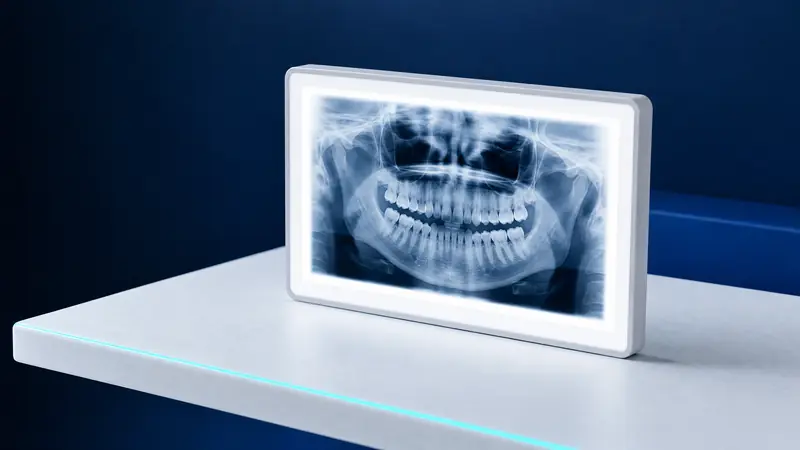
A missing permanent tooth germ is diagnosed on an X-ray, most often a panoramic X-ray showing both dental arches. The AAPD recommends X-rays when indicated during the eruption of the lower incisors and first permanent molars, at roughly 6 to 7 years of age.
What is visible in the mouth may suggest an absent tooth germ. The AAPD lists three signs: an asymmetrical eruption sequence, a primary tooth that stays in the mouth too long, and a submerged lower second primary molar sitting below its neighbours.
Through the NFZ, Poland’s National Health Fund, children from age 5 until their 18th birthday are entitled to a panoramic X-ray with a written report once every 3 years for specific indications, including suspected developmental anomalies of the teeth. The X-ray must be linked to guaranteed dental services, and the justified referral is issued by a dentist who holds a specialisation or is in specialist training. This follows the Minister of Health’s regulation on guaranteed dental services (consolidated text Dz.U. 2025 poz. 615), legal status as of 24 October 2026.
Retained baby tooth: how long can it last without a successor?
A retained baby tooth without a permanent successor can last for many years, including in adulthood. A Swedish study of 41 people missing lower second premolars followed 59 primary molars from ages 11 to 12 to a mean age of 20 and a half: only 2 teeth fell out naturally and 5 were extracted.
The authors write that a primary molar still present at age 20 has a good prognosis for long-term survival. In an American study of adults whose mean age at the start was 36, 24 of 28 such teeth (86%) remained functional after a mean of 12.4 years; 4 were lost to decay or periodontal disease.
A 2022 systematic review concluded that 82% to 89% of retained primary molars were in good condition after 5 to 13 years, but rated the certainty of this evidence as low. A baby tooth without a successor therefore needs regular check-ups and X-rays.
Keeping a primary tooth also has drawbacks. The AAPD notes that the second primary molar is wider than a premolar, which can complicate alignment of the bite. A tooth fused to the bone (ankylosis) that becomes submerged relative to its neighbours can also lead to bone loss, making later implant placement more difficult.
Missing permanent teeth: treatment options
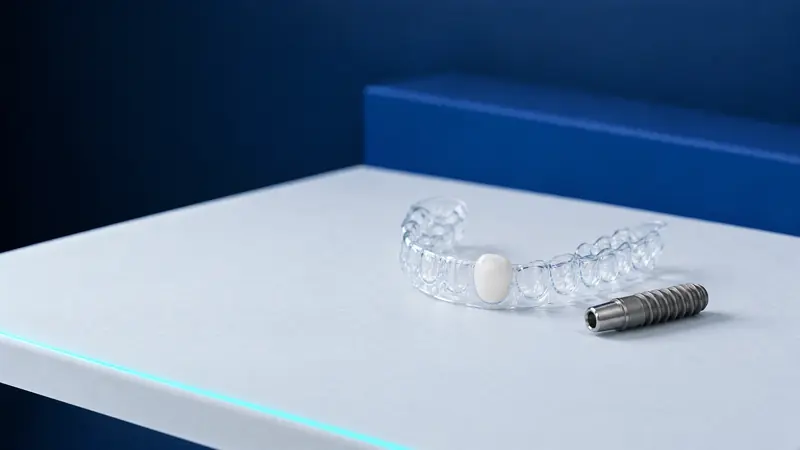
Treatment for missing permanent tooth germs involves choosing between several approaches: keeping the baby tooth, closing the gap with orthodontic appliances, or maintaining space for a future replacement, such as an implant, bridge or transplanted tooth. The AAPD says the decision depends on many factors, and more complex cases benefit from joint planning by several specialists.
When upper lateral incisors are absent, the orthodontist may move the canine into the second tooth’s position or open space for a future implant or bridge. The AAPD lists age, canine size, shape and position, crowding, bite depth, profile, smile line and bone quantity as factors in the decision, and notes that patients generally prefer gap closure to an implant.
There are also data on replacements. A review of 29 studies found 5-year survival of 91.4% for adhesive bridges bonded to neighbouring teeth, while a Dutch study of 74 teeth transplanted to another site in the mouth (autotransplantation) reported survival of 95.4% after a median of 10 years.
| Situation | Possible management | What the dentist assesses |
|---|---|---|
| Missing second premolar, healthy primary molar | Keeping the baby tooth with regular check-ups | Root resorption, submergence of the tooth, the bite |
| Missing second premolar with crowded teeth | Extracting the baby tooth and closing the gap orthodontically | Space in the arch, profile, child’s age |
| Missing upper lateral incisors | Moving the canine into the lateral incisor’s place or leaving space for an implant or bridge | Canine shape and position, smile line, bone |
| Primary tooth fused to the bone and becoming submerged | Extraction or decoronation, which removes the crown | Preserving bone for a future implant |
| One missing tooth and a suitable donor tooth | Autotransplantation into the gap | Donor tooth root development, available space |
| Six or more missing teeth | A plan made by a team of specialists | Possible genetic syndrome, such as ectodermal dysplasia |
At what age can an implant replace a missing tooth?
An implant for a missing tooth germ is usually placed only once the jawbones have finished growing; until then, the space needs to be maintained. A 2007 review of contraindications to implant treatment lists adolescence as a relative contraindication.
The AAPD stresses that, if an implant is planned, the space must be kept open with a temporary replacement. For a submerged primary molar, removing only the crown (decoronation) helps preserve the bone until implant placement. How the end of growth is assessed is explained in the article on the age at which implants are possible.
Supernumerary teeth: what does an extra tooth such as a mesiodens mean?
Supernumerary teeth are teeth beyond the normal number, the opposite of missing tooth germs. The AAPD reports them in 0.52% to 2% of children with mixed dentition; 80% to 90% are in the upper jaw, half in the front region and almost all on the palatal side.
The most common supernumerary tooth is a mesiodens, located on the midline between the upper central incisors. According to the AAPD, only one mesiodens in four erupts on its own; the others can obstruct or displace eruption of a permanent central incisor and, less often, damage its root.
An extra tooth should be considered if the upper incisors erupt asymmetrically, one central incisor is late or comes through crooked, or a primary incisor stays too long. Its position is established on X-rays, precisely using cone beam computed tomography (CBCT) or two images taken from different angles.
The AAPD describes removal of an unerupted supernumerary tooth at ages 6 to 7, once the permanent central incisor’s crown has formed, as timing that allows that incisor to erupt by itself. A check-up is needed 6 months after surgery; if the incisor has not erupted within 6 to 12 months, surgical exposure and orthodontic traction are considered.
Missing permanent teeth at DentalBlue
At DentalBlue in Białystok, panoramic X-rays, cephalometric X-rays and CBCT scans are taken in the clinic’s own radiology unit. Orthodontic treatment is planned digitally using cephalometric analysis, and implants using CBCT images. In the clinic’s price list, “Pantomogram” (panoramic X-ray) costs 120 zł, “Konsultacja ortodontyczna” (orthodontic consultation) 300 zł and “Plan leczenia z analizą cefalometryczną” (treatment plan with cephalometric analysis) 380 zł. The final scope and cost are agreed at the consultation, and prices may change.
Frequently asked questions
Does a missing baby tooth mean the permanent tooth will not grow either?
Not always, but the risk is considerably higher. The AAPD says there is a strong association between a missing primary tooth and absence of its permanent successor. If a child is missing a baby tooth, the dentist therefore usually assesses tooth germs on an X-ray when the child’s age allows.
Do missing wisdom teeth also count as missing tooth germs?
Yes, but they are usually excluded from hypodontia statistics. The 2004 and 2014 meta-analyses give prevalence figures excluding wisdom teeth because their absence is assessed separately. Missing wisdom teeth usually need no replacement.
Can missing tooth germs be a sign of a genetic condition?
Sometimes, especially when many teeth are missing. The AAPD associates absence of six or more teeth with ectodermal dysplasia and other syndromes, and missing lateral incisors with cleft lip and palate. An isolated missing second premolar or lateral incisor is usually not a sign of disease.
Can a baby tooth in an adult suddenly fall out?
Usually not. In a study of adults with primary molars without successors, root shortening after a mean of 12 years was negligible (0.16 mm), and teeth were lost because of decay or periodontal disease. Good hygiene and check-ups are therefore the main requirements for such a tooth.
Does the NFZ fund treatment for missing permanent teeth?
Partly. Children are entitled to removable appliance treatment until their 12th birthday and, from age 5, a panoramic X-ray every 3 years when indicated, on referral from a dentist who is a specialist or in specialist training. Implants, bridges and fixed appliances are not included in guaranteed dental services (Dz.U. 2025 poz. 615, legal status as of 24 October 2026).
Sources
- AAPD: Management of the Developing Dentition and Occlusion in Pediatric Dentistry (2024)
- Journal of Orthodontics: Khalaf K et al., prevalence of hypodontia, meta-analysis (2014)
- Community Dentistry and Oral Epidemiology: Polder BJ et al., prevalence of permanent tooth agenesis, meta-analysis (2004)
- European Journal of Orthodontics: Bjerklin K, Bennett J, retained primary molars in the absence of premolars (2000)
- American Journal of Orthodontics and Dentofacial Orthopedics: Sletten DW et al., retained primary molars in adults (2003)
- Angle Orthodontist: Dos Santos CCO et al., survival of primary molars without successors, systematic review (2022)
- British Journal of Oral and Maxillofacial Surgery: van Westerveld KJH et al., tooth autotransplantation after 1 to 20 years (2019)
- ELI: Rozporządzenie MZ w sprawie świadczeń gwarantowanych z zakresu leczenia stomatologicznego, t.j. Dz.U. 2025 poz. 615
An informational article. It does not replace a consultation, and treatment decisions are made during a visit.