What does a dentist look for in an older patient?
In an older patient, the dentist assesses not only the teeth but also the gums, the lining of the mouth, the amount of saliva, any dentures and the list of medicines being taken. According to the most recent nationwide survey (2016 to 2019), 18.8% of Poles aged 65 to 74 no longer had any natural teeth, compared with 40.8% about 10 years earlier.
More and more people therefore keep their own teeth into old age, and with them the problems of the gums and roots. In the same age group, 34.7% of those examined had gum pockets of 4 to 5 mm, and a further 9.8% had pockets of 6 mm or deeper. The table sets out the most common problems and what helps with them.
| Problem | What studies report | What helps |
|---|---|---|
| Dry mouth | One in five to one in three older people | A medication review with the doctor, more frequent check-ups |
| Root decay | About 41% of middle-aged and older people | Fluoride toothpaste, and fluoride varnish where the risk is high |
| Periodontitis | Pockets of 4 mm or deeper in 44.5% of people aged 65 to 74 | Professional cleaning and gum treatment |
| Inflammation under a denture | From 15% to over 70% of denture wearers | Daily cleaning, taking the denture out at night |
| Changes in the lining of the mouth | 4,482 cancers of the lip, mouth and throat in 2023 | A check of any sore that has not healed in 3 weeks |
Dry mouth in older people: where does it come from and what can you do?
Dry mouth (xerostomia) affects between one in five and one in three older people: a meta-analysis of 37 studies covering more than 1.6 million people over 50 gives 21%, and another, from 2026, gives 32.4% in people over 60. An objectively reduced flow of saliva is found in 33.4% of people over 60, but that is a different phenomenon from the feeling of dryness alone.
Medicines are a frequent cause. A 2017 review lists 56 substances with strong evidence of causing dry mouth, among them medicines for high blood pressure, diuretics, antidepressants, anti-epileptic and anti-Parkinson drugs, bladder medicines and antihistamines. In people over 75, taking many medicines at once was linked to dry mouth about twice as often (OR 2.05).
Do not stop your medicines because of a dry mouth; talk to your doctor, who will assess whether any of them can be changed. Dryness encourages tooth decay, ulcers and infections, so the dentist takes it into account when setting the interval between check-ups and the fluoride prevention plan.
Root decay: why does it affect older people more often?
Root decay develops on the surface of a root exposed by a receding gum, and it is common: a review of 91 publications reports it in 41% of middle-aged and older people (Maklennan et al., 2025). Gum recession in at least one place was found in a 2003 study in 88% of people over 65.
A root is not covered by enamel but by cementum and dentine, and a dry mouth further increases the risk of cavities. That is why, in older people, so much depends on fluoride and on regularly removing plaque along the gum line.
The UK guidance Delivering better oral health (2025 update) advises adults to brush at least twice a day with a toothpaste containing 1,350 to 1,500 ppm fluoride and to spit out the toothpaste after brushing rather than rinsing with water. For people at higher risk or with active decay, the dentist may prescribe a 2,800 or 5,000 ppm toothpaste and apply fluoride varnish twice a year.
How do you look after a denture?
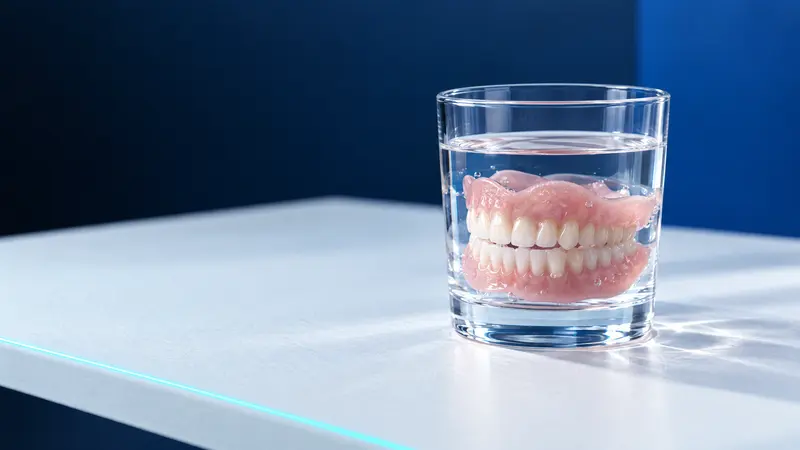
A denture needs daily cleaning just as natural teeth do, and its fit changes over time, because the bone gradually shrinks after teeth are lost. The types of denture and their costs are covered in the article on dentures; this section is about everyday care.
The guidelines of the American College of Prosthodontists (ACP, 2011) do not recommend wearing a denture around the clock. In a Japanese study of 524 people aged 85 and over, sleeping in a denture was linked to more than twice the risk of pneumonia within 3 years (HR 2.38); this is an association, not proof of cause. Inflammation of the lining under a denture affects from 15% to over 70% of wearers, and it is encouraged by poor hygiene and wearing the denture at night.
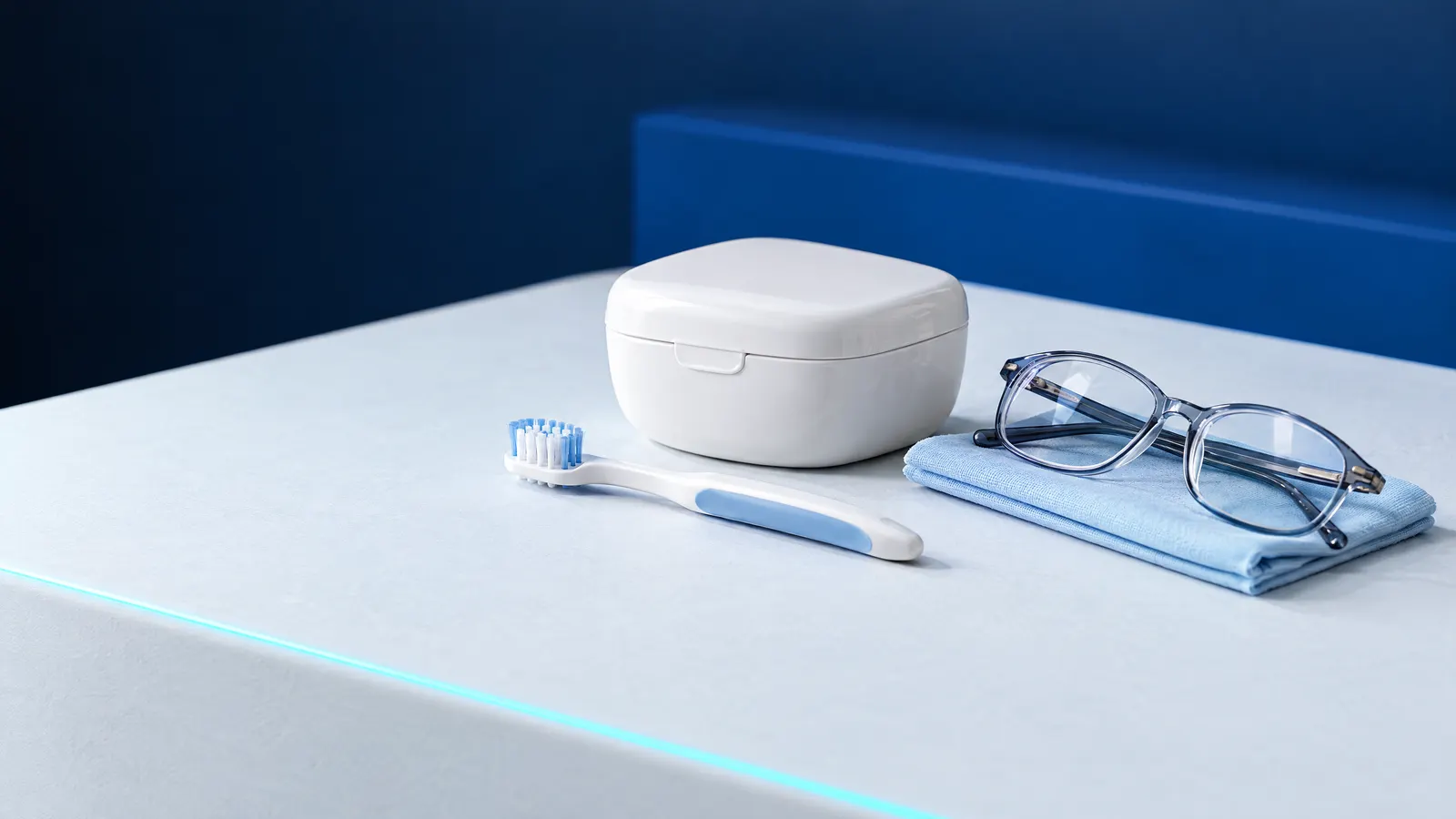
- Clean your denture every day: soak it and brush it with a cleaner that does not scratch the surface.
- Take your denture out at night and keep it in water.
- Brush your gums, palate, tongue and any remaining natural teeth as well, especially those that the clasps rest on.
- Come for a check-up at least once a year, even when the denture is causing no trouble.
- Get in touch if the denture rubs, slips or causes sore spots and wounds; the answer is often a reline, which refits the base to the changed gums underneath.
Dentures on the NFZ: what are older patients entitled to?
The NFZ, Poland’s National Health Fund, funds acrylic dentures for adults, partial ones where at least 5 teeth are missing in an arch and complete ones, no more often than once every 5 years; after surgery for head and neck cancer this limit does not apply (legal position as of 12 October 2026). Since 2025 the basket has also included a denture supported on root-treated roots (overdenture), likewise once every 5 years.
The NFZ does not fund implants, crowns, bridges or cast metal (skeletal) partial dentures. No referral is needed to see a dentist with an NFZ contract, and a patient who comes in with pain should receive help on the same day. The table lists the services that matter most to older patients.
| NFZ service | How often |
|---|---|
| Partial or complete acrylic denture | Once every 5 years |
| Overdenture supported on roots | Once every 5 years |
| Denture repair with an impression | Once every 2 years |
| Denture reline | Once every 2 years, separately for each arch |
| Examination with oral hygiene instruction | Once per calendar year |
| Follow-up examination | 3 times per calendar year |
| Tartar removal | Once per calendar year |
Implants in older people: is age an obstacle?
Age in itself does not rule out an implant, but it does affect the outlook. In a review of studies, after 10 years 93.2% of implants were still functioning in the whole group and 91.5% in people over 65, in an analysis that accounted for patients lost to follow-up (Howe et al., 2019).
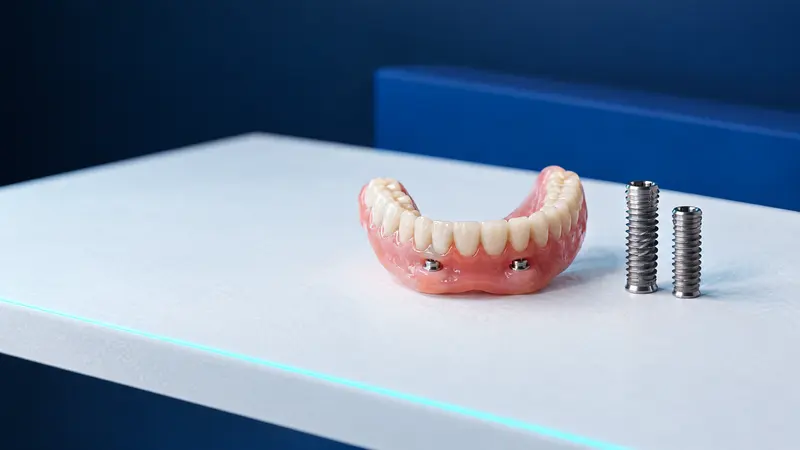
General health and medicines matter more than the date of birth: poorly controlled diabetes, smoking and the antiresorptive drugs used for osteoporosis and in cancer treatment, which carry a risk of osteonecrosis of the jaw. For people with no teeth whose denture slips, the dentist may suggest an implant-supported denture; it is described in the article on implant-supported dentures.
Medicines and teeth: what should you tell your dentist?
For an older patient, the list of medicines is one of the most important pieces of information before treatment. It is best to bring it in writing, together with any over-the-counter medicines and supplements.
- Anticoagulant and antiplatelet medicines: do not stop them on your own before a procedure; the decision is made by your doctor or the dentist.
- Osteoporosis medicines and cancer drugs that act on bone: these matter before a tooth extraction and before an implant is placed.
- Medicines that can dry the mouth, for example those for high blood pressure, diuretics, antidepressants and bladder medicines.
- Diabetes and its treatment, because they affect the gums and healing.
When does a change in the mouth need prompt attention?
A mouth ulcer that has not healed for more than 3 weeks needs to be checked by a doctor or dentist, and the same applies to a red or white patch and to a lump in the mouth or on the lip (NHS). Assessing such a change is a job for a clinician, not for watching at home.
According to the Polish National Cancer Registry, 4,482 cancers of the lip, mouth and throat were diagnosed in Poland in 2023, and 3,090 people died of them. Among the risk factors the registry lists smoking, strong alcohol, HPV infection, sun exposure in the case of the lip, poorly fitting dentures or broken teeth, and a diet low in vegetables and fruit.
Cochrane reviews found insufficient evidence to recommend mass screening, but they stress that dentists should stay alert. That is why a check-up for an older patient should include a look at the tongue, the floor of the mouth, the cheeks, the palate and the gums, including under the denture.
How it works at DentalBlue
At DentalBlue in Białystok, treatment usually begins with a visit without pain: a panoramic X-ray, a consultation, an examination and a written treatment plan with the price of each stage (300 zł in the clinic’s price list). The clinic provides prosthodontics, periodontology and preventive care, and plans implants on a CBCT image from its own radiology unit. In the price list, a complete acrylic denture costs 2 500 zł, a partial one 2 000 zł and a denture reline 450 zł; the final scope and cost are set at the consultation, and prices may change. Patients can communicate at the clinic in Polish, English, Ukrainian and Russian.
Frequently asked questions
Does a person with no teeth need to see a dentist?
Yes. Prosthodontic guidelines recommend a check-up once a year for denture wearers. The dentist checks the fit of the denture and the condition of the gums and palate, and examines the lining of the mouth, where changes needing further investigation can appear.
How often should a denture be replaced?
There is no single interval: replacement depends on the fit, the condition of the base and the denture teeth, and changes in the gums underneath. The NFZ funds a new acrylic denture no more often than once every 5 years, and a reline or repair once every 2 years (legal position as of 12 October 2026).
Which toothpaste is right for an older person?
UK guidance advises adults to use a toothpaste with 1,350 to 1,500 ppm fluoride, twice a day, without rinsing with water after brushing. Where the risk of decay is high, for example on the roots, the dentist may prescribe a toothpaste with 2,800 or 5,000 ppm fluoride.
Is dry mouth a normal part of ageing?
Dry mouth is common in older people, but a review of studies links it above all to the number and doses of medicines being taken. It is worth reporting it to your doctor and dentist; medicines should not be stopped on your own.
Can a denture cause sores in the mouth?
It can, especially when it no longer fits the changed gums underneath. A denture that rubs usually needs adjusting or relining. A sore or ulcer that has not healed for more than 3 weeks should be seen by a doctor or dentist, because poorly fitting dentures are among the risk factors for mouth cancer.
Sources
- Kamnoedboon P et al., Gerodontology: dry mouth in older people, meta-analysis (2026)
- Wolff A et al., Drugs R D: medicines that cause dry mouth, systematic review (2017)
- Maklennan A et al., Caries Res: prevalence of root caries, review (2025)
- Iinuma T et al., J Dent Res: denture wearing during sleep and pneumonia in older people (2015)
- Dz.U. 2025 poz. 615: Rozporządzenie MZ w sprawie świadczeń z zakresu leczenia stomatologicznego, consolidated text (2025)
- Krajowy Rejestr Nowotworów: cancers of the lip, oral cavity and pharynx, fact sheet (2023)
- NHS: Mouth cancer, symptoms (2023)
- GOV.UK: Delivering better oral health, chapter 2, summary guidance tables (2025)
An informational article. It does not replace a consultation, and treatment decisions are made during a visit.