Does oral care protect a bedbound person against pneumonia?
Oral hygiene in a bedbound person may be linked to pneumonia risk, but the evidence is weaker than popular guides suggest. Pneumonia in care home residents may result from aspiration of bacteria from the mouth and throat, so removing bacterial plaque is considered a possible way to reduce this risk (Cochrane, 2022).
The 2022 Cochrane review included 6 studies involving 6 244 people and compared professional oral care with usual care. It found no clear difference in the number of pneumonia cases, but low-certainty evidence suggests that professional care may reduce deaths from pneumonia after 24 months (RR 0.43; 454 people).
Sleeping in dentures is associated with a higher risk: in a Japanese study of 524 people aged 85 and over, those who did not remove their dentures at night had around 2.4 times the risk of pneumonia over 3 years (Iinuma et al., 2015). This was an observational study, so it shows an association, not proof that dentures are the cause.
How do you prepare a bedbound person for toothbrushing?
Before brushing, position the bedbound person as upright as possible, either sitting up or with the head of the bed raised high, to make it easier to spit out toothpaste and saliva. The same principle applies to eating when swallowing is difficult: MedlinePlus advises sitting as upright as possible during meals and remaining upright for 30 to 45 minutes afterwards.
If the person cannot be raised, agree on positioning for mouth care with a nurse, doctor or speech and language therapist, especially after a stroke or where swallowing is impaired. Prepare all the equipment before starting so that you do not leave the person with toothpaste in their mouth.
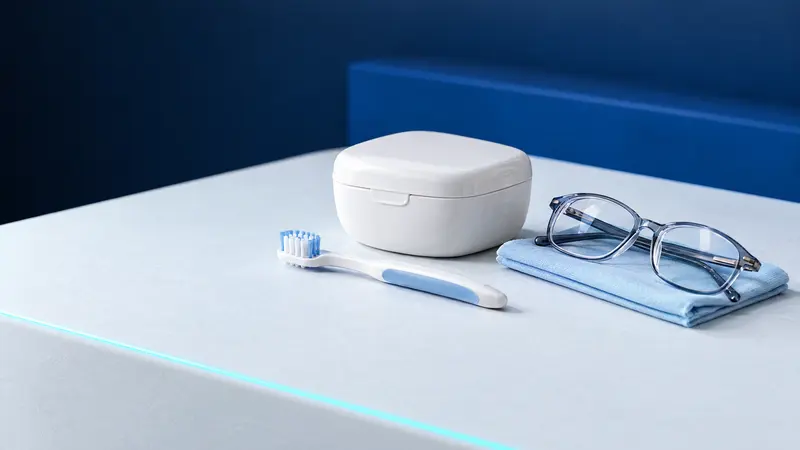
- A small-headed toothbrush with an easy-to-hold handle, either manual or electric.
- Fluoride toothpaste; for someone with swallowing difficulties, choose a low-foaming toothpaste without sodium lauryl sulphate (SLS).
- A cup of water, a bowl for spitting into and a towel under the chin.
- A separate denture brush and a container of water for storing the denture.
- Lip balm and good lighting, such as a torch, so that you can see the teeth and gums.
How do you brush a bedbound person’s teeth step by step?
Brush a bedbound person’s teeth at least twice a day, last thing at night and on one other occasion during the day, using fluoride toothpaste. This is NICE’s recommendation for care home residents (guideline NG48, 2016). The Delivering better oral health toolkit adds that excess toothpaste should be spat out without rinsing with water, because rinsing dilutes the fluoride.
Oral care is also needed for someone taking nothing by mouth, for example a person who is tube-fed. Delivering better oral health lists these people, alongside those with swallowing difficulties, dry mouth or a history of stroke, among those who benefit from low-foaming toothpaste.
- Remove any dentures and set them aside for separate cleaning.
- Put a pea-sized amount of toothpaste on the brush.
- Stand to one side and, if the person can manage it, let them hold the toothbrush while you guide their hand.
- Clean every tooth surface and the gumline in turn, using small movements and taking your time.
- Gently clean the tongue and gums too, including areas without teeth.
- If the person can spit, hold the bowl for them; if not, remove excess toothpaste with a damp, soft cloth as staff have shown you, and leave suction to a trained person when it has been recommended. Do not rinse with water or mouthwash immediately after brushing.
- Finish by drying the mouth area and applying lip balm.
How do you clean an older person’s dentures?
Remove dentures for cleaning morning and evening, and brush them with mild soap or washing-up liquid over a basin of water or a towel, because they can break if dropped. The NHS advises against cleaning dentures with toothpaste, which can damage them, and recommends rinsing them with cold water after meals (NHS, 2025).
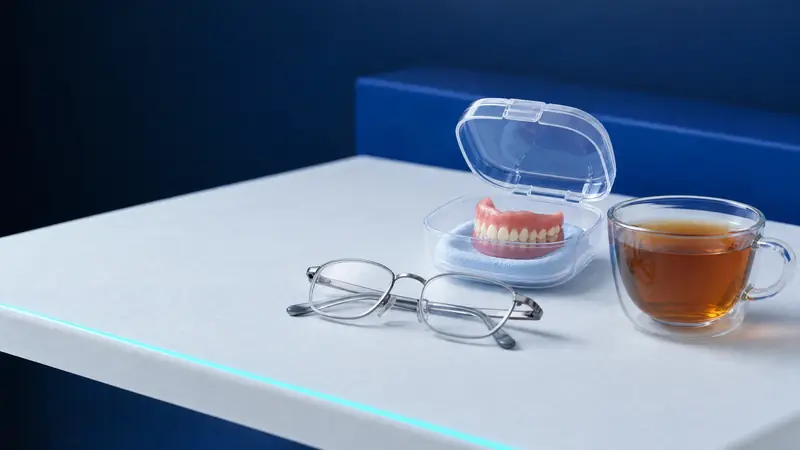
Take dentures out at night and keep them in water or a denture storage solution unless the dentist has advised otherwise. The NHS explains that wearing dentures at night encourages infection and decay and poses a choking risk, while NICE recommends removing dentures at night for care home residents.
In a care home or hospital, labelling dentures with the person’s full name is useful. NICE recommends checking whether dentures are labelled on admission to a care home and helping to arrange labelling with the resident’s consent.
What should you do if a bedbound person has a dry mouth and chapped lips?
Dry mouth in a bedbound person is often linked to medicines, mouth breathing and insufficient fluids. Alzheimer’s Society advises checking that the person is drinking enough, offering frequent small sips of water, using products for dry mouth and applying balm to dry lips.
If swallowing is impaired, agree how to give fluids with a doctor or speech and language therapist. Do not stop medicines because of dry mouth without speaking to the doctor. A full discussion of the causes and ways to manage it is provided in the article on dry mouth.
A dry mouth increases the risk of decay, so Delivering better oral health lists it among the indications for higher-fluoride toothpaste recommended by a dentist. Tell the dentist about new medicines and if the person is spending more time in bed.
Which changes in the mouth should you report to a dentist or doctor?
Changes in a bedbound person’s mouth should be reported if they do not settle after a few days or alter their behaviour during meals or toothbrushing. NICE reminds carers that untreated toothache or oral infection can change the behaviour of people who cannot communicate pain, such as those with dementia.
- An ulcer that has not healed for more than 3 weeks.
- Red or creamy-white patches, cracks at the corners of the mouth or pain when eating, which may indicate oral thrush.
- Red, swollen or bleeding gums that do not return to normal after a few days.
- Refusing food, frequently touching the face, agitation, moaning or crying out during toothbrushing in someone who does not communicate pain.
- Coughing, choking or a gurgling sound in the throat during or after eating and drinking.
- A denture that presses, rubs or no longer fits.
- Swelling of the face or neck with fever, difficulty breathing or difficulty swallowing: call the emergency number 112.
Daily oral care for a bedbound person: a checklist
A checklist helps carers, especially when family members and care workers share the care. NICE recommends making daily oral hygiene part of the individual care plan and updating it as the person’s needs change.
| When | What to do | What to look for |
|---|---|---|
| Morning | Brush teeth with fluoride toothpaste and clean dentures | Bleeding, new sores, white patches |
| After meals | Remove and rinse dentures; remove food debris | Food trapped inside the cheeks |
| During the day | Offer small sips, following swallowing advice where needed; apply lip balm | Dry mouth and chapped lips |
| Evening | Brush teeth before bed; remove excess toothpaste without rinsing | Pain or reluctance to have teeth brushed |
| Overnight | Keep dentures out, in water or denture solution | Pressure marks and rubbing beneath the denture |
| Regularly | Inspect the whole mouth in good light | Ulcers that have not healed for 3 weeks |
| As advised by the dentist | Dental check-ups, including for people with full dentures | Denture fit and gum health |
How it works at DentalBlue
At DentalBlue in Białystok, a visit may include an examination, images from the clinic’s own radiology unit, a denture assessment and a written treatment plan. If disability makes treatment in the dental chair impossible, the doctors may consider treatment under general anaesthesia. Every such course of treatment begins with a combined dental and anaesthetic consultation, including a panoramic X-ray, medical history, medication list and test results; the procedure is scheduled only afterwards. Funding through the NFZ, Poland’s National Health Fund, depends on the criteria in the regulation (legal status as of 24 October 2026) and is confirmed from the documents at the assessment.
Frequently asked questions
Can foam swabs be used to brush a bedbound person’s teeth?
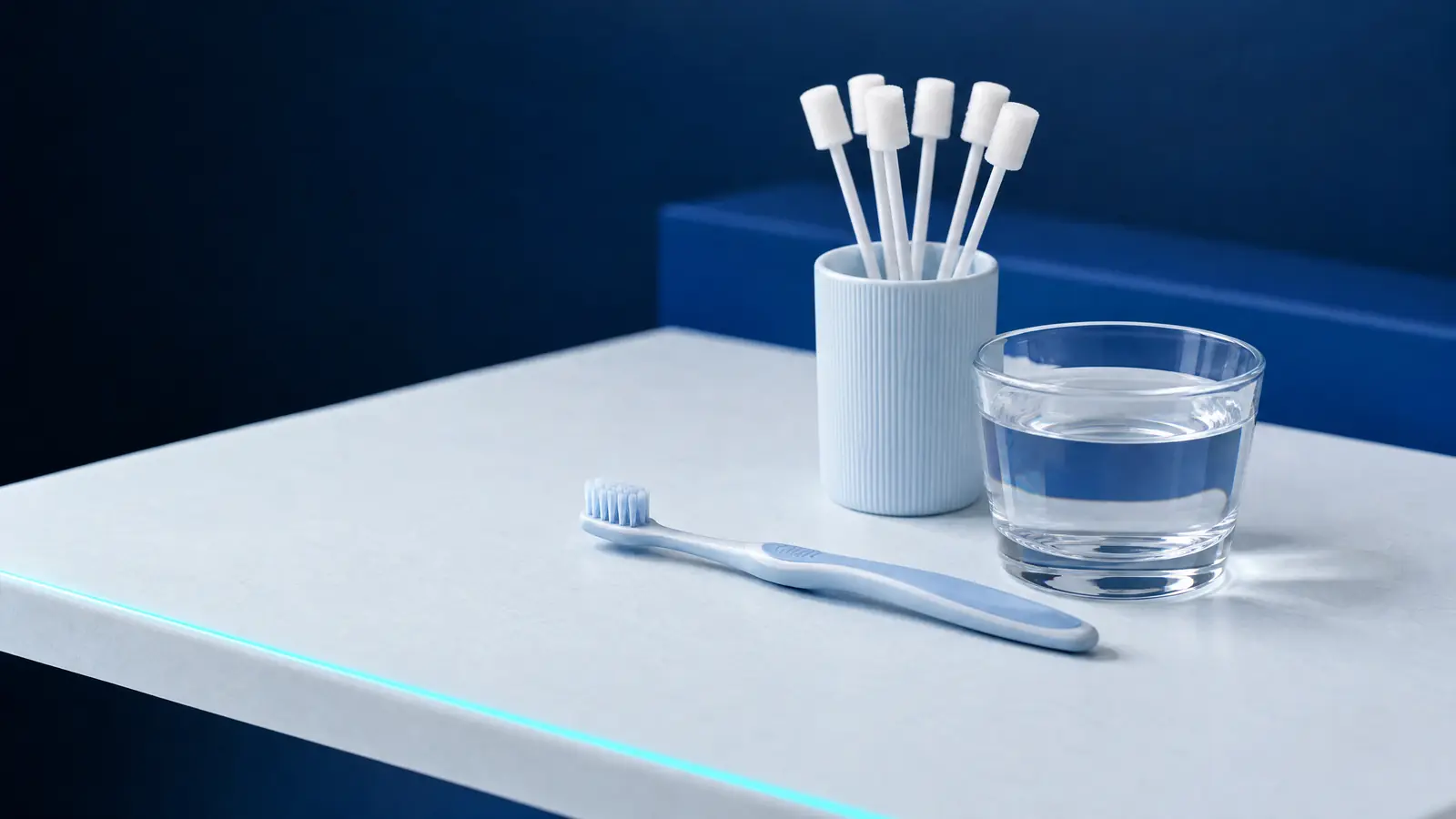
Foam swabs cannot replace a toothbrush. In a controlled study involving 34 volunteers, a toothbrush removed plaque substantially better than a foam swab, which did not reach sheltered areas between the teeth and at the gumline (Pearson and Hutton, 2002).
Which toothpaste should you choose for someone with swallowing difficulties?
Delivering better oral health recommends a low-foaming fluoride toothpaste, meaning one without sodium lauryl sulphate, for people with swallowing difficulties, dry mouth or a history of stroke. Less foam is easier to remove from the mouth, and it is worth discussing the toothpaste’s ingredients with the dentist.
Is an electric toothbrush better for a bedbound person?
Either type can work. NICE recommends using the resident’s choice of toothbrush in care homes, manual or electric, and Alzheimer’s Society gives an electric toothbrush as an example of a brush with a small head and an easy-to-hold handle. Thorough brushing twice daily matters more than the type.
Does someone with no teeth still need mouth care?
Yes. The NHS advises denture wearers to brush their gums, tongue and any remaining teeth with fluoride toothpaste morning and evening, while cleaning the dentures separately. Regular dental check-ups are also needed for people with full dentures.
Can a bedbound person use mouthwash?
Mouthwash does not replace a toothbrush. Alzheimer’s Society advises against rinsing with water or mouthwash immediately after brushing, and Delivering better oral health explains that rinsing dilutes fluoride. If the person cannot spit the liquid out, ask a doctor or dentist whether it should be used at all.
How often should a bedbound person see a dentist?
The dentist sets the interval between check-ups according to oral health, and NICE recommends assessing dental needs on admission to a care home. An earlier appointment is needed for pain, swelling, sores, a denture causing pressure or changes in behaviour during meals.
Sources
- Cochrane: Cao Y et al., Oral care measures for preventing nursing home-acquired pneumonia (2022)
- Iinuma T et al., J Dent Res: Denture wearing during sleep doubles the risk of pneumonia in the very elderly (2015)
- NICE: Oral health for adults in care homes, NG48 (2016)
- Delivering better oral health, chapter 9: fluoride, Department of Health and Social Care and NHS England (2025)
- NHS: Dentures (2025)
- MedlinePlus (U.S. National Library of Medicine): Swallowing problems (2026)
- Alzheimer’s Society: Supporting a person with dementia to keep a healthy mouth (2026)
- Pearson LS, Hutton JL, J Adv Nurs: foam swabs and toothbrushes, plaque removal (2002)
An informational article. It does not replace a consultation, and treatment decisions are made during a visit.