How can you prepare an autistic child for a dental visit?
An autistic child manages a dental visit better when they know what will happen, in what order and for how long. Preparation therefore begins at home in advance and includes speaking to the practice, visual aids and brief exercises in opening the mouth.
The UK’s National Autistic Society (NAS) advises telling the child about the appointment as early as possible and showing the date on a calendar if they find time difficult to understand. The 2024 American Academy of Pediatric Dentistry (AAPD) guidelines list gradual desensitisation, sensory adaptations in the surgery and picture-based communication for autistic children.
The table brings together preparation steps and what these sources suggest may help. Not every child needs every step; parents know best which sensory experiences their child finds difficult.
| Preparation step | What helps | Source |
|---|---|---|
| Choosing an appointment | The first appointment of the day or a double slot, with few people in the waiting room | NAS, AAPD 2021 |
| Informing the practice | Diagnosis, communication style, stress triggers and sensory sensitivities | AAPD 2021 |
| Explaining the appointment | As early as possible, using a calendar or another visual aid | NAS |
| Social story | A short illustrated account explaining why the visit is needed and what happens | NAS, AAPD 2024 |
| Practice at home | A parent demonstrates mouth opening and touching the cheek, and practises with a mirror | AAPD 2024 |
| Familiarisation visit | Seeing the building, surgery and equipment without treatment | NAS, AAPD 2024 |
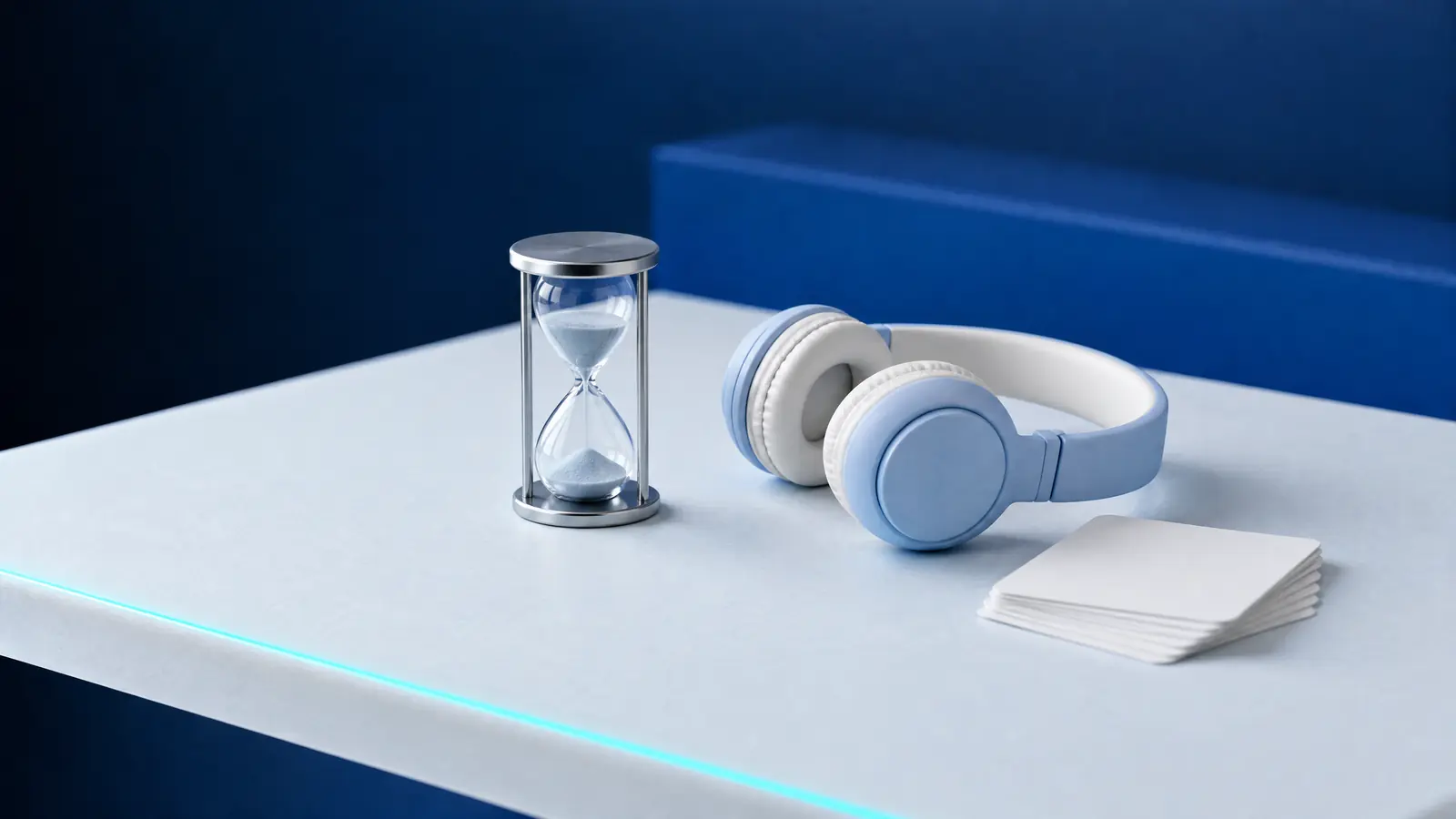
| During the appointment | A photo sequence ending with a reward, a sand timer, headphones and a favourite object | NAS |
| Communication without words | Picture cards, including a stop sign to request a break | AAPD 2024 |
What should you tell the practice before the first visit?
Before the first visit, tell the practice about the diagnosis, how your child communicates, sensory experiences that upset them and what calms them. The AAPD guidelines on patients with special health care needs (2021 revision) recommend considering sensory sensitivities and communication limitations when taking the history.
These guidelines also stress the timing and length of the visit: a morning appointment, first of the day, with few people in the waiting room and, if needed, a familiarisation visit beforehand. Agreed adjustments are recorded so the team is prepared for subsequent visits too.
The AAPD also recommends speaking to the child at a level appropriate to their development, without assuming intellectual disability simply because they use little spoken language. If your child uses picture cards or a communication app, bring these to the appointment.
A medication list, information about illnesses and previous anaesthetics, and test results are also useful at first contact. A separate article on dentistry for people with disabilities explains the documents needed for NFZ treatment (Poland’s National Health Fund) and assessment for general anaesthesia.
Social stories and visual aids: how do you use them?
A social story is a short account, often with photographs, explaining what will happen and why. NAS describes it as a useful way to convey information about an activity and its purpose, and also recommends simple picture books about visiting the dentist.
It is best to base the story on real places and people. The 2024 AAPD guidelines suggest looking through material about the practice with your child at home before the visit, in a booklet, video or on the practice website.
In the surgery, a sequence of photographs showing the stages of the visit with a reward picture at the end can help, as can a visible timer, such as a sand timer or phone alarm. For children who use little or no speech, the AAPD describes the Picture Exchange Communication System (PECS): a prepared board shows the steps, and the child can use a symbol, such as a stop sign, to request a short break.
Familiarisation visits: what does gradual adjustment involve?
Familiarisation visits gradually introduce the child to the surgery, step by step, before treatment begins. The AAPD calls this systematic desensitisation and recommends it among other approaches for children with neurodevelopmental conditions such as autism.
The guidelines describe a sequence of steps. Each new step is introduced only once the previous one has gone calmly; the pace follows the child rather than a timetable.
- At home, the child looks at a booklet, video or practice website, and a parent demonstrates opening the mouth and touching the cheek.
- A parent practises with the child at home using a dental mirror.
- The child visits the surgery outside patient appointment hours, if the practice can arrange this.
- The next visit takes place in the treatment room, where the child gets to know the chair, light and sounds.
- Only after these steps comes an appointment with the dentist and team, initially just for an examination.
Do sensory adaptations in the surgery help autistic children?
Sensory adaptations may reduce stress for an autistic child, although the evidence comes from small studies. The 2024 AAPD guidelines describe a sensory-adapted surgery with dimmed lighting, moving ceiling projections, calming background music and a blanket or special wrap providing deep pressure.
In a randomised pilot study by Cermak et al. (2015), 44 children aged 6 to 12, including 22 autistic children, had two professional dental cleanings: one in a regular surgery and one in a sensory-adapted setting. Both groups showed lower physiological anxiety in the adapted setting, and the children reported less pain and sensory discomfort.
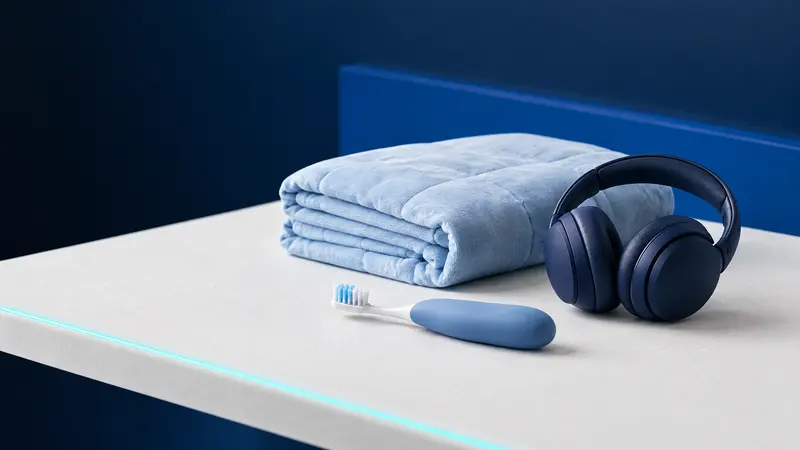
Not every practice has this equipment, but some aids can be brought from home: NAS recommends headphones with favourite music and a comforting object. NAS lists noise and bright light as stressors, so ask whether the dental light or room lighting can be dimmed.
How do you brush the teeth of a child with sensory sensitivities?
Children with sensory sensitivities need toothbrushing as often as other children, twice a day with fluoride toothpaste, but the approach must suit their sensitivities. AAPD guidelines stress that people with special health care needs may face a greater risk of oral disease, making daily hygiene supervised by a carer important.
The amount of toothpaste depends on age. The European Academy of Paediatric Dentistry (EAPD, 2019) recommends a rice-grain-sized amount of 1000 ppm fluoride toothpaste under age 2, a pea-sized amount of 1000 ppm from 2 to 6, and 1450 ppm over age 6, with parental supervision until at least age 7.
- If toothpaste taste or foam is intolerable, the AAPD lists toothpaste without sodium lauryl sulphate (SLS), which foams less, a fluoride rinse or another preparation applied with a brush; discuss the choice with the dentist.
- An electric toothbrush and floss holders may make regular cleaning easier, according to the AAPD.
- Familiarisation exercises, such as cheek touch and a mirror in the mouth, can be combined with daily toothbrushing.
- The picture sequence and visible timer used in the surgery can also support toothbrushing at home.
- The AAPD notes that an occupational therapist can help develop a hygiene plan, and a carer should clean the teeth if the child cannot do so thoroughly.
When is dental treatment under general anaesthesia justified for an autistic child?
General anaesthesia is considered when non-drug approaches, such as preparation, familiarisation and sensory adaptations, do not allow necessary dental treatment to be carried out safely. The AAPD guidelines for patients with special health care needs state that most can be treated in a surgery with a carer’s help. When non-pharmacological techniques fail, the clinician may propose sedation or general anaesthesia.
An autism diagnosis alone does not confer entitlement to NFZ-funded general anaesthesia. The regulation on guaranteed dental services (t.j. Dz.U. 2025 poz. 615) grants it to children under 16 with an official disability certificate where medically indicated, and since 1 January 2026 also to under-18s in specified circumstances. One example is a child who, despite pharmacological calming, cannot in a specialist’s opinion safely undergo root canal treatment or extraction of 4 teeth in total (legal status as of 24 October 2026).
The article on NFZ-funded dental treatment under general anaesthesia explains the criteria, documents and waiting times; the article on preparing a child for general anaesthesia covers the procedure day and first 24 hours afterwards. The dentist and anaesthesiologist always decide following assessment, with parents contributing their knowledge of the child.
Dental care for autistic children at DentalBlue
At DentalBlue in Białystok, a child’s first appointment can be a familiarisation visit. “Wizyta Adaptacyjna” (familiarisation visit) costs 250 zł in the price list; the final scope and cost are agreed at the visit, and prices may change. The clinic uses inhalation sedation with nitrous oxide. When treatment in the chair is not possible, its own anaesthesiology department (2 anaesthesiologists and anaesthetic nurses) provides general anaesthesia for children unable to cooperate and for patients with disabilities.
The procedure is preceded by a joint dental and anaesthesiology consultation with a panoramic X-ray, medical history, medication list and test results. NFZ entitlement is confirmed during assessment. Carers can phone Monika Gosiewska (preoperative and postoperative care, 606 983 347).
Frequently asked questions
Can an autistic child have laughing gas at the dentist?
Yes, if they accept the nasal mask and breathe through their nose. The 2024 AAPD guidelines list nitrous oxide sedation among options for children with anxiety and special health care needs. Sessions are less often successful in children with disabilities than in healthy children, as the article on laughing gas explains.
Can a parent stay in the surgery with an autistic child?
Usually, yes. The 2024 AAPD guidelines describe parental presence as emotional support and an approach suitable for any patient; the parent and clinician agree beforehand how to use it. Parents know their child’s stress signals and can explain them to the team.
Can dental general anaesthesia cause autism?
Research does not support this. The AAPD guidelines cite a large cohort study in which neither general anaesthesia before age 2 nor the number of anaesthetics was associated with developing autism, although the guideline authors consider further research into neurodevelopmental conditions necessary.
When should an autistic child first see a dentist?
As early as other children, with even greater attention to establishing care. The AAPD recommends an ongoing dental care provider by 12 months of age, especially for a child with special health care needs. Early, calm visits without treatment help familiarise the child with the surgery.
Can an autistic child without a disability certificate have NFZ-funded dental general anaesthesia?
They can, if they meet one of the NFZ criteria. For a child who does not cooperate despite pharmacological calming, a specialist in oral surgery or paediatric dentistry must confirm that the child does not allow safe root canal treatment or extraction of 4 teeth in total, or a surgical procedure in the mouth. The other indications are covered in the article on NFZ-funded dental treatment under general anaesthesia (legal status as of 24 October 2026).
Sources
- AAPD: Behavior Guidance for the Pediatric Dental Patient (2024 revision)
- AAPD: Management of Dental Patients with Special Health Care Needs (2021 revision)
- National Autistic Society: Going to the dentist, a guide for parents (2020)
- Cermak SA et al., Journal of Autism and Developmental Disorders: sensory-adapted dental environment, pilot study (2015)
- Toumba KJ et al., Eur Arch Paediatr Dent: EAPD guidelines on fluoride use in children (2019)
- ELI: Rozporządzenie MZ w sprawie świadczeń gwarantowanych z zakresu leczenia stomatologicznego, t.j. Dz.U. 2025 poz. 615 (2025)
An informational article. It does not replace a consultation, and treatment decisions are made during a visit.