What is tooth devitalisation?
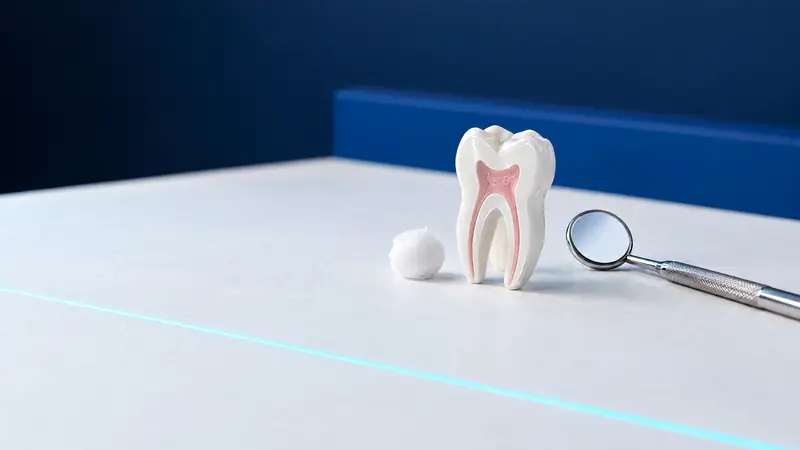
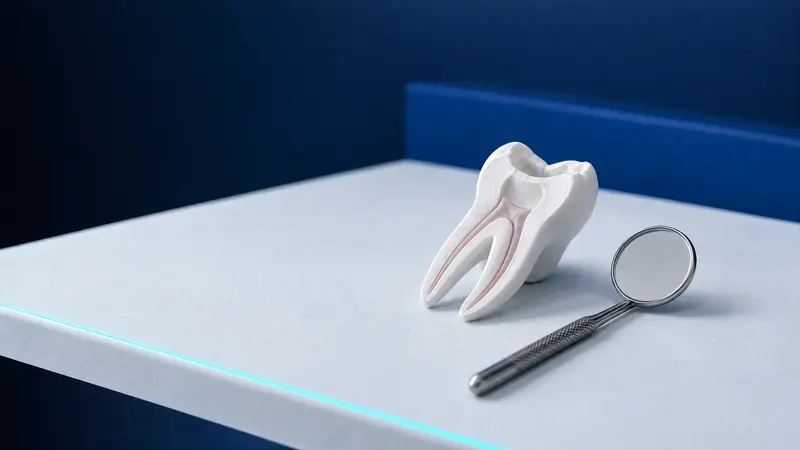
Tooth devitalisation, sometimes called killing or poisoning the tooth nerve, means killing the pulp chemically instead of removing it under anaesthesia. The dentist opens the pulp chamber, places devitalising paste on the exposed pulp, seals the tooth with a dressing and removes the dead pulp at the next visit; this is how the summary of product characteristics for a paste available in Poland describes the procedure.
Patients also speak of poisoning the tooth nerve, although the paste acts on the whole pulp, the tissue containing nerves and blood vessels. In medical terminology, this is a non-vital method, as opposed to vital extirpation, in which living pulp is removed straight away under anaesthesia.
Both approaches still exist in Polish regulations. The list of adult services funded by the NFZ, Poland's National Health Fund, includes both “Dewitalizacja miazgi zęba z zaopatrzeniem ubytku opatrunkiem” (pulp devitalisation with a cavity dressing) and “Ekstyrpacja przyżyciowa miazgi” (vital pulp extirpation); devitalisation is also listed among emergency dental services (Ministry of Health regulation, t.j. Dz.U. 2025 poz. 615, legal status as of 24 October 2026).
Arsenic in a tooth: how was pulp devitalised in the past?
In the past, arsenic trioxide pastes, commonly known as arsenic pastes, were used to devitalise teeth. Arsenic compounds were traditionally used as devitalising agents, but leakage into periodontal tissues can cause gum and bone necrosis, as described in a review including the case of a 14-year-old girl treated in France (Marty et al., 2016).
In 2014, a European Medicines Agency (EMA) committee recommended revoking EU marketing authorisations for two dental pastes containing arsenic trioxide, also marketed under other names; the European Commission issued a binding decision on 11 July 2014. The pastes had been authorised in Estonia, France, Italy, Latvia and Lithuania.
The EMA identified a risk of genotoxic effects that could increase cancer risk, and a small number of reported cases of periodontal necrosis, including 12 cases of bone necrosis. It concluded that, with arsenic-free methods available, benefits did not outweigh risks, and restrictions on use would not reduce them to an acceptable level.
Such cases still occur. Taiwanese reports from 2014 describe two women who developed a painful white patch on the gum or severe pain with gum bleeding after arsenic paste devitalisation; the authors write that these pastes have no indication in contemporary dentistry (Chen et al., 2014).
How teeth are devitalised today: paraformaldehyde paste
An arsenic-free devitalising paste containing paraformaldehyde and lidocaine is currently available in Poland, registered as a medicinal product. Its summary of product characteristics says paraformaldehyde slowly releases formaldehyde in the pulp chamber, causing pulp necrosis after 6 to 8 days and mummification after a further 2 to 6 days.
The document specifies that the paste is used only when pulpitis cannot be treated by vital pulp amputation or extirpation, meaning removal of living pulp. Contraindications include the possibility of such treatment, allergy to ingredients and age under 4 years; the paste should not be used during pregnancy because safety data are lacking.
Paste is placed on exposed pulp beneath a tightly sealed temporary dressing, because leakage towards the gum can damage tissues. The table compares the old method, today's paste and pulp removal under anaesthesia.
| Feature | Arsenic paste (past) | Paraformaldehyde paste (today) | Pulp removal under anaesthesia |
|---|---|---|---|
| How it works | Arsenic trioxide kills the pulp | Formaldehyde slowly causes pulp necrosis and mummification | The dentist removes living pulp immediately under local anaesthesia |
| Visits until pulp removal | At least two | At least two; paste stays for 10 to 14 days | One |
| Status | EU authorisations revoked in 2014 | Medicine authorised in Poland, only when vital treatment is impossible | Approach consistent with ESE guidelines |
| Main risk | Gum and bone necrosis, possible genotoxicity | Gum and bone necrosis if paste leaks | Risks of ordinary root canal treatment |
Why are guidelines moving away from pulp devitalisation?
Guidelines are moving away from devitalisation because pulp can be removed immediately under anaesthesia without introducing toxic substances into the tooth. In its 2006 quality guidelines, the European Society of Endodontology (ESE) states that devitalisation or chemical modification of the pulp should not use materials containing toxic ingredients, because there is no indication for this approach.
For irreversible pulpitis, the current standard is removing pulp from the canals or, in selected cases, pulpotomy, meaning removal of pulp only from the chamber; the article on pulpitis explains this. The same ESE guidelines also advise against root canal sealers containing aldehydes.
Paraformaldehyde was mainly used when local anaesthesia of inflamed pulp failed; however, a 2007 case series notes that it does not remain in the pulp but passes through dentine and gradually releases formaldehyde (Tortorici et al., 2007). For a hot tooth that is difficult to anaesthetise, dentists now have supplementary techniques described in the article on whether root canal treatment hurts.
What risks does devitalising paste carry?
The main risk of devitalising paste is leakage from the tooth into the gum and bone, potentially causing necrosis. Case reports concern both arsenic and paraformaldehyde pastes: in an Italian report from 1998, paraformaldehyde paste leaking from a lower molar caused gum and bone necrosis and ultimately tooth loss (Di Felice and Lombardi, 1998).
The Taiwanese authors write that arsenic paste can damage periodontal tissues and bone if it leaks or is used carelessly (Chen et al., 2014). The paraformaldehyde paste's summary of product characteristics requires a tight dressing to prevent leakage towards the gum and prohibits placing it inside a root canal.
A tooth with devitalising paste is still undergoing treatment and is closed only with a temporary dressing. The seal deteriorates over time, as described in the article on temporary fillings, so the next appointment should not be postponed.
In the two Taiwanese case reports, after dead tissue was removed, the gum healed after 7 weeks in one patient and the tissues supporting the tooth after 4 weeks in the other (Chen et al., 2014). This does not predict the outcome for anyone else; in another report the necrosis led to loss of the tooth (Di Felice and Lombardi, 1998).
How long can devitalising paste stay in a tooth, and what should you do now?
Devitalising paste should stay in a tooth only for as long as your dentist specifies; the summary of product characteristics for the paraformaldehyde paste available in Poland says it should remain for 10 to 14 days. The dentist then removes the dead pulp, cleans and fills the canals, and finally restores the tooth.
If you currently have devitalising paste in a tooth, the most important step is keeping your next appointment. The list explains what to do and when to seek help sooner.
- Attend on the agreed day even if the tooth does not hurt; the lack of pain reflects the paste's action, not a cure.
- If you cannot remember when the paste was placed, or more time has passed than agreed, contact the surgery.
- Call the surgery immediately if the dressing falls out, crumbles or becomes noticeably smaller.
- Seek an earlier appointment if a painful white patch appears on the gum beside the tooth, the gum bleeds or pain increases.
- Tell your dentist if you are pregnant, because the paraformaldehyde paste's product information advises against use in pregnancy.
- Facial swelling with fever, or difficulty breathing or swallowing: hospital emergency department (SOR) or the emergency number 112.
Is pain after pulp devitalisation normal?
A tooth may hurt briefly after paste is placed: the paraformaldehyde paste's product information lists transient pain among adverse effects. The document describes bouts of pain during its action as a drawback of paraformaldehyde itself, eased by the lidocaine in the paste.
The same document recommends making the opening into the pulp chamber large enough for exudate to escape, to prevent pain after placement. Severe or increasing pain, pain lasting several days, gum swelling or changes on the gum require contact with the surgery before the planned appointment.
Allergy to paraformaldehyde is rare; the product information gives a frequency of at least 1 in 10 000 but fewer than 1 in 1 000 people. Rash, itching or swelling after paste placement warrants urgent contact with a doctor.
How it works at DentalBlue
DentalBlue's price list in Białystok includes “Devipasta z opatrunkiem” (Devipasta with a dressing, 350 zł). This dressing is used in particular circumstances, and the dentist explains why it is chosen instead of pulp removal under anaesthesia. Root canal treatment is also performed under a microscope, and the clinic's own radiology unit takes intraoral X-rays and CBCT scans. When inflammation is too acute for local anaesthesia to work, treatment under general anaesthesia is decided at a joint dental and anaesthesiology consultation. The dentist sets the final scope and cost, and prices may change.
Frequently asked questions
Does the NFZ cover pulp devitalisation?
Yes, pulp devitalisation with a dressing is listed among NFZ adult and emergency services. However, adults have removal of devitalised pulp and canal filling funded only in teeth numbered 1 to 3, while children, young people, pregnant women and women in the postpartum period have cover for all teeth (legal status as of 24 October 2026).
Is arsenic in a tooth dangerous?
Arsenic trioxide paste is toxic to tissues: in 2014 the EMA identified genotoxicity risks and cases of periodontal and bone necrosis, so EU authorisations were revoked. Tell your dentist if you have had such treatment; the tooth and bone are assessed by examination and an X-ray.
What happens to a tooth after devitalisation?
At the next visit, the dentist removes dead, mummified pulp from the chamber and canals, cleans and fills the canals, then restores the tooth. This is ordinary root canal treatment, but started with devitalisation; the article on root canal treatment describes the process step by step.
Is pulp devitalisation used in children?
Paraformaldehyde paste must not be used in children under 4, as its product information states, and the NFZ list of children's services includes amputation of devitalised pulp in a baby tooth. A 2016 report describes bone necrosis in a 14-year-old girl after arsenic paste.
Sources
- EMA: Caustinerf arsenical and Yranicid arsenical, referral and revocation of authorisations (2014)
- Rejestr Produktów Leczniczych: Devipasta summary of product characteristics, paraformaldehyde and lidocaine paste
- International Endodontic Journal: ESE, quality guidelines for endodontic treatment (2006)
- European Archives of Paediatric Dentistry: Marty M et al., bone necrosis after arsenic trioxide in a child (2016)
- Journal of the Formosan Medical Association: Chen G et al., gum and bone necrosis after arsenic paste (2014)
- Endodontics and Dental Traumatology: Di Felice R, Lombardi T, gum and bone necrosis after paraformaldehyde paste (1998)
- British Dental Journal: Tortorici S et al., jaw bone necrosis after formaldehyde paste, case series (2007)
- ELI: Rozporządzenie MZ w sprawie świadczeń gwarantowanych z zakresu leczenia stomatologicznego, t.j. Dz.U. 2025 poz. 615
An informational article. It does not replace a consultation, and treatment decisions are made during a visit.