What is the temporomandibular joint, and what is TMD?
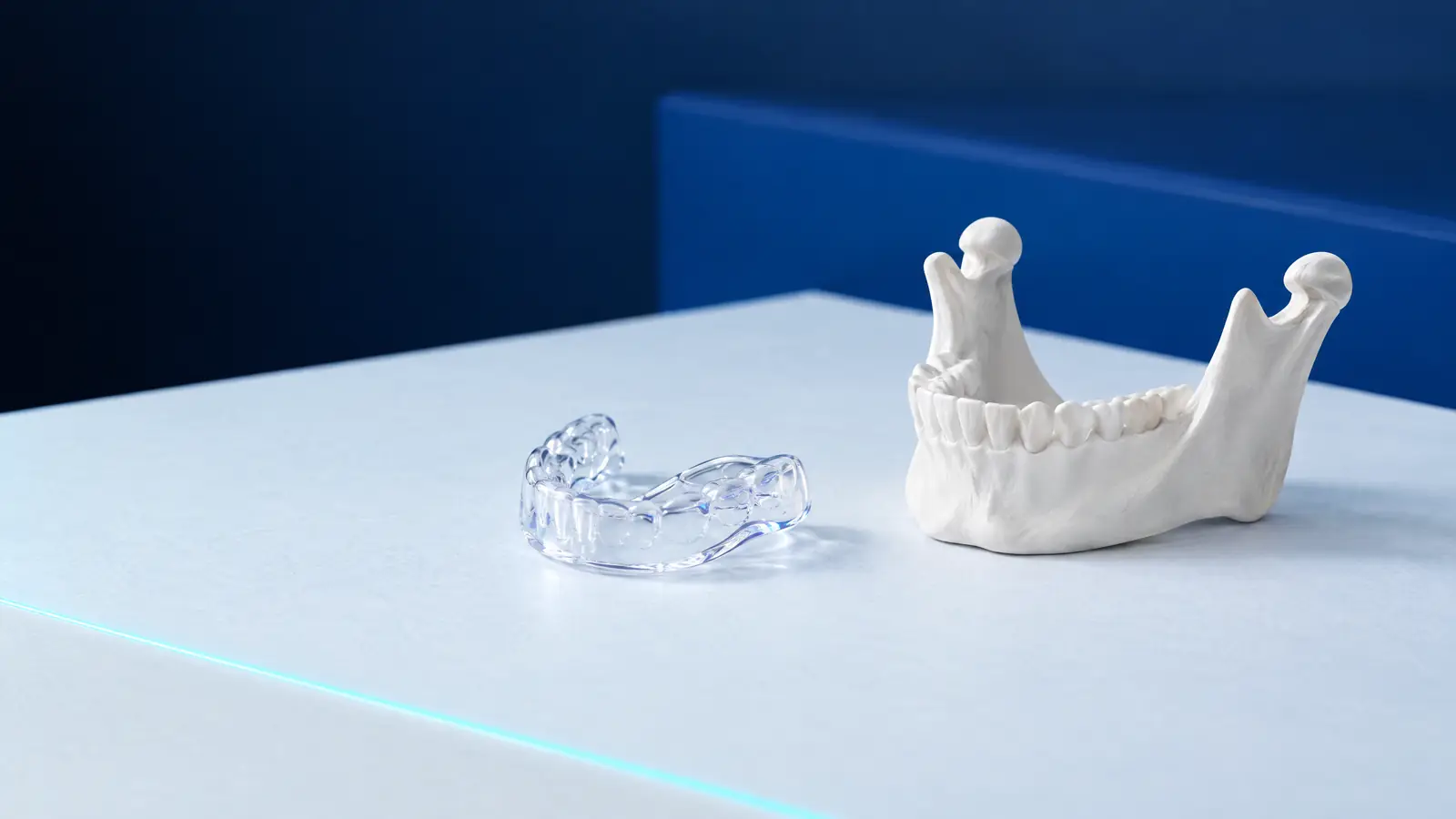
The temporomandibular joint connects the lower jaw to the skull; everyone has two of these joints, which you can feel by placing your fingers just in front of your ears and opening your mouth. Pain in this area is most often a symptom of temporomandibular disorders (TMD), which the US National Institute of Dental and Craniofacial Research (NIDCR) describes as a group of more than 30 conditions that cause pain and dysfunction in the joint and in the muscles that move the lower jaw.
For diagnosis, clinicians and researchers use the international DC/TMD criteria from 2014, which combine an examination of the joint and muscles with questionnaires assessing pain, limitation of function and psychological burden. This makes it possible to tell muscle pain apart from problems with the joint itself, for example displacement of the articular disc.
The NIDCR stresses that many forms of TMD are short-lived and go away on their own, but in some people the symptoms become chronic. They can also occur together with headaches, back pain or sleep problems.
How common are temporomandibular joint disorders?
How common temporomandibular disorders are depends on the definition, which is why figures vary widely between sources. The NIDCR estimates that TMD affects about 5% of adults in the US, and that women are affected twice as often as men, especially between the ages of 35 and 44.
Guidelines published in the BMJ in 2023 call TMD the second most common chronic musculoskeletal condition after low back pain, affecting 6 to 9% of adults worldwide. When every disorder found on examination is counted, the proportion rises: a 2024 meta-analysis by Polish authors (74 studies) gives 34% worldwide and 29% in Europe.
Joint disorders affect younger people too. In a meta-analysis of 21 studies that used diagnostic criteria, they were found in 31.1% of adults and in 11.3% of children and adolescents.
Symptoms: jaw pain, clicking in the joint and restricted opening
The most common symptom of temporomandibular disorders is pain in the chewing muscles or in the joint itself, which often gets worse when chewing and sometimes spreads to the face, temple or neck. Trismus, meaning restricted mouth opening, and locking of the jaw are also typical symptoms.
Clicking or popping in the joint on its own, without pain or restricted movement, usually needs no treatment. The NIDCR writes that such sounds are common and are regarded as normal; a frequent cause is disc displacement with reduction, which a meta-analysis found in 25.9% of adults.
TMD may, however, be indicated by the symptoms below, which are listed by the NIDCR and the UK’s NHS.
- Pain around the joint in front of the ear, spreading to the face, temple or neck.
- Stiffness of the jaw and difficulty opening the mouth fully.
- The jaw locking when opening or closing the mouth.
- Painful clicking, popping or grating in the joint when the jaw moves.
- Headaches around the temples.
- Ringing in the ears, worsening hearing or dizziness.
- A feeling that the teeth fit together differently from before.
What causes temporomandibular joint pain?
The cause of temporomandibular joint pain often remains unclear. The NIDCR states that some disorders result from an injury to the joint, but in most cases the symptoms arise from a combination of factors: genes, stress and life pressures, and individual sensitivity to pain.
Bruxism, meaning clenching or grinding the teeth, often occurs alongside TMD: in a review of studies, an average of 63.5% of people with bruxism had temporomandibular disorders. A separate article describes how bruxism is diagnosed and how the teeth are protected.
Malocclusion, on the other hand, is not a proven cause. The NIDCR writes that research does not confirm that a bad bite or orthodontic treatment causes TMD, and the current evidence does not point to a strong link between malocclusion and these disorders.
When does jaw pain need urgent medical help?
Jaw pain needs urgent assessment when it comes with symptoms that do not fit ordinary joint disorders, or that point to an injury or infection. The UK’s NHS and a review in the journal American Family Physician list the situations collected below.
Repositioning and immobilisation of a dislocated jaw are on the list of services funded by the NFZ (Poland’s National Health Fund), including in emergency dental care, which operates on working days from 19:00 to 7:00 and round the clock at weekends and on public holidays (legal position as of 18 October 2026).
- The pain began after an injury to the face or a blow to the jaw.
- Your jaw has locked, or you cannot open your mouth wide enough to eat and drink.
- The pain comes with swelling of the face or neck and a fever, which may mean an abscess; if you have difficulty breathing or swallowing, call 112, the emergency number, or go to a hospital emergency department (SOR).
- You have severe or frequent headaches, tenderness of the temple or scalp, or problems with your vision, for example double vision.
- Numbness of the face, lips or tongue has appeared: symptoms involving the nerves are not attributed to TMD.
- The pain does not change when you move your jaw, which according to the review suggests a different source, for example a tooth or a sinus.
What can you do yourself? First steps for jaw pain
For temporomandibular joint pain, the first step is self-care, because many joint and muscle problems are temporary and do not get worse. A review in American Family Physician states that symptoms resolve on their own in about 40% of patients and that only 5 to 10% need treatment; the NIDCR and the NHS recommend the measures listed below.
- Eat soft foods and do not bite into food with your front teeth.
- Apply a warm or cold compress and combine it with gentle exercises that stretch and strengthen the jaw muscles.
- Gently massage your jaw muscles and make time to relax.
- Give up chewing gum, do not bite your nails and do not clench your teeth; except when eating, your teeth should be slightly apart.
- Avoid wide yawning and opening your mouth very wide.
- If you need a painkiller, choose it with a pharmacist or a doctor.
Treatment: what do exercises, a splint and botulinum toxin achieve?
Treatment of temporomandibular joint pain starts with conservative, reversible methods. The 2023 BMJ guidelines, which concern pain lasting at least 3 months, strongly recommend cognitive behavioural therapy, supervised jaw and posture exercises, manual therapy and usual care, that is, education, home exercises and reassurance.
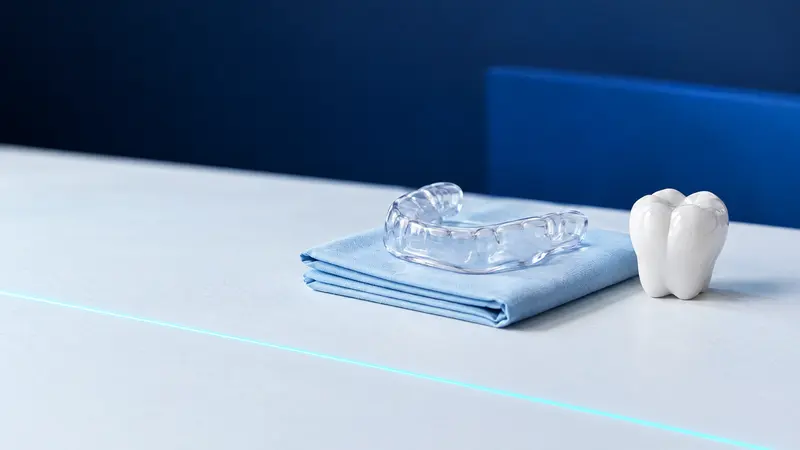
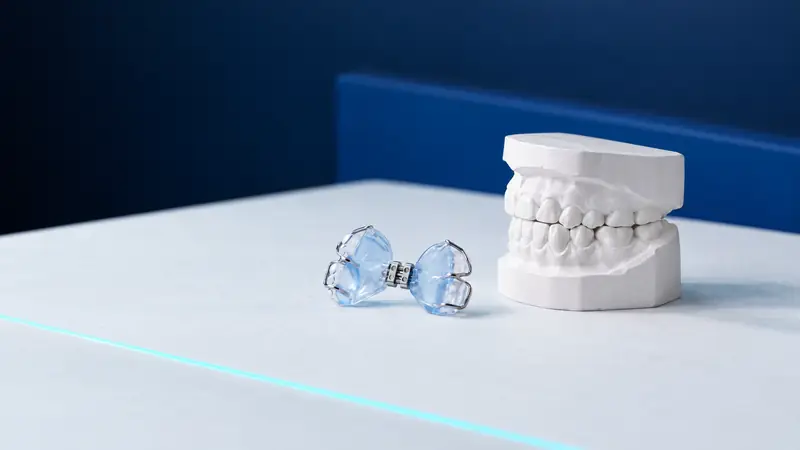
An occlusal splint has weak justification for joint pain. A review of 52 studies for the UK’s NIHR did not show that splints reduce pain in TMD, and the BMJ guidelines make a conditional recommendation against them as a treatment for chronic pain; the NIDCR adds that a splint protects the teeth and can help you unlearn clenching, but it does not change the bite.
Botulinum toxin is not licensed for TMD, so its use is off-label; the NIDCR describes the research findings as inconclusive. According to the NIDCR, procedures that permanently change the bite, such as grinding down teeth or fitting crowns, have no evidence of effectiveness and may make the symptoms worse.
| Method | What it involves | What research and guidance say |
|---|---|---|
| Education and self-care | Explaining the condition, soft diet, compresses, home exercises | BMJ 2023: strong recommendation; AAFP: first-line treatment |
| Exercises and physiotherapy | Supervised jaw and posture exercises, manual therapy | BMJ 2023: strong recommendation; some reviews rate the evidence as low |
| Cognitive behavioural therapy | Working with a psychologist on pain and stress | BMJ 2023: strong recommendation; Cochrane 2022: small effect, low certainty |
| Occlusal or relaxation splint | A tray over the teeth, usually worn at night | Protects the teeth; for chronic pain, BMJ 2023 conditionally against |
| Botulinum toxin | Injections into the chewing muscles | Inconclusive results; BMJ 2023 conditionally against; off-label |
| Grinding down teeth, crowns, changing the bite | A permanent change in the position or shape of the teeth | NIDCR: no evidence of effectiveness, possible worsening |
| Procedures on the joint | Joint lavage (arthrocentesis), surgical procedures | BMJ 2023: conditionally against lavage, strongly against disc removal |
Who treats temporomandibular joint pain, and how much does a splint cost?
The first port of call is usually a dentist, who will examine the joint, the muscles and the teeth and rule out toothache or sinus pain. The NIDCR and the NHS also mention a physiotherapist, who leads exercises and manual therapy, and a psychologist when stress or anxiety makes the pain worse.
The review in American Family Physician recommends referral to an oral and maxillofacial surgeon when conservative treatment does not help, jaw movement is restricted or the pain persists without explanation. The NIDCR advises getting a second opinion before any irreversible procedure.
Neither occlusal nor relaxation splints are on the NFZ list of services, which covers only splints used for dental injuries, fractures and surgical procedures (legal position as of 18 October 2026). In the clinic’s price list, “Szyna relaksacyjna twarda” (hard relaxation splint) costs 1 250 zł and “Szyna zgryzowa” (occlusal splint) 600 zł; the orthodontics category also includes “Artykulacja” (articulator analysis) at 450 zł. Whether treatment is indicated is decided by the examination, the final cost is set at the consultation, and prices may change.
How it works at DentalBlue
At DentalBlue in Białystok, pain around the temporomandibular joint is assessed at a visit with an examination; the first visit includes a panoramic X-ray (pantomogram), an examination and a consultation. When additional imaging is needed, for example CBCT tomography, it is carried out in the clinic’s own radiology unit. Relaxation and occlusal splints are in the price list under prosthodontics and under hygiene and aesthetics. The clinic is open Monday to Friday from 8:00 to 20:00 and on Saturdays from 8:00 to 16:00. An appointment can be booked by phone.
Frequently asked questions
Will temporomandibular joint pain go away on its own?
Often, yes. The NIDCR writes that TMD symptoms go away without treatment in many people, and the NHS that the condition is usually not serious and gets better over time. The review in American Family Physician reports spontaneous resolution of symptoms in about 40% of patients. If the pain does not go away or gets worse, the NIDCR advises seeing a dentist or doctor.
Can jaw joint pain spread to the ear?
Yes. The joint lies just in front of the ear, and the NHS lists pain around the jaw, ear and temple among the symptoms of TMD. The NIDCR adds that joint disorders can be accompanied by ringing in the ears, worsening hearing and dizziness, which is why, with such symptoms, a dentist or doctor first rules out other causes of the pain.
Can stress cause jaw pain?
It can contribute to it. The NIDCR lists stress and life pressures, alongside genes and sensitivity to pain, among the factors that lead to TMD, and the NHS notes that the pain often gets worse with stress. That is why the 2023 BMJ guidelines strongly recommend cognitive behavioural therapy for chronic pain.
Can temporomandibular joint exercises be done at home?
Yes, but preferably after a dentist or physiotherapist has shown you how. The NIDCR recommends gentle exercises that stretch and strengthen the jaw muscles, combined with a warm or cold compress, and the BMJ guidelines strongly recommend both home exercises and supervised exercises.
Can a child have temporomandibular joint problems?
Yes, although less often than an adult. In a meta-analysis of 21 studies, joint disorders were found in 11.3% of children and adolescents, compared with 31.1% of adults, and the most common was disc displacement with reduction, which causes clicking. Pain, locking of the jaw or restricted mouth opening in a child are worth showing to a dentist.
Sources
- NIDCR: TMD (Temporomandibular Disorders) (2026)
- BMJ: Busse JW et al., management of chronic pain in temporomandibular disorders, guideline (2023)
- NHS: Temporomandibular disorder (TMD) (2023)
- American Family Physician: Gauer RL, Semidey MJ, diagnosis and treatment of temporomandibular disorders (2015)
- Health Technology Assessment: Riley P et al., splints for temporomandibular disorders and bruxism (2020)
- Clin Oral Investig: Valesan LF et al., prevalence of temporomandibular joint disorders, meta-analysis (2021)
- J Clin Med: Zieliński G et al., global prevalence of temporomandibular disorders, meta-analysis (2024)
- ELI: Rozporządzenie MZ w sprawie świadczeń gwarantowanych z zakresu leczenia stomatologicznego, t.j. Dz.U. 2025 poz. 615
An informational article. It does not replace a consultation, and treatment decisions are made during a visit.