Why do doctors ask for dental clearance before surgery?
Doctors ask for dental clearance because bacteria from infected teeth and gums can enter the bloodstream and pose a risk to an implanted heart valve, an artificial joint or someone with weakened immunity. The certificate confirms that these sources of infection, also called inflammatory foci, have been identified and treated before the planned procedure.
Requests to treat oral sources of infection arise before procedures including heart surgery involving valve implantation, joint replacement, organ and bone marrow transplantation, head and neck radiotherapy, and antiresorptive treatment in cancer care. The centre assessing the patient for the procedure determines whether a certificate is required and its format, so confirm this with the treating doctor.
Hospitals in Białystok also remind patients about their teeth before surgery: in its information for patients awaiting planned surgery, the University Clinical Hospital in Białystok advises having tooth decay treated by a dentist well in advance (as of 24 October 2026).
What does treatment for dental clearance involve?
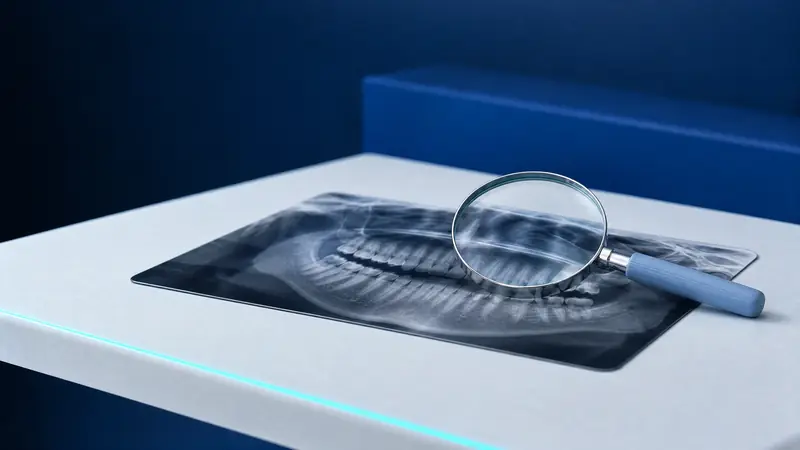
Treatment for dental clearance means finding and treating sources of infection in the teeth, gums and jawbones before planned medical treatment. It begins with an oral examination and a review of existing records; the dentist chooses X-rays according to the findings and the planned treatment. The extent of treatment depends on what the dentist finds.
The Scottish SDCEP guidance for patients about to start antiresorptive treatment lists similar priorities: carry out necessary treatment, promptly remove teeth with a poor prognosis, reduce dental and periodontal infection, and adjust dentures that damage the lining of the mouth. What doctors consider a source of infection is explained in a separate article on dental sources of inflammation. Treatment may include:
- Treating decay and replacing leaking fillings.
- Root canal treatment or extraction of non-vital teeth with inflammatory changes around the roots.
- Removing teeth that cannot be saved and roots left in the bone.
- Removing tartar and treating periodontitis (gum disease).
- Assessing impacted teeth, especially wisdom teeth with recurrent inflammation of the gum around the crown.
- Adjusting or replacing a denture that presses on or rubs the lining of the mouth.
Why do you need to see a dentist before heart valve replacement?
Seeing a dentist before valve replacement matters because bacteria from the mouth can cause infection of a prosthetic heart valve, known as infective endocarditis. The 2023 ESC guidelines strongly recommend eliminating potential dental sources of infection at least 2 weeks before implantation of a prosthetic valve or other material in the heart or blood vessels, unless the procedure is urgent.
The same guidelines recommend brushing twice daily and professional cleaning and dental check-ups at least twice a year for people at high risk, and once a year for others. The ESC high-risk group includes people who have previously had endocarditis and those with a prosthetic valve or material used to repair a valve.
For high-risk patients, the ESC recommends antibiotic cover before procedures involving the gums or the area around the root tip, including tooth extraction; the doctor decides which medicine to use. Heart disease and dental care are discussed further in the article on high blood pressure and heart disease.
Do teeth need treating before a joint replacement?
Before hip or knee replacement, the orthopaedic centre may request a dental check-up and certificate, because infection around an artificial joint is a serious complication. The centre assessing you for surgery sets this requirement, so ask about it at the assessment and arrange a dental appointment straight away.
In its 2015 guidelines, the American Dental Association (ADA) generally does not recommend antibiotics before dental procedures for people with joint replacements. Teeth needing treatment are best treated before surgery, allowing time for healing, rather than just before hospital admission.
Dental clearance before radiotherapy, chemotherapy and transplantation: when?
Dental treatment before cancer therapy is planned as early as possible: the US National Cancer Institute (NCI) states that an oral health check at least a month before treatment begins usually allows time for healing after any procedures. Dental care during and after therapy is described in the article on teeth and chemotherapy.
Before kidney transplantation, the 2020 KDIGO guidelines suggest dental screening according to general population guidelines to detect dental and periodontal disease, with the aim of preventing oral infections after transplantation. The NCI adds that after transplantation as part of cancer treatment, routine dental care is postponed until immunity has recovered, which may take 6 to 12 months.
Before antiresorptive medicines such as bisphosphonates or denosumab, SDCEP recommends that cancer patients have a thorough dental assessment and any necessary treatment before therapy starts. The risk of medication-related osteonecrosis of the jaw is generally estimated at below 5% in people with cancer and below 0.05% in osteoporosis (SDCEP, 2024), as discussed further in the article on osteoporosis medicines.
How far before surgery should you see a dentist?
It is best to see a dentist as soon as you are approved for surgery, because root canal treatment, tooth extraction or periodontal treatment require several visits and time for healing. The table brings together the timings given in guidelines; the dentist and treating doctor agree the specific date together.
| Planned procedure | Purpose of the dental check | Typical timing |
|---|---|---|
| Implantation of a valve or other material in the heart | Protection against endocarditis | Sources of infection eliminated at least 2 weeks before, unless urgent (ESC 2023) |
| Joint replacement | Detecting and treating infections before the procedure | Well in advance, according to the centre’s procedures |
| Head and neck radiotherapy | Treating teeth before irradiation of the jaw area | Check-up at least a month before treatment (NCI) |
| Chemotherapy or bone marrow transplantation | Reducing infections when immunity is weakened | As early as possible, ideally a month before treatment (NCI) |
| Kidney transplantation | Detecting dental and periodontal disease | During assessment for transplantation (KDIGO 2020) |
| Antiresorptive medicines in cancer care | Avoiding subsequent extractions during therapy | Before treatment begins, if possible (SDCEP) |
What does a dental clearance certificate before surgery contain?
A dental clearance certificate before surgery usually states that the mouth is free of active sources of infection or that their treatment has been completed, with the examination date and the dentist’s signature and stamp. A dentist certifies health status after examining the patient, in person or remotely, and reviewing the available records (art. 42 ust. 1 in conjunction with art. 3 ust. 1 of the Act on the Professions of Doctor and Dentist, t.j. Dz.U. 2026 poz. 37).
The hospital may have its own form or require specific information, for example about a panoramic X-ray. Bring the referral or assessment document stating the procedure and its date to your appointment, because these determine what the dentist assesses and when treatment needs to be completed.
If a tooth needs treatment that cannot be completed before surgery, the dentist records this in the certificate, and the treating doctor decides on the timing of the procedure.
Can dental treatment before surgery be funded by the NFZ?
Dental treatment before surgery can be carried out under the NFZ, Poland’s National Health Fund, through its standard dental benefits, although the regulation does not list a separate service called dental clearance. Adults are entitled, among other things, to an examination, fillings, tooth extractions, tartar removal once per calendar year and root canal treatment of teeth numbered 1 to 3, meaning incisors and canines (Minister of Health’s regulation, t.j. Dz.U. 2025 poz. 615).
Children and young people up to the age of 18, pregnant women and women in the postnatal period are entitled to NFZ-funded root canal treatment of all teeth. Root canal treatment of premolars and molars in adults is provided privately. Legal status as of 24 October 2026.
How it works at DentalBlue
At DentalBlue in Białystok, a preoperative dental check can begin with “Wizyta bez bólu” (visit without pain), which includes a panoramic X-ray, a consultation, an examination and a written treatment plan; it costs 300 zł in the clinic’s price list. Intraoral X-rays, panoramic X-rays and CBCT scans are performed in the clinic’s own radiology unit. The clinic provides root canal treatment under a microscope, oral surgery and periodontology. The dentist sets the final scope and cost, and prices may change.
Frequently asked questions
How much does a dental clearance certificate before surgery cost?
The cost depends on the extent of the examination and whether the teeth need treatment. In the clinic’s price list, “Wizyta bez bólu”, including a panoramic X-ray, a consultation, an examination and a written treatment plan, costs 300 zł. Treating any sources of infection found is priced separately. The dentist sets the final scope and cost, and prices may change.
How long is a dental clearance certificate valid?
Confirm how recent the certificate needs to be with the hospital requesting it, ideally at the assessment. If surgery is postponed by many months, plan another check-up, because new cavities or changes around the teeth may develop in that time.
Does a non-vital tooth need removing before heart surgery?
Not always. A non-vital tooth with an inflammatory lesion around the root is a potential source of infection. Before a planned valve implantation, the ESC recommends eliminating such sources at least 2 weeks beforehand; urgent procedures are the exception. This may mean root canal treatment or extraction; the choice depends on the tooth’s condition and the time before surgery.
Does the dentist have to take a panoramic X-ray before a transplant?
The KDIGO guidelines for kidney transplant candidates recommend dental screening according to general population guidelines, rather than a particular investigation. The dentist chooses X-rays after examining you and reviewing earlier results; a panoramic X-ray is not mandatory for every transplant candidate.
Can you have surgery immediately after a tooth extraction?
Usually not immediately, because the extraction wound needs time to heal, and the timing also depends on the type and urgency of the operation. Before a planned valve implantation, the ESC recommends eliminating sources of infection at least 2 weeks beforehand, except in urgent procedures. The NCI advises a dental check-up at least a month before cancer treatment. The dentist and treating doctor agree the timing.
Sources
- ESC: Delgado V et al., 2023 ESC Guidelines for the management of endocarditis, European Heart Journal (2023)
- ADA: Oral Health Topics, Antibiotic Prophylaxis Prior to Dental Procedures (2026)
- National Cancer Institute: Oral Complications of Cancer Therapies (PDQ), patient version (2024)
- KDIGO: Clinical Practice Guideline on the Evaluation and Management of Candidates for Kidney Transplantation, Transplantation (2020)
- SDCEP: Oral Health Management of Patients at Risk of Medication-related Osteonecrosis of the Jaw, guidance and supplement (2017, 2024)
- University Clinical Hospital in Białystok: preparing for a planned procedure (2026)
- Dz.U. 2026 poz. 37: ustawa o zawodach lekarza i lekarza dentysty, consolidated text (2026)
- Dz.U. 2025 poz. 615: rozporządzenie MZ w sprawie świadczeń gwarantowanych z zakresu leczenia stomatologicznego (2025)
An informational article. It does not replace a consultation, and treatment decisions are made during a visit.