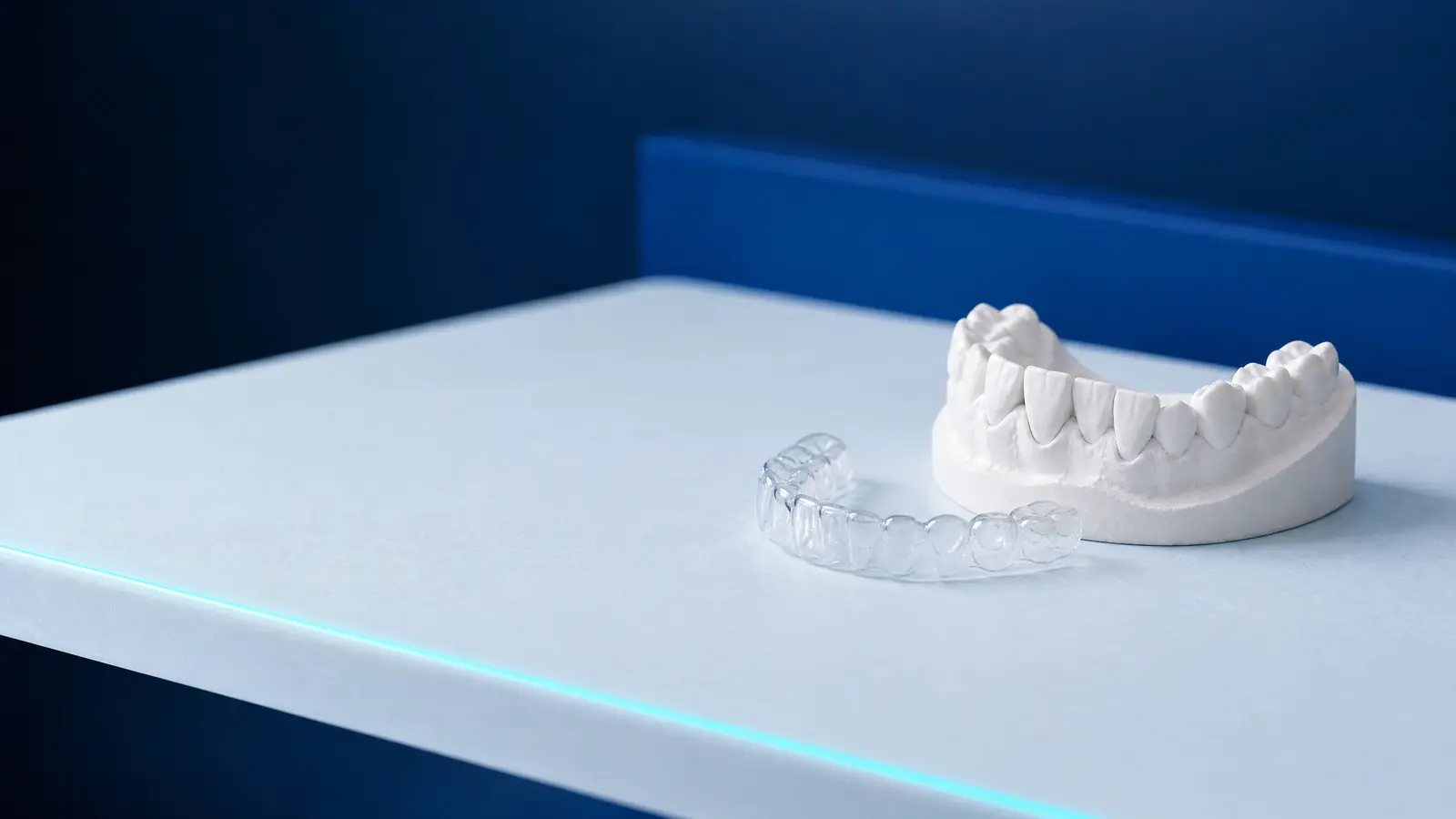
What is interproximal reduction (IPR)?
Interproximal enamel reduction (IPR), also known as stripping, involves removing a thin layer of enamel from the surfaces where neighbouring teeth meet. Each tooth becomes slightly narrower, and braces or aligners use the resulting space to straighten the teeth. Sheridan formally described the procedure in 1985.
According to the review by Dahhas et al. (2024), IPR is now an almost routine part of orthodontic treatment, especially in adults; with aligners, the amount for each tooth is set in the digital treatment plan. It is irreversible because enamel does not grow back, so the smallest amount needed to achieve the treatment goal is planned.
Why is IPR carried out?
The most common reason for IPR is insufficient space in the arch: mild or moderate crowding, usually of the front teeth. The review by Dahhas et al. also lists other indications, given below; some concern tooth shape and proportions rather than a lack of space alone.
Black triangles are empty spaces between incisors near the gum, which may exist before treatment or appear after rotated teeth are aligned. Narrowing a tooth moves the contact point closer to the gum, which can reduce the space where tooth shape is suitable; Tarnow et al. recommended a contact point 4.5 to 5 mm from the bone crest.
- Creating space to align teeth with mild or moderate crowding.
- Balancing the relative sizes of upper and lower teeth (Bolton ratio).
- Reducing black triangles between incisors.
- Correcting tooth shape, for example triangular incisors or a canine positioned in place of a lateral incisor.
- Minor correction of the midline and canine position.
- Improving the stability of the treatment result, although evidence for this is inconclusive.
How much enamel can be removed during IPR?
With aligners, the plan usually specifies 0.2 to 0.5 mm per contact point, taken from the two neighbouring teeth combined. The safe amount depends on enamel thickness, which varies between people and between teeth. In front teeth, proximal enamel does not always reach 1 mm in thickness; from the canine towards the back teeth, this thickness is regularly found.
The values in the table come from recommendations collected in the review by Dahhas et al. (2024) and are indicative. The orthodontist selects the amount for the individual teeth; if the space needed exceeds safe limits, other methods are considered.
| Situation | Value in the recommendations |
|---|---|
| Typical amount with aligners | Usually 0.2 to 0.5 mm per contact point, from the two neighbouring teeth combined; the orthodontist adjusts the amount to enamel thickness |
| Posterior segments | Around 8 mm of space per arch |
| General principle | At least half the enamel thickness remains |
What happens during IPR, step by step?
IPR uses manual abrasive strips or powered instruments: oscillating files, diamond discs or thin safe-ended burs. Manual strips suit small amounts, while a disc or bur suits larger amounts; the space gained is checked with gauges of different thicknesses.
Powered instruments heat the tooth, so work is intermittent: the 2024 review cites data suggesting that around 10 seconds of continuous bur contact may generate a temperature harmful to the pulp. However, in the cited studies the rise in pulp temperature was below 5.5°C, a value often cited in research on thermal injury; technique, pauses and cooling limit risk. The stages are listed below.
- Patient consent after discussing which teeth are involved and how much enamel the plan covers.
- Sometimes separators: small elastics placed between teeth for 2 to 4 days in the front or a week in the back.
- With aligners, attachments are bonded first and IPR follows initial tooth alignment.
- Removal of the planned amount, sometimes over several visits, and measurement of the space gained.
- Polishing the surfaces with finishing strips.
- Application of fluoride gel or another product supporting enamel remineralisation.
Does IPR hurt?
IPR usually does not require anaesthesia: Dahhas et al. state that topical anaesthesia is generally unnecessary but may be used for sensitive patients. In a 2025 randomised study (Sudarshan et al.), 34 people aged 16 or above undergoing fixed-brace treatment had lower-incisor IPR once with manual strips and once with powered strips. VAS pain scores increased by an average of 18.5 mm with manual strips and 15.6 mm with powered strips, without a significant difference; no complications were reported.
Post-procedure sensitivity was uncommon in studies. In the follow-up by Zachrisson et al. (2007), 59 of 61 people more than 10 years after lower front tooth IPR reported no increased sensitivity to temperature changes; the 2022 review of 8 clinical studies found no sensitivity after IPR. If a tooth remains sensitive to cold for a long time after the procedure, tell your orthodontist at the next visit.
Does IPR damage teeth, and when should it be avoided?
Research does not suggest that correctly performed IPR increases the risk of decay or gum disease. A systematic review of 8 clinical studies (Gómez-Aguirre et al., 2022) found no enamel demineralisation, increase in cavities, periodontal changes or sensitivity after IPR. However, the evidence quality was rated low or very low, and the authors call for longer, better-designed studies.
Long-term follow-up studies are scarce. Zachrisson et al. examined 61 people more than 10 years after IPR of all 6 lower front teeth using diamond discs with cooling and polishing: they found no new cavities or reduction in the distance between roots, while 3 adults had minor gum recession.
The reduced surface can be rougher, so it is polished afterwards; a technical error, such as damaging a neighbouring tooth, may increase the risk of decay and sensitivity. The review by Dahhas et al. lists situations where IPR is contraindicated or requires particular caution.
- Poor oral hygiene or high decay risk.
- Active periodontal disease.
- Tooth sensitivity or underdeveloped enamel (hypoplasia).
- Naturally small or rectangular teeth, where an overhang and food trapping can easily occur.
- Large pulp chambers, especially in young patients.
- Severely rotated teeth or marked crowding preventing access to the contact.
- A need for more space than can safely be created, or previous IPR on the same teeth.
IPR with aligners: why is it included in the plan?
With aligners, the digital plan specifies the sites and amounts of IPR, usually 0.2 to 0.5 mm per contact. Dahhas et al. state that combining IPR with moving back teeth backwards reduces the amount of that movement and the number of aligners needed. Before ordering trays, it is worth reviewing the visualisation to see where enamel removal is planned and how much.
The plan and actual treatment do not always match. According to the same review, most studies found that less enamel was removed than planned; in one cited study, IPR was the least predictable method of gaining space in aligner treatment (49% in the upper arch and 42% in the lower). Reviews therefore check whether the space gained matches the plan.
Black triangles can occur after both aligner and fixed-brace treatment: the review cites a study reporting them after aligners at 25.7% of upper and 40.3% of lower incisors, while other fixed-brace studies report 22 to 36%. IPR can reduce this where tooth shape is suitable.
IPR, arch expansion or tooth extraction: how can space be created?
IPR is one of several ways to create space for tooth alignment; the choice depends on the amount needed, tooth shape and bone anatomy. The table compares common options; a plan often combines several.
The review by Gómez-Aguirre et al. (2022) found shorter treatment with IPR than with extractions; according to the 2024 review, substituting IPR for extraction reduces the risk of residual gaps. However, enamel thickness limits the space available from IPR, so extraction may still be necessary for severe crowding; the article on tooth extraction for braces explains this.
| Method | Where the space comes from | When considered | Limitations |
|---|---|---|---|
| Interproximal reduction (IPR) | Narrowing teeth at their contacts | Mild or moderate crowding, tooth-size discrepancy, black triangles | Amount limited by enamel thickness; irreversible change |
| Arch expansion | Widening the dental arch sideways | A narrow dental arch | Range limited by bone anatomy |
| Moving back teeth backwards | Moving posterior teeth further back | Where there is space at the back of the arch | More treatment stages; IPR reduces the movement needed |
| Tooth extraction | The gap left by a removed tooth | Severe crowding | Duration depends on the bite problem and plan; extraction treatment took longer in studies in the review, with low-certainty evidence |
IPR at DentalBlue in Białystok: cost, NFZ and booking
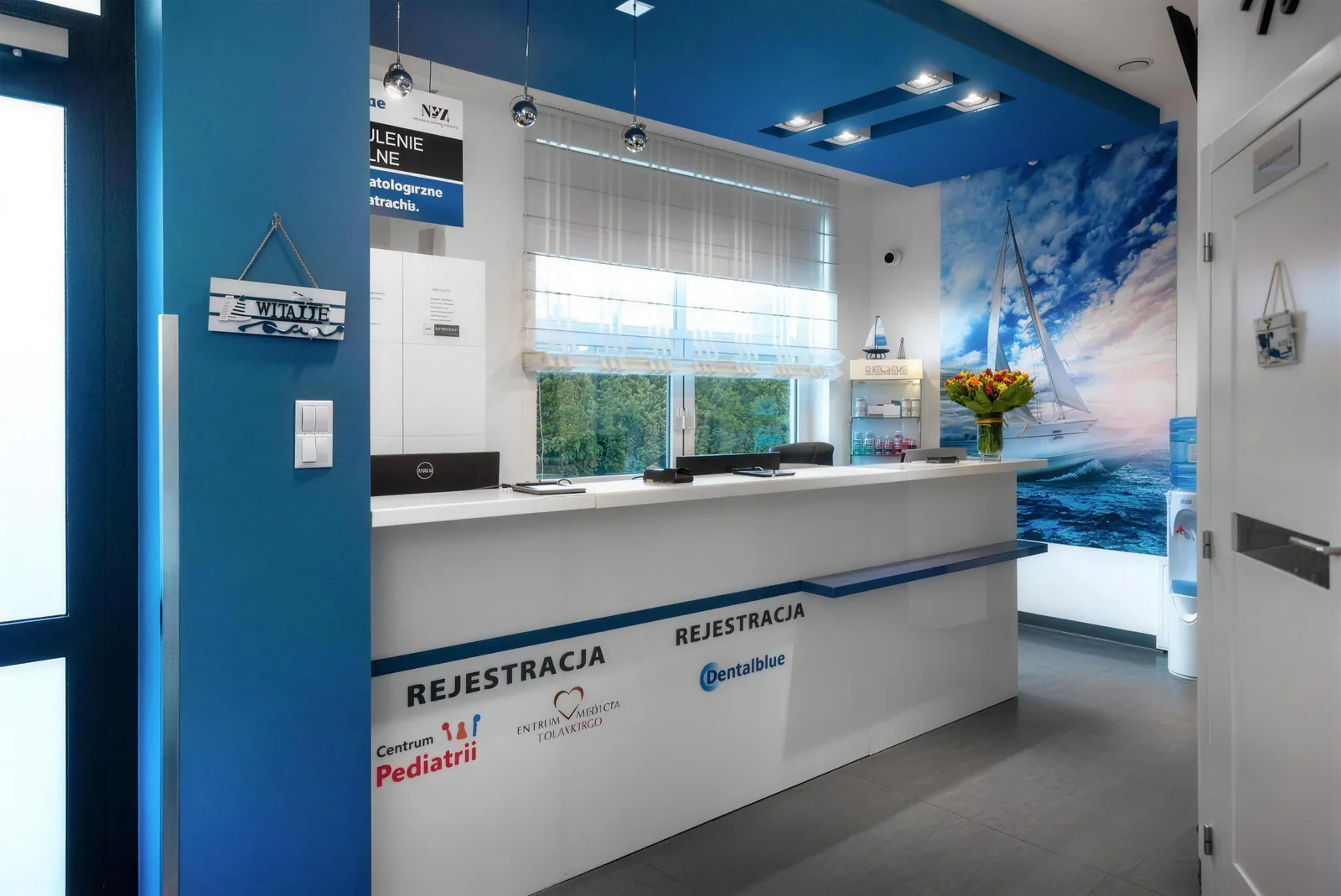
At DentalBlue, IPR is part of the treatment plan with Clear Aligner trays or fixed braces, so the published price list gives no separate price; the cost is agreed at consultation together with the whole plan. Treatment is planned digitally using cephalometric analysis from the clinic’s own radiology unit. The table gives diagnostic prices, which may change.
The standard package from Poland’s National Health Fund (NFZ) does not cover aligner or fixed-brace treatment, including for adults; the FAQ on NFZ coverage at the end explains the rules (as at November 2026). Find clinics contracted for children’s orthodontics using the NFZ ‘Gdzie się leczyć’ (Where to get treatment) search tool.
DentalBlue is at ul. Kazimierza Pułaskiego 35 in Białystok, near the junction with Wspólna, south of the city centre; the ‘Pułaskiego/Wspólna’ stop is 50 m from the entrance and served by buses 16, 23 and 26. The clinic is open Monday to Friday 8:00 to 20:00 and Saturday 8:00 to 16:00, and closed on Sundays.
Book a consultation by calling 85 748 00 50; a receptionist answers during opening hours. Say you need an orthodontic consultation and mention whether you already have a plan including IPR. Bring previous X-rays, your current plan and a medication list. The clinic’s team page lists the role ‘Orthodontist’, and you can speak Polish, English, Ukrainian or Russian at the clinic.
| Price-list item | Price | Purpose |
|---|---|---|
| ‘Orthodontic consultation’ | 300 zł | Examination and assessment of whether treatment and IPR are needed |
| ‘Treatment plan with cephalometric analysis’ | 380 zł | A plan based on measurements from a cephalometric X-ray |
| ‘Diagnostic scans’ | 300 zł | Digital dental scans for planning |
| ‘Clear Aligner visualisation’ | 350 zł | An aligner treatment simulation showing the planned IPR |
| Interproximal reduction (IPR) | No separate item | Cost determined by the treatment plan |
Frequently asked questions
Is IPR harmful?
Studies do not suggest that correctly performed IPR harms teeth: a 2022 review of 8 clinical studies found no increase in decay, demineralisation, gum changes or sensitivity. However, the evidence quality is low, and safety depends on respecting limits and maintaining good hygiene.
Does enamel grow back after IPR?
No. Enamel does not regenerate, so IPR is irreversible and the smallest amount needed for treatment is planned. Afterwards, the surface is polished and fluoride gel is usually applied to support enamel remineralisation.
Will gaps remain between teeth after IPR?
The gaps created by the procedure are intentional: braces or successive aligners use them to align the teeth, and the plan aims to prevent the space being lost through unwanted tooth movement. At reviews, the orthodontist checks whether the space gained matches the plan.
How many IPR sessions are needed with aligners?
It depends on the plan: IPR may take one visit or be spread across several; the 2024 review advises carrying it out after attachments are bonded and initial alignment is complete. The digital treatment plan shows the number and timing of procedures.
Does the NFZ cover IPR?
The standard orthodontic package from the NFZ covers removable appliances for children under 12, excluding fixed braces; it also lists ‘corrective tooth grinding’ for those under 18 without defining it further (as at November 2026). IPR as part of aligner or fixed-brace treatment, including for adults, is therefore provided privately.
How should I care for my teeth after IPR?
As carefully as throughout treatment: use fluoride toothpaste and clean between teeth daily, as IPR is performed in patients with good hygiene. If a tooth remains sensitive to cold or food gets trapped between teeth, mention it at your next visit.
Sources
- Orthodontics and Craniofacial Research: Gómez-Aguirre JN et al., effects of interproximal enamel reduction, systematic review (2022)
- Am J Orthod Dentofacial Orthop: Zachrisson BU et al., dental health more than 10 years after lower front tooth IPR (2007)
- Cureus: Dahhas FY et al., IPR in aligner treatment: indications, technique, contraindications and outcomes, review (2024)
- European Journal of Orthodontics: Sudarshan S et al., pain during manual and powered IPR, randomised study (2025)
- Dz.U. 2025 poz. 615: Rozporządzenie MZ w sprawie świadczeń gwarantowanych z zakresu leczenia stomatologicznego (Health Minister’s regulation on guaranteed dental benefits), consolidated text, Annex 6
- DentalBlue: published price list, orthodontics and Clear Aligner
An informational article. It does not replace a consultation, and treatment decisions are made during a visit.